Anzai Tatsuya, Yamagata Takanori, Uosaki Hideki
Division of Regenerative Medicine, Center for Molecular Medicine, Jichi Medical University, Shimotsuke, Japan.
Department of Pediatrics, Jichi Medical University, Shimotsuke, Japan.
Front Cell Dev Biol. 2020 Apr 22;8:268. doi: 10.3389/fcell.2020.00268. eCollection 2020.
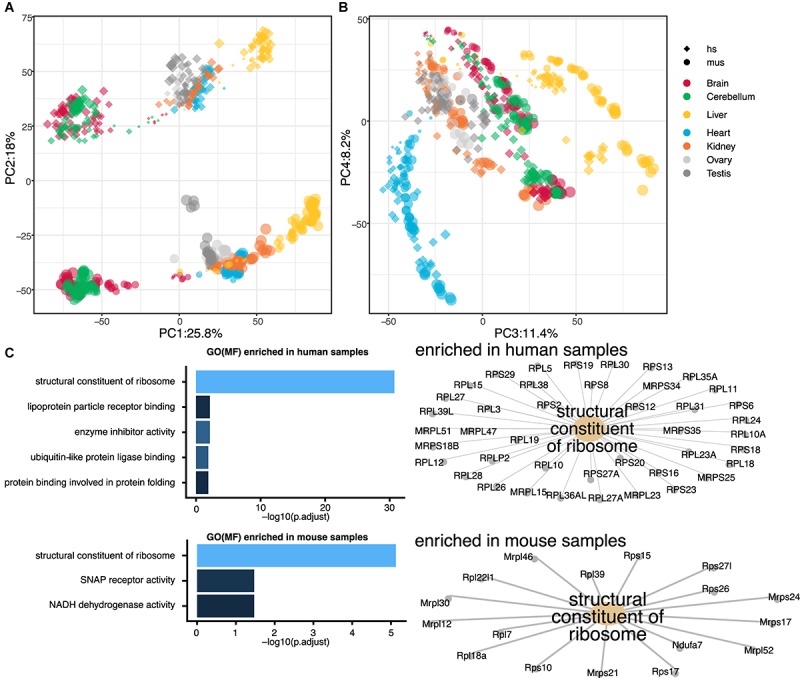
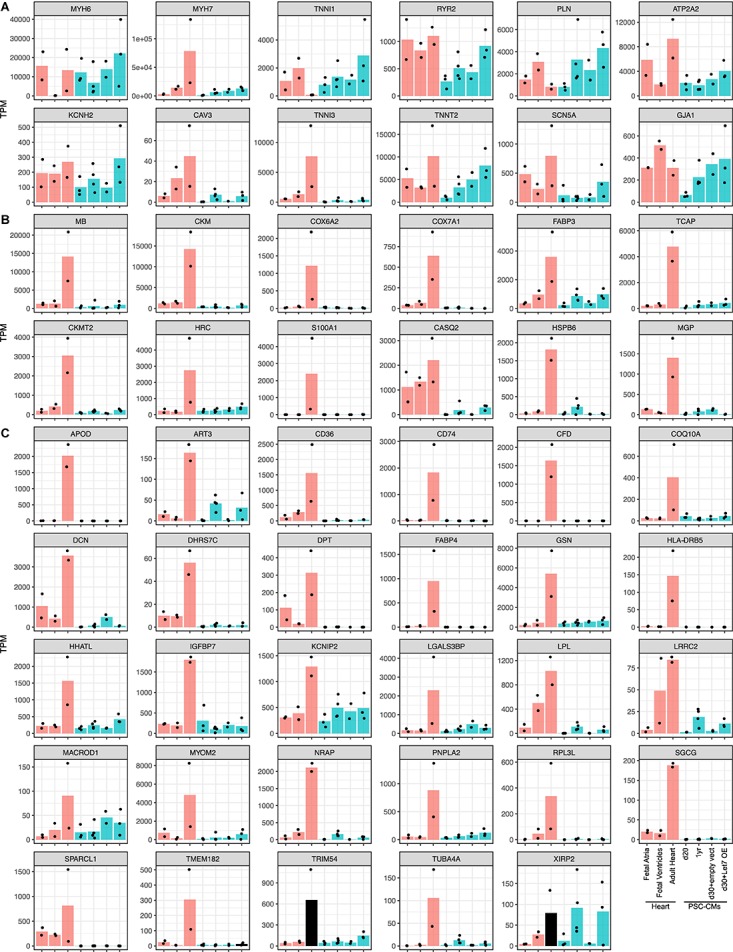
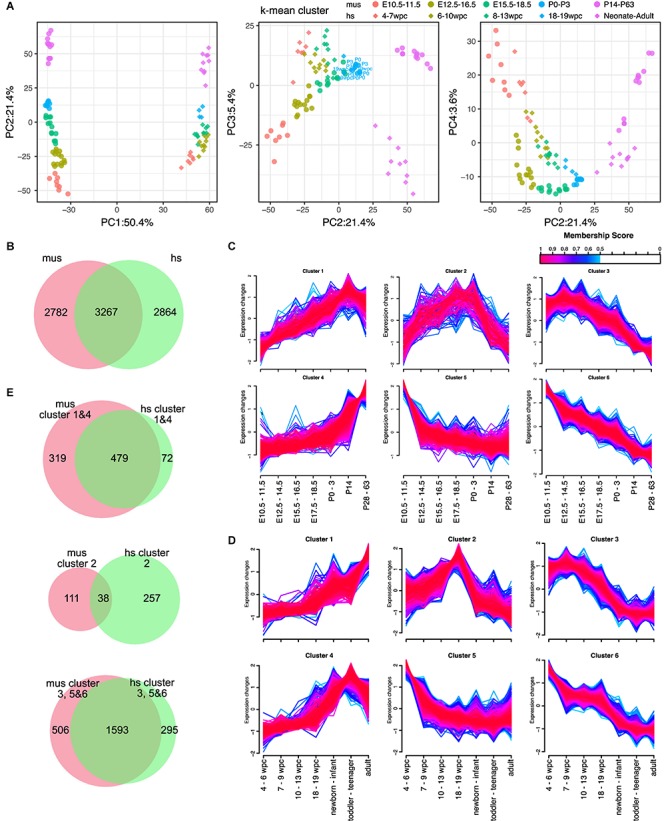
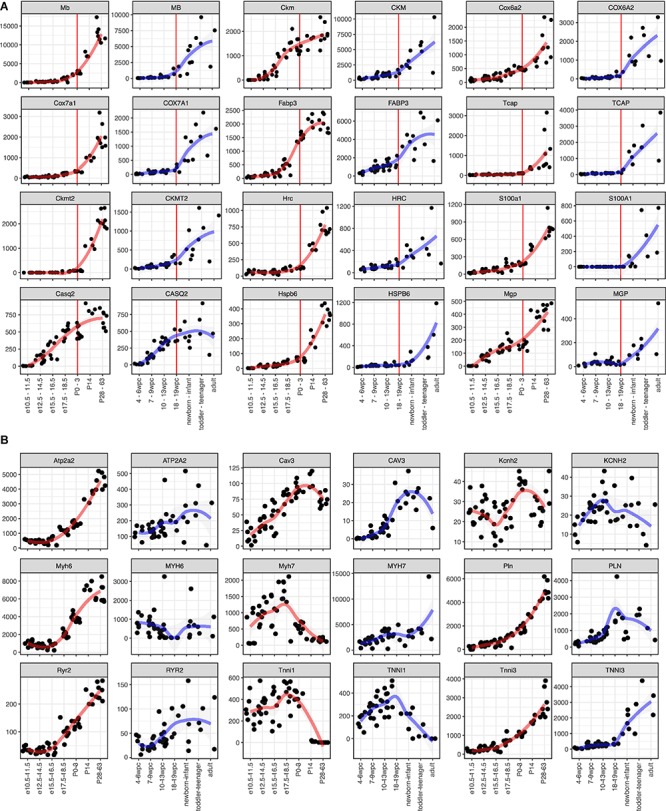
Transcriptome landscape of organs from mice and humans offers perspectives on the process of how organs develop and the similarity and diversity in each organ between the species. Among multi-species and multi-organ dataset, which was previously generated, we focused on the mouse and human dataset and performed a reanalysis to provide a more specific perspective on the maturation of human cardiomyocytes. First, we examined how organs diversify their transcriptome during development across and within two species. We unexpectedly identified that ribosomal genes were differentially expressed between mice and humans. Second, we examined the corresponding ages of organs in mice and humans and found that the corresponding developmental ages did not match throughout organs. Mouse hearts at P0-3 and human hearts at 18-19 wpc showed the most proximity in the regard of the transcriptome. Third, we identified a novel set of maturation marker genes that are more consistent between mice and humans. In contrast, conventionally used maturation marker genes only work well with mouse hearts. Finally, we compared human pluripotent stem cell-derived cardiomyocytes (PSC-CMs) in maturation-enhanced conditions to human fetal and adult hearts and revealed that human PSC-CMs only expressed low levels of the potential maturation marker genes. Our findings provide a novel foundation to study cardiomyocyte maturation and highlight the importance of studying human samples rather than relying on a mouse time-series dataset.
小鼠和人类器官的转录组图谱为器官发育过程以及物种间各器官的异同提供了见解。在先前生成的多物种多器官数据集中,我们聚焦于小鼠和人类数据集并进行了重新分析,以更具体地了解人类心肌细胞的成熟情况。首先,我们研究了两个物种内和物种间器官在发育过程中转录组如何分化。我们意外地发现核糖体基因在小鼠和人类之间存在差异表达。其次,我们研究了小鼠和人类器官的相应年龄,发现整个器官的相应发育年龄并不匹配。出生后0至3天的小鼠心脏和孕18至19周的人类心脏在转录组方面最为接近。第三,我们鉴定出一组新的成熟标记基因,这些基因在小鼠和人类之间更为一致。相比之下,传统使用的成熟标记基因仅在小鼠心脏中表现良好。最后,我们将成熟增强条件下人类多能干细胞衍生的心肌细胞(PSC-CMs)与人类胎儿和成人心脏进行比较,发现人类PSC-CMs仅表达低水平的潜在成熟标记基因。我们的研究结果为研究心肌细胞成熟提供了新的基础,并强调了研究人类样本而非依赖小鼠时间序列数据集的重要性。