Rockman Steven, Laurie Karen, Barr Ian
Seqirus, 63 Poplar Road, Parkville, VIC 3052, Australia.
Department of Microbiology and Immunology, The University of Melbourne at the Peter Doherty Institute of Infection and Immunity, 792 Elizabeth Street, Melbourne, VIC 3000, Australia.
Vaccines (Basel). 2020 May 7;8(2):211. doi: 10.3390/vaccines8020211.
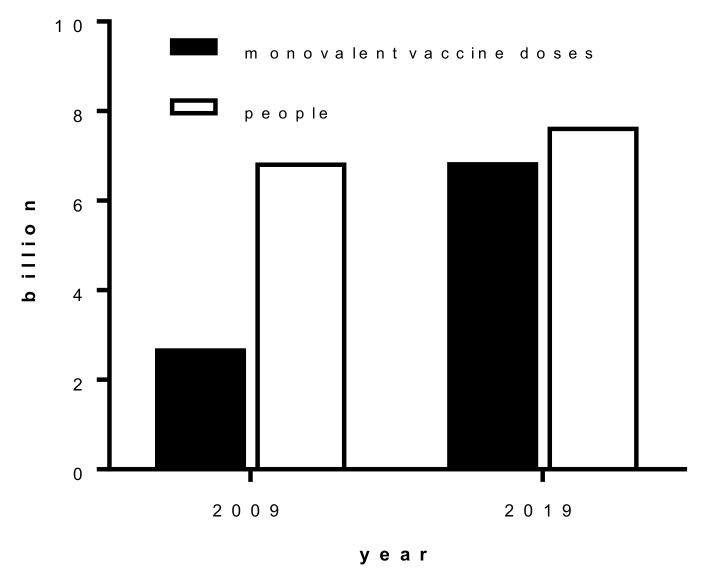
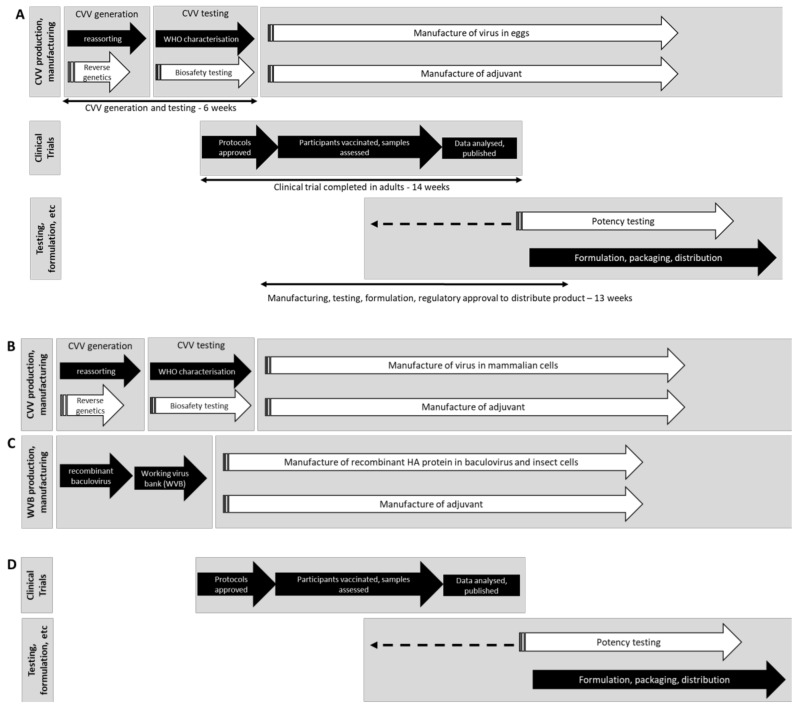
In 2009, a novel A(H1N1) influenza virus emerged with rapid human-to-human spread and caused the first pandemic of the 21st century. Although this pandemic was considered mild compared to the previous pandemics of the 20 century, there was still extensive disease and death. This virus replaced the previous A(H1N1) and continues to circulate today as a seasonal virus. It is well established that vaccines are the most effective method to alleviate the mortality and morbidity associated with influenza virus infections, but the 2009 A(H1N1) influenza pandemic, like all significant infectious disease outbreaks, presented its own unique set of problems with vaccine supply and demand. This manuscript describes the issues that confronted governments, international agencies and industries in developing a well-matched vaccine in 2009, and identifies the key improvements and remaining challenges facing the world as the next influenza pandemic inevitably approaches.
2009年,一种新型甲型H1N1流感病毒出现,在人际间迅速传播,引发了21世纪的首次大流行。尽管与20世纪的前几次大流行相比,这次大流行被认为较为温和,但仍有广泛的疾病和死亡发生。这种病毒取代了之前的甲型H1N1病毒,至今仍作为一种季节性病毒在传播。众所周知,疫苗是减轻与流感病毒感染相关的死亡率和发病率的最有效方法,但2009年甲型H1N1流感大流行,与所有重大传染病爆发一样,在疫苗供需方面出现了其自身独特的一系列问题。本文描述了2009年各国政府、国际机构和企业在研发匹配度良好的疫苗时所面临的问题,并确定了随着下一次流感大流行不可避免地临近,世界面临的关键改进措施和 remaining challenges。 (注:原文中“remaining challenges”未翻译完整,可能是输入有误,完整的应是“剩余挑战”之类的意思 )