Department of Microbiology and Molecular Genetics (MMG), University of the Punjab, New Campus Lahore, Lahore, 54590, Pakistan.
Institute of Public Health, Lahore, Pakistan.
BMC Pulm Med. 2020 May 11;20(1):138. doi: 10.1186/s12890-020-1172-4.
Fluoroquinolones (FQs) are potential drugs that inhibit DNA synthesis and are used in the treatment of multidrug-resistant tuberculosis (TB) and short-term anti-TB regimens. In recent years, a high proportion of FQ resistance has been observed in Mycobacterium tuberculosis isolates. The development of FQ resistance in multidrug-resistant TB negatively impacts patient treatment outcome and is a serious threat to control of TB.
The study included a total of 562 samples from patients with pulmonary TB that had been on anti-tuberculosis therapy. MTBDRsl assays were performed for the molecular detection of mutations. Sequence analysis was performed for the characterization and mutational profiling of FQ-resistant isolates.
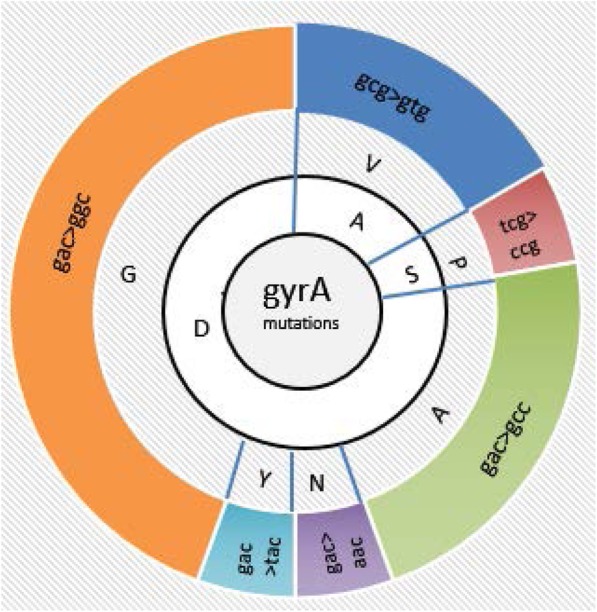
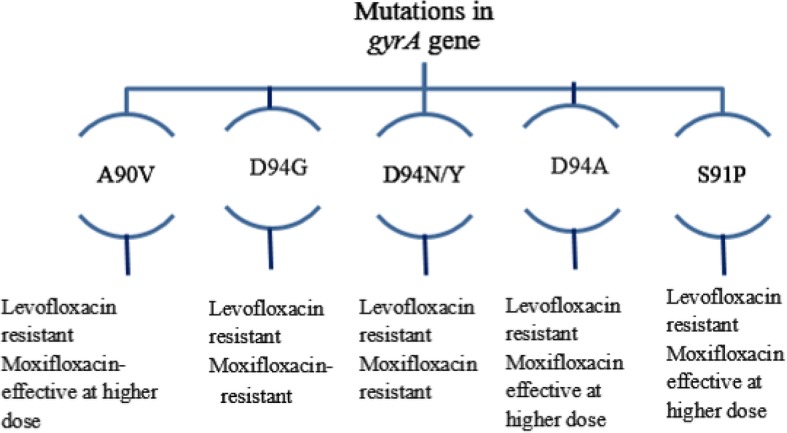
FQ resistance was observed in 104 samples (18.5%), most of which were previously treated and treatment failure cases. A total of 102 isolates had mutations in DNA gyrase subunit A (gyrA), while mutations in gyrB were observed in only two isolates. Mutational analysis revealed that the mutations mostly alter codons 94 (replacing aspartic acid with glycine, D94G) and 90 (replacing alanine with valine, A90V). In MDR and treatment failure cases, resistance to FQs was most commonly associated with the D94G mutation. In contract, a high proportion of A90V mutations were observed in isolates that were newly diagnosed.
The findings suggest that genotypic assays for FQ resistance should be carried out at the time of initial diagnosis, before starting treatment, in order to rule out mutations that impact the potential use of FQs in treatment and to control drug resistance.
氟喹诺酮类药物(FQs)是一种潜在的抑制 DNA 合成的药物,用于治疗耐多药结核病(TB)和短期抗结核方案。近年来,从结核分枝杆菌分离株中观察到 FQ 耐药率较高。耐多药结核病中 FQ 耐药的发展对患者的治疗结果产生负面影响,是控制结核病的严重威胁。
本研究共纳入 562 例接受抗结核治疗的肺结核患者的样本。进行 MTBDRsl 检测以进行突变的分子检测。对 FQ 耐药分离株进行特征分析和突变分析。
在 104 个样本(18.5%)中观察到 FQ 耐药,其中大多数为既往治疗和治疗失败病例。总共 102 株分离株在 DNA 回旋酶亚单位 A(gyrA)中有突变,而只有两株分离株在 gyrB 中有突变。突变分析表明,突变主要改变密码子 94(天冬氨酸被甘氨酸取代,D94G)和 90(丙氨酸被缬氨酸取代,A90V)。在 MDR 和治疗失败病例中,FQ 耐药最常与 D94G 突变相关。相比之下,新诊断的分离株中观察到 A90V 突变的比例较高。
这些发现表明,在开始治疗之前,在初始诊断时应进行 FQ 耐药的基因分型检测,以排除影响 FQ 在治疗中潜在应用的突变,并控制耐药性。