1Pharmaceutical Institute, Eberhard Karls University Tuebingen, Tuebingen, Germany.
2Le Dépôt Central Médico-Pharmaceutique de la 8e CEPAC (DCMP), Bukavu, Democratic Republic of Congo.
Am J Trop Med Hyg. 2020 Aug;103(2):894-908. doi: 10.4269/ajtmh.20-0184. Epub 2020 May 7.
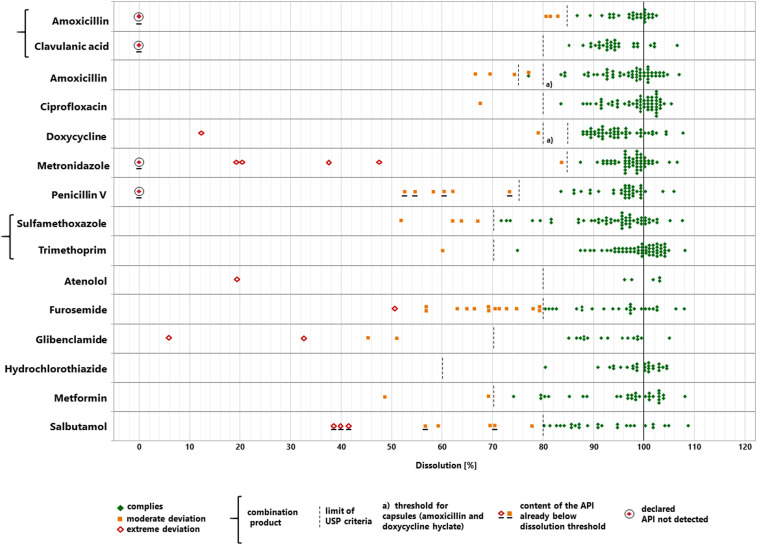
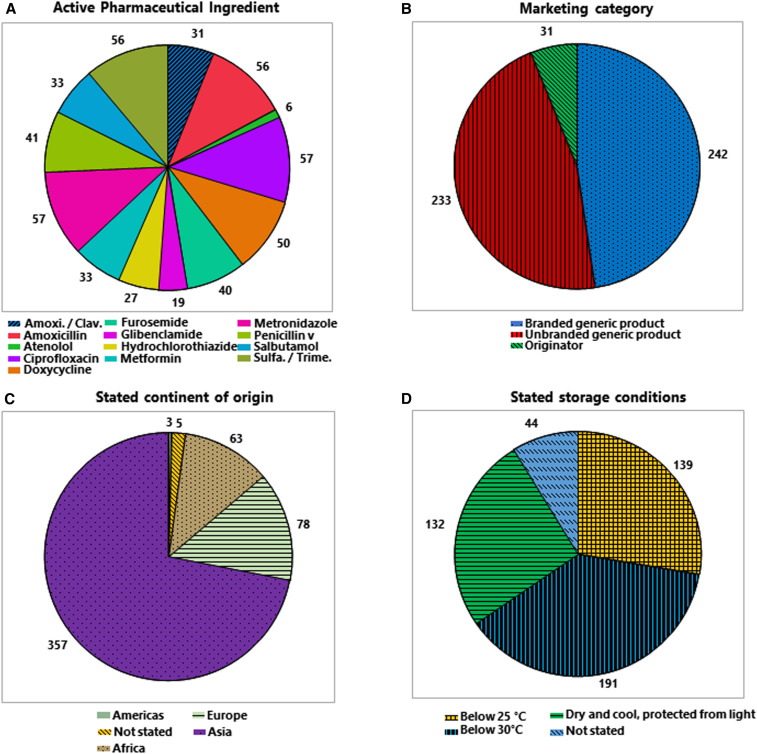
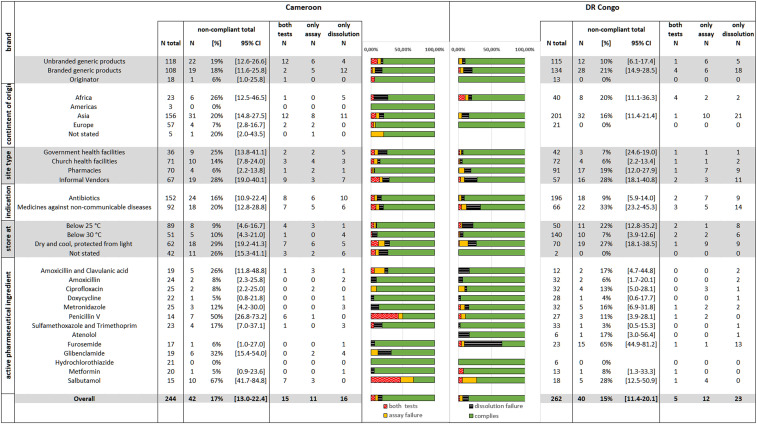
Falsified and substandard medicines may undermine the progress toward the Sustainable Development Goals. The present study investigated the quality of 13 essential medicines in Cameroon and the Democratic Republic of Congo (DR Congo). Five hundred six medicine samples were collected from the government and faith-based health facilities, private pharmacies, and informal vendors (total 60 facilities). Collected samples were analyzed according to the U.S. Pharmacopeia (USP) for identity, content, and dissolution of their active pharmaceutical ingredients (APIs) and for uniformity of dosage units. Three samples (0.6%) were identified as falsified. Overall, 8.5% of the samples failed USP specifications for the content of the API and 11.7% failed dissolution testing. Medicines from informal vendors showed a higher out-of-specification rate (28.2%) than other types of drug outlets (12.3%; < 0.0001). All three falsified medicines had been sold by informal vendors. The failure rate of medicines stated to be produced in Europe (5.1%) was lower than that for medicines from Asia (17.7%; = 0.0049) and Africa (22.2%; = 0.0042). Medicines against noncommunicable diseases showed a higher failure rate than antibiotics (25.3% versus 12.1%; = 0.0004). Four hundred fifty-one of the samples were analyzed in Cameroon and the DR Congo with the Global Pharma Health Fund Minilab (thin-layer chromatography and disintegration testing). The three falsified medicines were readily detected in Minilab analysis. However, substandard samples were detected with low sensitivity. A well-enforced ban of medicine sales by informal vendors and increased attention to supplier qualification in the procurement process may reduce the prevalence of substandard and falsified medicines.
假冒伪劣药品可能会破坏可持续发展目标的进展。本研究调查了喀麦隆和刚果民主共和国(DR Congo)的 13 种基本药物的质量。从政府和宗教医疗机构、私人药店和非正规供应商(共 60 个设施)收集了 506 个药物样本。收集的样本根据美国药典(USP)进行了分析,以确定其活性药物成分(API)的身份、含量和溶解情况,以及剂量单位的均匀性。有 3 个样本(0.6%)被鉴定为假冒产品。总体而言,有 8.5%的样本不符合 USP 关于 API 含量的规定,11.7%的样本不符合溶解测试。来自非正规供应商的药品不符合规定的比例(28.2%)高于其他类型的药品销售点(12.3%;<0.0001)。所有三种假冒药品均由非正规供应商销售。声称在欧洲生产的药品的失效率(5.1%)低于亚洲(17.7%;=0.0049)和非洲(22.2%;=0.0042)生产的药品。治疗非传染性疾病的药品的失效率高于抗生素(25.3%对 12.1%;=0.0004)。451 个样本在喀麦隆和刚果民主共和国用全球制药健康基金 MiniLab(薄层色谱法和崩解试验)进行了分析。三种假冒药品在 MiniLab 分析中很容易被检测到。然而,不合格的样品检测灵敏度较低。严格禁止非正规供应商销售药品,并在采购过程中更加关注供应商的资质,可能会降低不合格和假冒药品的流行率。