Maqsoudlou Atefe, Sadeghi Mahoonak Alireza, Mohebodini Hossein, Koushki Vahid
Department of Food Science and Technology, Gorgan University of Agricultural Sciences and Natural Resources, Gorgan, Iran.
Department of Animal Science, University of Mohaghegh Ardabili, Ardabil, Iran.
Heliyon. 2020 May 3;6(5):e03731. doi: 10.1016/j.heliyon.2020.e03731. eCollection 2020 May.
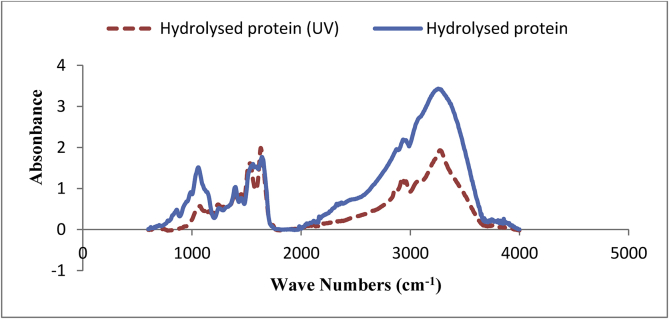
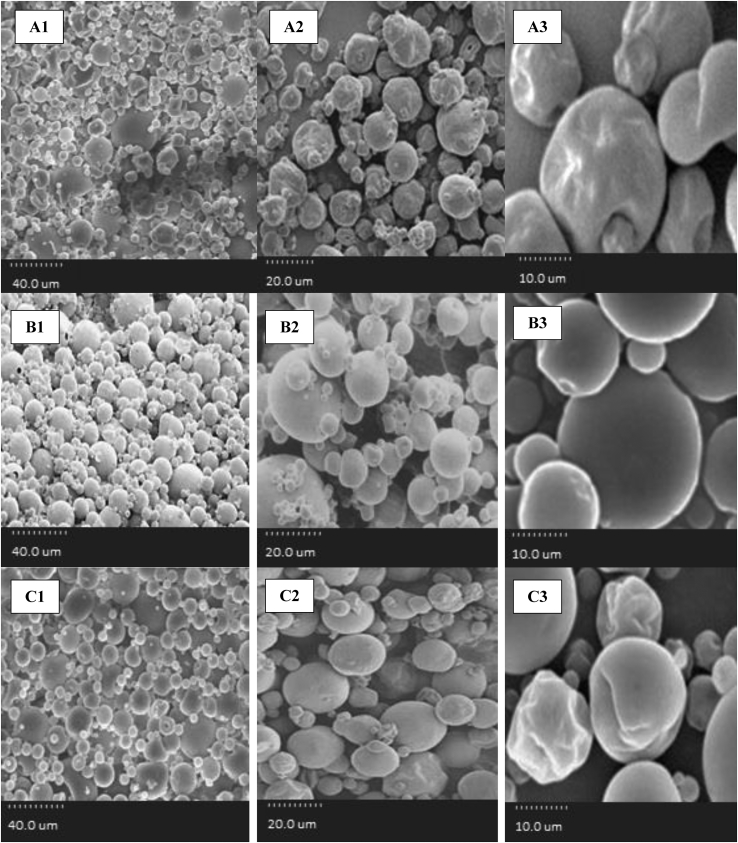
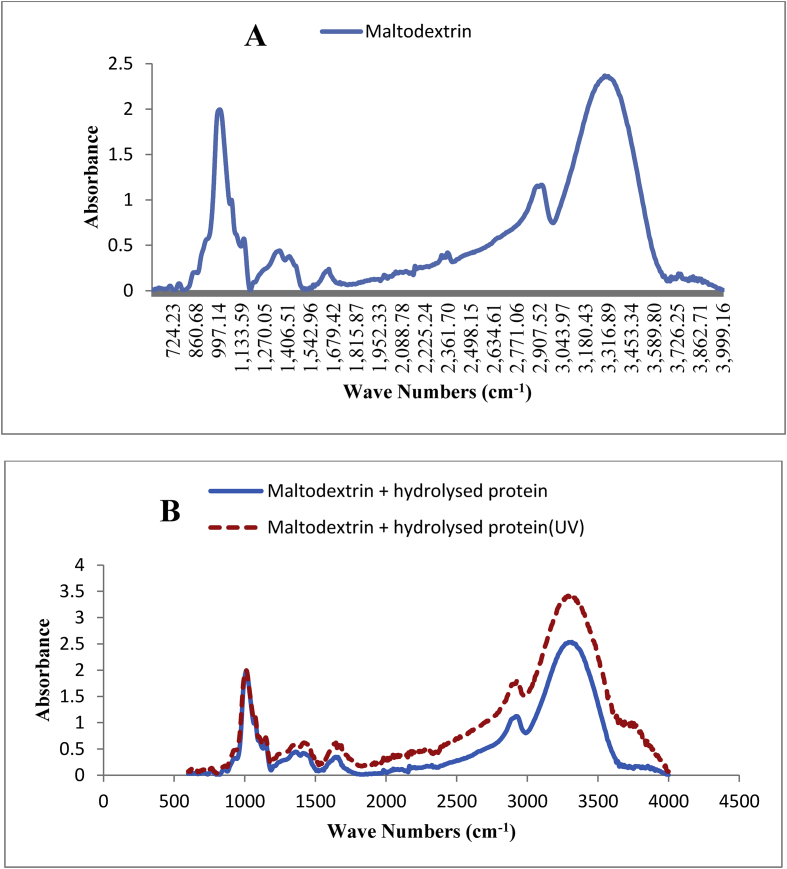
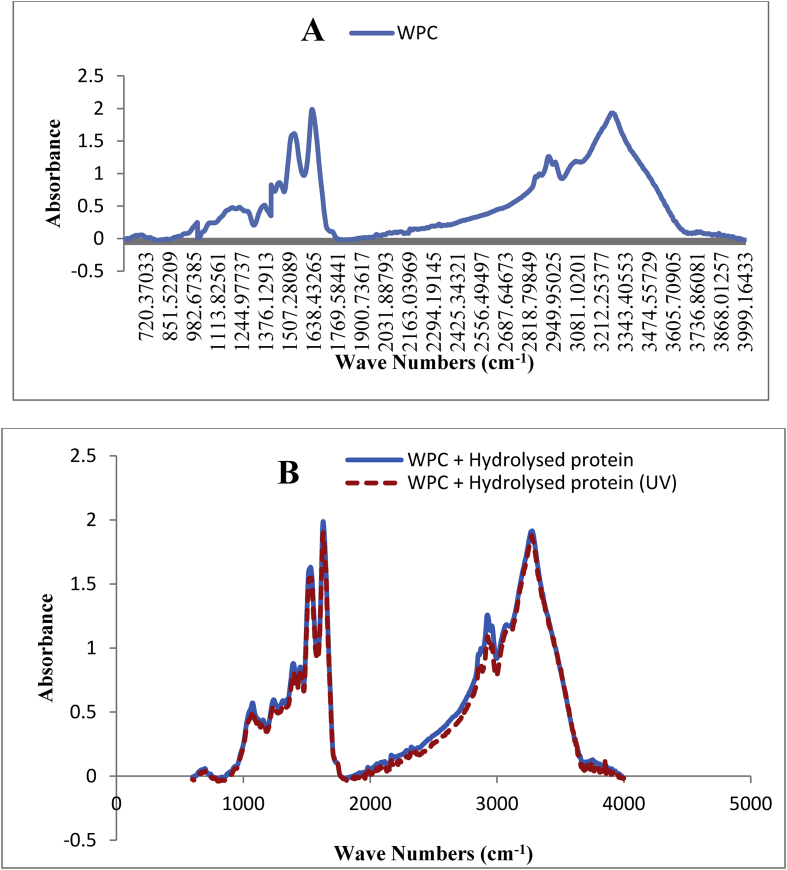
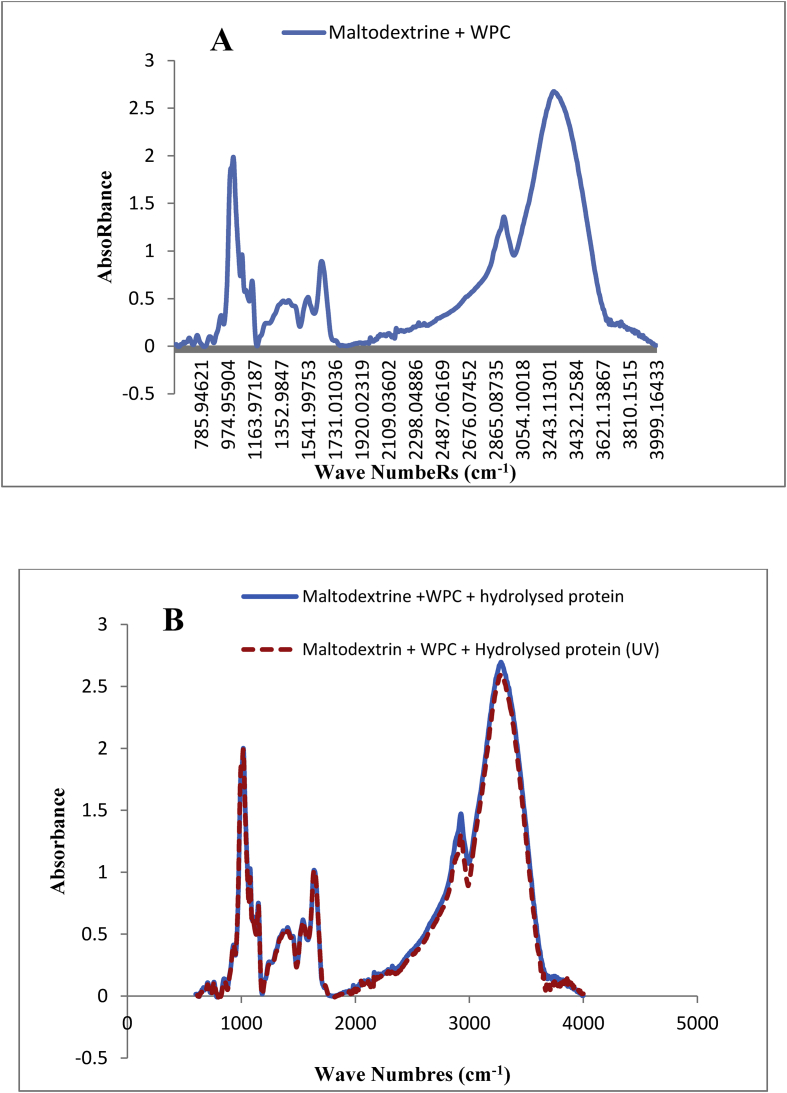
In this research, the bee pollen protein hydrolysate was microencapsulated by spray drying using maltodextrin (MD), whey protein concentrate (WPC) and a mixture of both compounds. For this purpose, the bee pollen was hydrolysed by alcalase (enzyme concentration of 1.5%) at 50 °C and pH 8 during 3.95 h, and then freeze-dried. The hydrolysed protein and wall materials were used in ratio of 1:10 (w/w). The wall materials included maltodextrin 2%, WPC 2%, as well as maltodextrin and WPC mixtures with 3:1 ratio. The resulting capsules were exposed to UV radiation for 48 h to accelerate the oxidation. The results showed that the capsule prepared using maltodextrin and WPC mixture showed the highest DPPH radical scavenging during exposure to UV radiation. Based on the FTIR spectroscopy results, the wall containing maltodextrin and WPC mixture showed the best performance in maintaining the chemical structure of hydrolysed protein. The SEM results indicated that the microcapsules prepared with WPC and maltodextrin mixture as wall material showed uniform and smoother wall than those prepared with maltodextrin alone. Finally, it was found that the maltodextrin and WPC mixture was the best wall with an appropriate protective capability for the microencapsulation of hydrolysed proteins and their protection against UV radiation.
在本研究中,采用麦芽糊精(MD)、乳清蛋白浓缩物(WPC)以及这两种化合物的混合物通过喷雾干燥法对蜂花粉蛋白水解物进行微胶囊化。为此,在50℃和pH 8条件下,用碱性蛋白酶(酶浓度为1.5%)对蜂花粉进行3.95小时的水解,然后进行冷冻干燥。水解后的蛋白质与壁材的使用比例为1:10(w/w)。壁材包括2%的麦芽糊精、2%的WPC以及比例为3:1的麦芽糊精与WPC的混合物。将所得胶囊暴露于紫外线辐射48小时以加速氧化。结果表明,使用麦芽糊精与WPC混合物制备的胶囊在紫外线辐射期间表现出最高的DPPH自由基清除能力。基于傅里叶变换红外光谱(FTIR)结果,含有麦芽糊精与WPC混合物的壁材在维持水解蛋白化学结构方面表现最佳。扫描电子显微镜(SEM)结果表明,以WPC与麦芽糊精混合物作为壁材制备的微胶囊比单独用麦芽糊精制备的微胶囊具有更均匀、更光滑的壁材。最后发现,麦芽糊精与WPC混合物是用于水解蛋白微胶囊化及其抗紫外线辐射保护的具有适当保护能力的最佳壁材。