Ghosh Saptarshi, Sela Noa, Kontsedalov Svetlana, Lebedev Galina, Haines Lee R, Ghanim Murad
Department of Entomology, Institute of Plant Protection,Volcani center, ARO, HaMaccabim Road 68, PO Box 15159, Rishon LeZion 7528809, Israel.
Department of Plant Pathology and Weed Research, Institute of Plant Protection,Volcani center, ARO, HaMaccabim Road 68, PO Box 15159, Rishon LeZion 7528809, Israel.
Microorganisms. 2020 May 8;8(5):692. doi: 10.3390/microorganisms8050692.
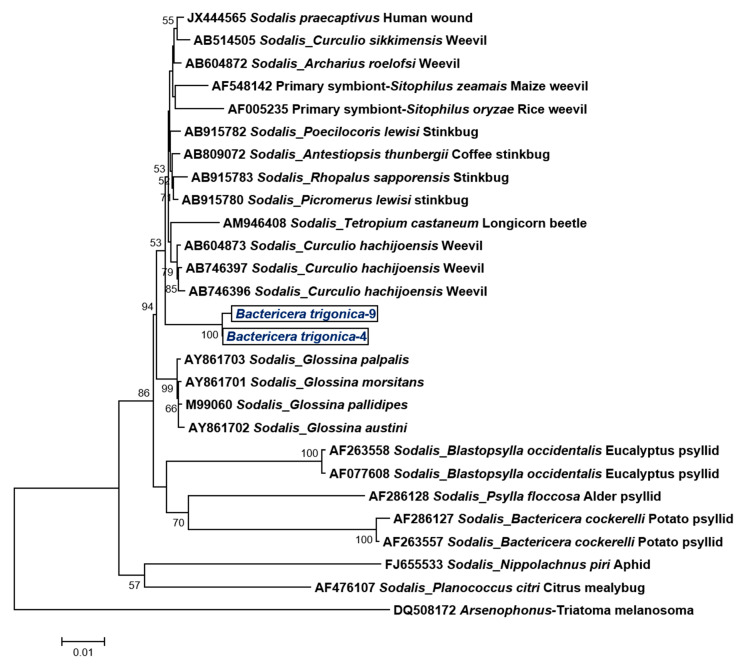
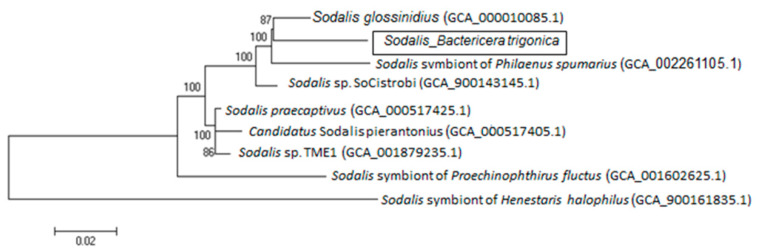
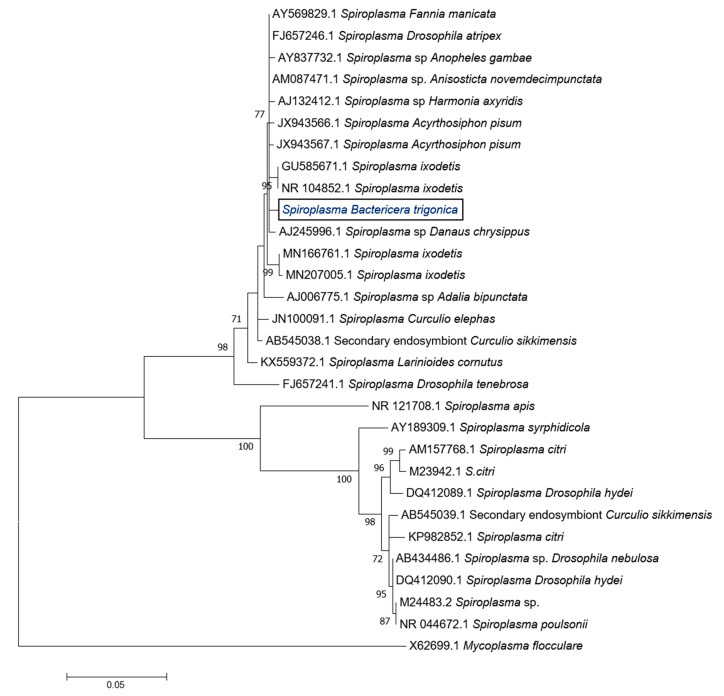
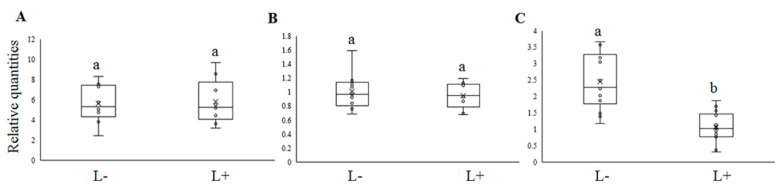
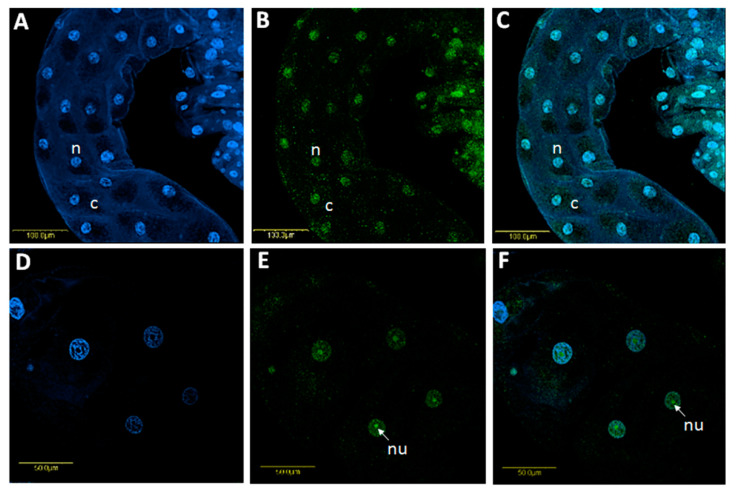
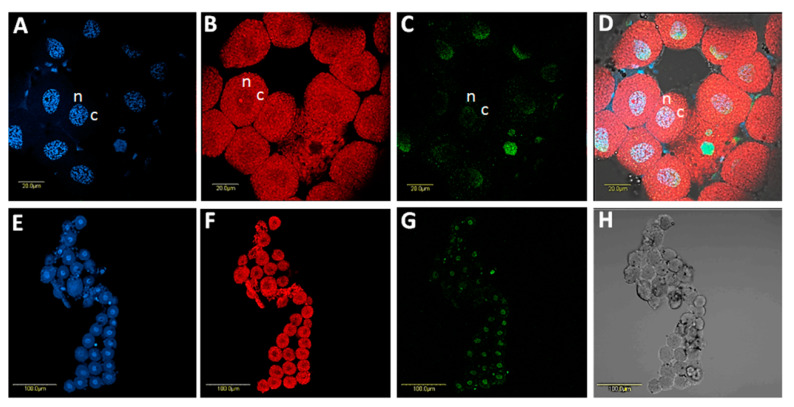
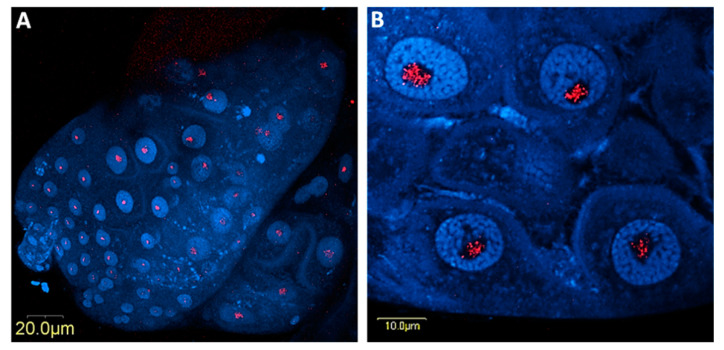
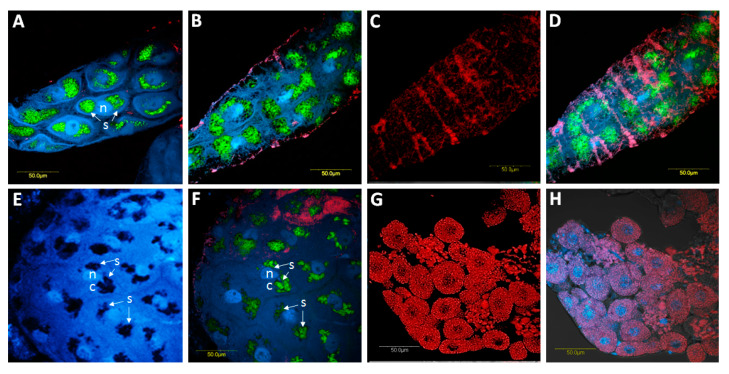
Endosymbionts harbored inside insects play critical roles in the biology of their insect host and can influence the transmission of pathogens by insect vectors. infests umbelliferous plants and transmits the bacterial plant pathogen Liberibacter solanacearum (CLso), causing carrot yellows disease. To characterize the bacterial diversity of , as a first step, we used PCR-restriction fragment length polymorphism (PCR-RFLP) and denaturing gradient gel electrophoresis (DGGE) analyses of 16S rDNA to identify and endosymbionts. The prevalence of both symbionts in field-collected psyllid populations was determined: was detected in 100% of field populations, while was present in 82.5% of individuals. Phylogenetic analysis using 16S rDNA revealed that infecting was more closely related to symbionts infecting weevils, stink bugs and tsetse flies than to those from psyllid species. Using fluorescent in situ hybridization and immunostaining, was found to be localized inside the nuclei of the midgut cells and bacteriocytes. was restricted to the cytoplasm of the midgut cells. We further show that a recently reported densovirus (BtDNV), a densovirus infecting was detected in 100% of psyllids and has reduced titers inside CLso-infected psyllids by more than two-fold compared to CLso uninfected psyllids. The findings of this study will help to increase our understanding of psyllid-endosymbiont interactions.
昆虫体内携带的内共生菌在其昆虫宿主的生物学特性中发挥着关键作用,并可能影响昆虫媒介传播病原体。 侵染伞形科植物并传播细菌性植物病原体茄科韧皮杆菌(CLso),导致胡萝卜黄化病。作为第一步,为了表征 的细菌多样性,我们使用16S rDNA的PCR-限制性片段长度多态性(PCR-RFLP)和变性梯度凝胶电泳(DGGE)分析来鉴定 和 内共生菌。测定了这两种共生菌在田间采集的木虱种群中的流行率:在100%的田间种群中检测到 ,而在82.5%的个体中存在 。使用16S rDNA进行的系统发育分析表明,感染 的 与感染象鼻虫、椿象和采采蝇的共生菌比与木虱物种的共生菌关系更密切。使用荧光原位杂交和免疫染色,发现 定位于中肠细胞和细菌细胞的细胞核内。 局限于中肠细胞的细胞质中。我们进一步表明,最近报道的一种浓核病毒(BtDNV),一种感染 的浓核病毒,在100%的木虱中被检测到,并且与未感染CLso的木虱相比,在感染CLso的木虱体内的滴度降低了两倍多。这项研究的结果将有助于增进我们对木虱-内共生菌相互作用的理解。