Farida Eko, Nuraida Lilis, Giriwono Puspo E, Jenie Betty S L
Department of Food Science and Technology, IPB University (Bogor Agricultural University), IPB Dramaga Campus, Bogor 16680, Indonesia.
Department of Nutrition, Faculty of Sport Science, Universitas Negeri Semarang, Sekaran Campus, Gunungpati, Semarang 50229, Indonesia.
Int J Food Sci. 2020 Jan 13;2020:6108575. doi: 10.1155/2020/6108575. eCollection 2020.
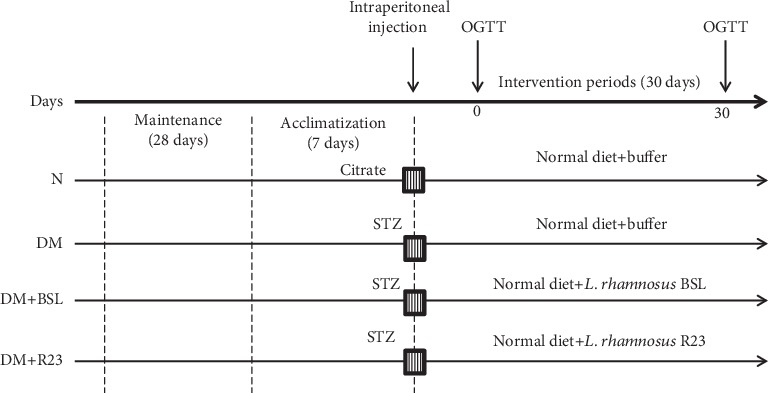
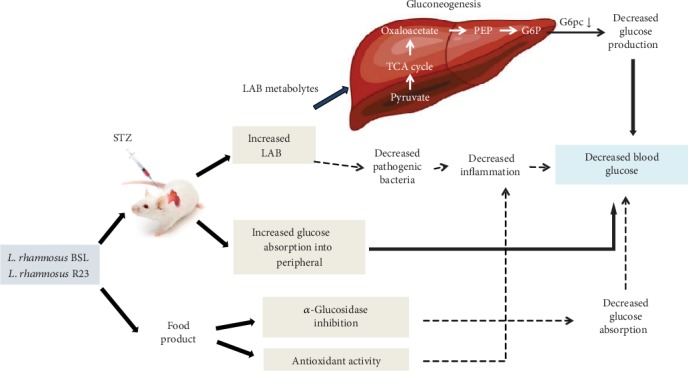
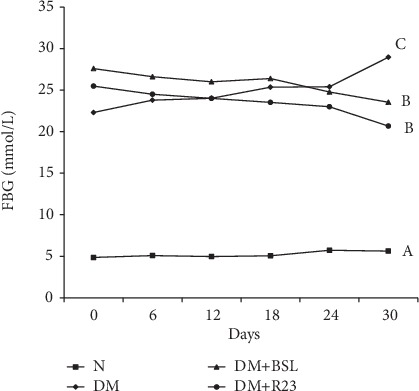
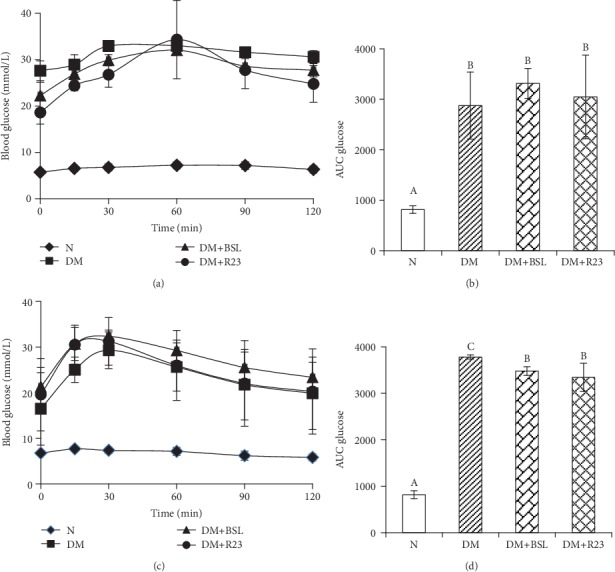
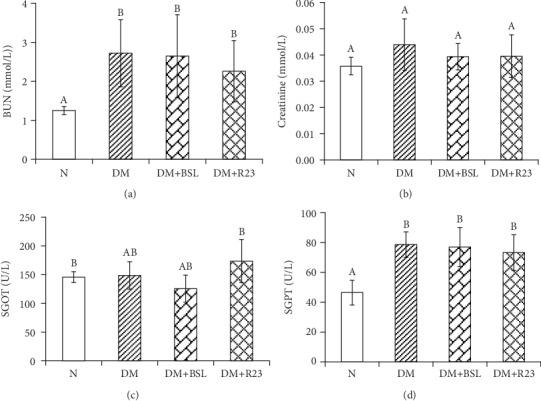
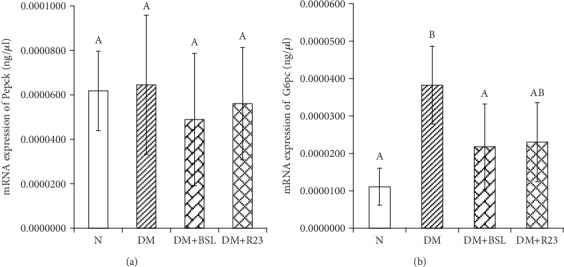
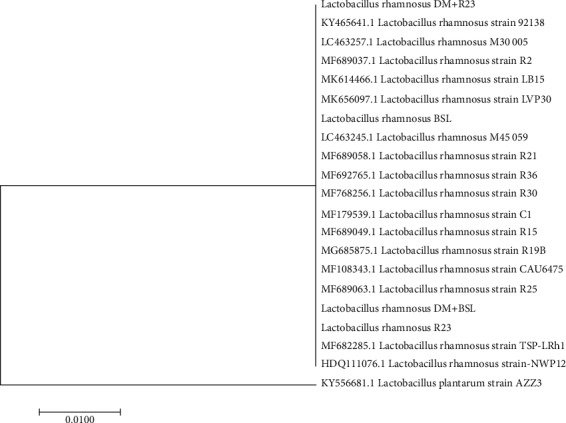
Some lactic acid bacteria (LAB) are observed to be potential probiotics with functional properties such as lowering fasting blood glucose (FBG), as a promising hyperglycemia management. This study investigated the ability and mechanism of BSL and R23 on lowering FBG in diabetic rats induced by streptozotocin (STZ). The rats were orally administered with BSL and R23 by giving 1 mL cell suspension (10 CFU/mL) daily for 30 days. The body weight (BW) was recorded once in three days, and FBG was recorded once in six days. An oral glucose tolerance test (OGTT) was measured 1 week after injection with STZ and before sacrifice. Fecal samples were collected on days 0, 15, and 30 for LAB population and identification, performed by PCR detecting 16S rRNA. Oral administration of BSL and R23 decreased FBG and improved glucose tolerance via downregulation of glucose-6-phosphatase (G6pc) expression by 0.57- and 0.60-fold change, respectively ( < 0.05). The lipid profiles, BUN, creatinine, SGOT, and SGPT were significantly ( < 0.05) different between normal and diabetic rats, but they were not significantly ( > 0.05) different among diabetic rats. Both strains were effective in increasing fecal LAB population. Molecular identification of the isolated LAB from fecal sample indicated that they were able to survive and pass through the digestive tract. These results suggested that both strains have the ability to manage blood glucose level and become a promising agent to manage hyperglycemia and diabetes.
一些乳酸菌(LAB)被观察到是具有降低空腹血糖(FBG)等功能特性的潜在益生菌,是一种有前景的高血糖管理方法。本研究调查了BSL和R23降低链脲佐菌素(STZ)诱导的糖尿病大鼠FBG的能力和机制。大鼠每天口服1 mL细胞悬液(10 CFU/mL)的BSL和R23,持续30天。每三天记录一次体重(BW),每六天记录一次FBG。在注射STZ后1周和处死前测量口服葡萄糖耐量试验(OGTT)。在第0、15和30天收集粪便样本进行LAB数量测定和鉴定,通过PCR检测16S rRNA进行。口服BSL和R23分别通过下调葡萄糖-6-磷酸酶(G6pc)表达0.57倍和0.60倍来降低FBG并改善葡萄糖耐量(<0.05)。正常大鼠和糖尿病大鼠之间的血脂谱、血尿素氮、肌酐、谷草转氨酶和谷丙转氨酶有显著差异(<0.05),但糖尿病大鼠之间无显著差异(>0.05)。两种菌株均能有效增加粪便LAB数量。对粪便样本中分离出的LAB进行分子鉴定表明它们能够在消化道内存活并通过。这些结果表明两种菌株都有能力控制血糖水平,成为管理高血糖和糖尿病的有前景的药物。