Department of Radiology and Nuclear Medicine, Amsterdam University Medical Centers, Amsterdam Movement Sciences, Academic Medical Center, University of Amsterdam, Meibergdreef 9, 1105 AZ, Amsterdam, The Netherlands.
Department of Radiology and Medical Imaging, Ghent University Hospital, Ghent, Belgium.
Eur Radiol. 2020 Oct;30(10):5237-5249. doi: 10.1007/s00330-020-06807-8. Epub 2020 May 12.
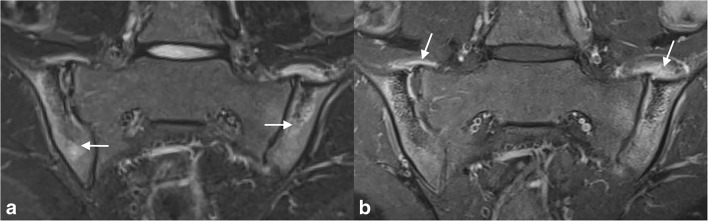
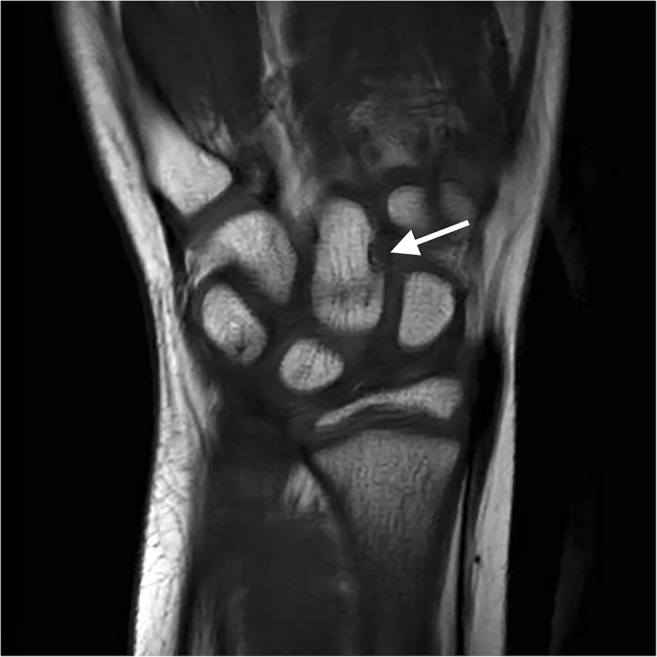
Juvenile idiopathic arthritis (JIA) is the most common paediatric rheumatic disease. It represents a group of heterogenous inflammatory disorders with unknown origin and is a diagnosis of exclusion in which imaging plays an important role. JIA is defined as arthritis of one or more joints that begins before the age of 16 years, persists for more than 6 weeks and is of unknown aetiology and pathophysiology. The clinical goal is early suppression of inflammation to prevent irreversible joint damage which has shifted the emphasis from detecting established joint damage to proactively detecting inflammatory change. This drives the need for imaging techniques that are more sensitive than conventional radiography in the evaluation of inflammatory processes as well as early osteochondral change. Physical examination has limited reliability, even if performed by an experienced clinician, emphasising the importance of imaging to aid in clinical decision-making. On behalf of the European Society of Musculoskeletal Radiology (ESSR) arthritis subcommittee and the European Society of Paediatric Radiology (ESPR) musculoskeletal imaging taskforce, based on literature review and/or expert opinion, we discuss paediatric-specific imaging characteristics of the most commonly involved, in literature best documented and clinically important joints in JIA, namely the temporomandibular joints (TMJs), spine, sacroiliac (SI) joints, wrists, hips and knees, followed by a clinically applicable point to consider for each joint. We will also touch upon controversies in the current literature that remain to be resolved with ongoing research. KEY POINTS: • Juvenile idiopathic arthritis (JIA) is the most common chronic paediatric rheumatic disease and, in JIA imaging, is increasingly important to aid in clinical decision-making. • Conventional radiographs have a lower sensitivity and specificity for detection of disease activity and early destructive change, as compared to MRI or ultrasound. Nonetheless, radiography remains important, particularly in narrowing the differential diagnosis and evaluating growth disturbances. • Mainly in peripheral joints, ultrasound can be helpful for assessment of inflammation and guiding joint injections. In JIA, MRI is the most validated technique. MRI should be considered as the modality of choice to assess the axial skeleton or where the clinical presentation overlaps with JIA.
幼年特发性关节炎(JIA)是最常见的儿童风湿性疾病。它代表了一组异质性炎症性疾病,其病因不明,是一种排除性诊断,影像学在其中发挥着重要作用。JIA 定义为 16 岁以下出现的一个或多个关节的关节炎,持续 6 周以上,病因和发病机制不明。临床目标是早期抑制炎症,以防止不可逆的关节损伤,这已经将重点从发现已建立的关节损伤转移到主动发现炎症变化。这就需要影像学技术来检测炎症过程以及早期的软骨骨变化,其敏感性要高于传统的放射摄影。即使由经验丰富的临床医生进行体格检查,其可靠性也有限,这强调了影像学在辅助临床决策中的重要性。代表欧洲肌肉骨骼放射学会(ESSR)关节炎小组委员会和欧洲儿科放射学会(ESPR)肌肉骨骼成像工作组,根据文献回顾和/或专家意见,我们讨论了 JIA 中最常涉及的、文献记载最好的和临床上最重要的关节的儿科特定影像学特征,即颞下颌关节(TMJ)、脊柱、骶髂(SI)关节、手腕、臀部和膝盖,然后讨论每个关节的临床适用要点。我们还将触及目前文献中仍存在争议的问题,这些问题需要通过正在进行的研究来解决。 关键点: • 幼年特发性关节炎(JIA)是最常见的慢性儿童风湿性疾病,在 JIA 影像学中,越来越重要的是辅助临床决策。 • 与 MRI 或超声相比,常规 X 线摄影对疾病活动和早期破坏性变化的敏感性和特异性较低。尽管如此,X 线摄影仍然很重要,特别是在缩小鉴别诊断范围和评估生长障碍方面。 • 主要在周围关节中,超声可用于评估炎症并指导关节注射。在 JIA 中,MRI 是最有效的技术。在评估脊柱骨骼或临床表现与 JIA 重叠的情况下,应考虑将 MRI 作为首选技术。