Institute of Biodiversity, Animal Health and Comparative Medicine, College of Medical, Veterinary and Life Sciences, University of Glasgow, Glasgow, United Kingdom.
Wellcome Centre for Integrative Parasitology, College of Medical, Veterinary and Life Sciences, University of Glasgow, Glasgow, United Kingdom.
PLoS Negl Trop Dis. 2020 May 13;14(5):e0008266. doi: 10.1371/journal.pntd.0008266. eCollection 2020 May.
The World Health Organization identified Uganda as one of the 10 highly endemic countries for schistosomiasis. Annual mass drug administration (MDA) with praziquantel has led to a decline in intensity of Schistosoma mansoni infections in several areas. However, as hotspots with high (re)infection rates remain, additional research on risk factors and implementing interventions to complement MDA are required to further reduce disease burden in these settings. Through a mixed-methods study we aimed to gain deeper understanding of how gender may impact risk and reinfection in order to inform disease control programmes and ascertain if gender-specific interventions may be beneficial.
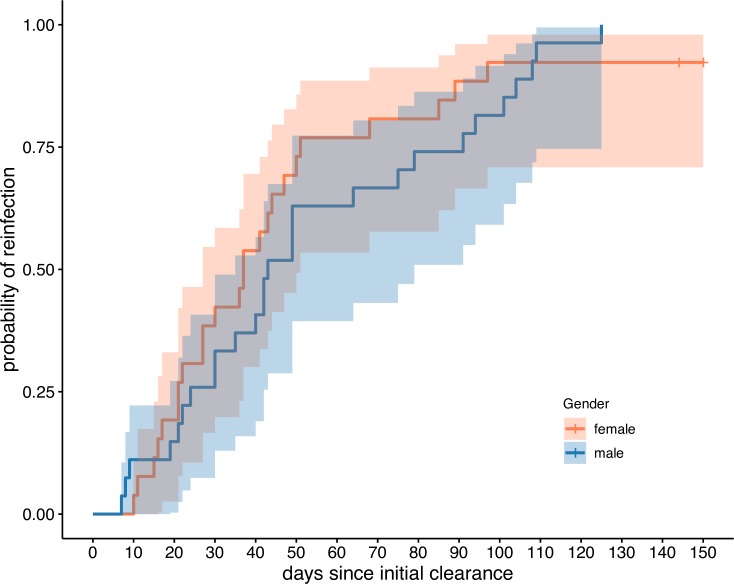
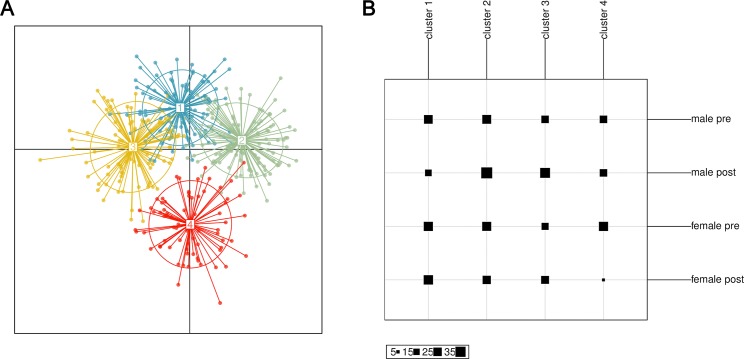
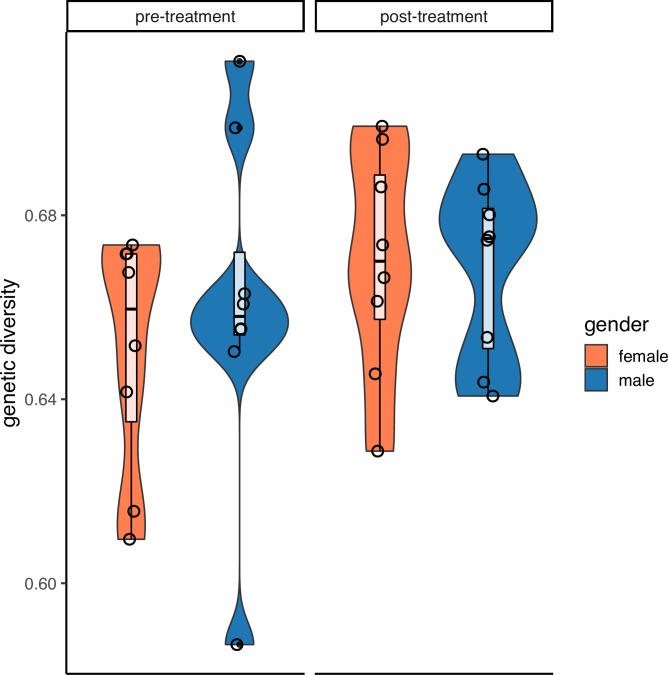
METHODOLOGY/PRINCIPAL FINDINGS: In Bugoto, Mayuge District, Eastern Uganda we conducted ethnographic observations (n = 16) and examined epidemiology (n = 55) and parasite population genetics (n = 16) in school-aged children (SAC), alongside a community-wide household survey (n = 130). Water contact was frequent at home, school and in the community and was of domestic, personal care, recreational, religious or commercial nature. Qualitative analysis of type of activity, duration, frequency, level of submersion and water contact sites in children showed only few behavioural differences in water contact between genders. However, survey data revealed that adult women carried out the vast majority of household tasks involving water contact. Reinfection rates (96% overall) and genetic diversity were high in boys (pre-He = 0.66; post-He = 0.67) and girls (pre-He = 0.65; post-He = 0.67), but no differences in reinfection rates (p = 0.62) or genetic diversity by gender before (p = 0.54) or after (p = 0.97) treatment were found.
CONCLUSIONS/SIGNIFICANCE: This mixed methods approach showed complementary findings. Frequent water exposure with few differences between boys and girls was mirrored by high reinfection rates and genetic diversity in both genders. Disease control programmes should consider the high reinfection rates among SAC in remaining hotspots of schistosomiasis and the various purposes and settings in which children and adults are exposed to water.
世界卫生组织将乌干达列为 10 个血吸虫病高度流行国家之一。在几个地区,每年一次的吡喹酮集体药物治疗(MDA)已导致曼氏血吸虫感染强度下降。然而,由于高(再)感染率的热点仍然存在,需要对风险因素进行额外研究,并实施干预措施来补充 MDA,以进一步减轻这些环境中的疾病负担。通过一项混合方法研究,我们旨在更深入地了解性别如何影响风险和再感染,以便为疾病控制规划提供信息,并确定是否可以开展针对特定性别的干预措施。
方法/主要发现:在乌干达东部马尤盖区的布戈托,我们对学龄儿童(SAC)进行了民族志观察(n = 16)和流行病学检查(n = 55)以及寄生虫种群遗传学研究(n = 16),同时还进行了一次社区范围的家庭调查(n = 130)。在家中、学校和社区中,经常接触水,其用途包括家庭、个人护理、娱乐、宗教或商业。对儿童的活动类型、持续时间、频率、浸没程度和水接触地点进行的定性分析表明,性别之间的水接触行为差异很小。然而,调查数据显示,成年女性承担了绝大多数涉及水接触的家务。男孩(治疗前 He = 0.66;治疗后 He = 0.67)和女孩(治疗前 He = 0.65;治疗后 He = 0.67)的再感染率(总体为 96%)和遗传多样性都很高,但在治疗前(p = 0.54)和治疗后(p = 0.97),性别之间的再感染率(p = 0.62)或遗传多样性无差异。
结论/意义:这种混合方法的研究结果互为补充。男孩和女孩之间很少有差异的频繁的水暴露与高再感染率和遗传多样性相吻合。疾病控制规划应考虑到在血吸虫病的剩余热点地区,SAC 的高再感染率,以及儿童和成人接触水的各种目的和环境。