Ivorra-Martinez Juan, Manuel-Mañogil Jose, Boronat Teodomiro, Sanchez-Nacher Lourdes, Balart Rafael, Quiles-Carrillo Luis
Technological Institute of Materials (ITM), Universitat Politècnica de València (UPV), Plaza Ferrándiz y Carbonell 1, 03801 Alcoy, Spain.
Polymers (Basel). 2020 May 11;12(5):1097. doi: 10.3390/polym12051097.
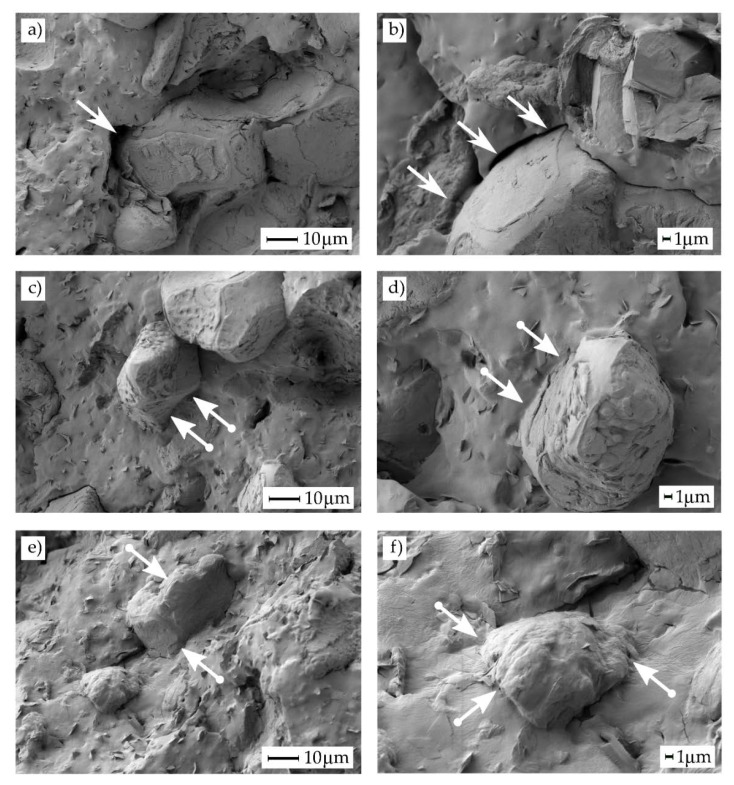
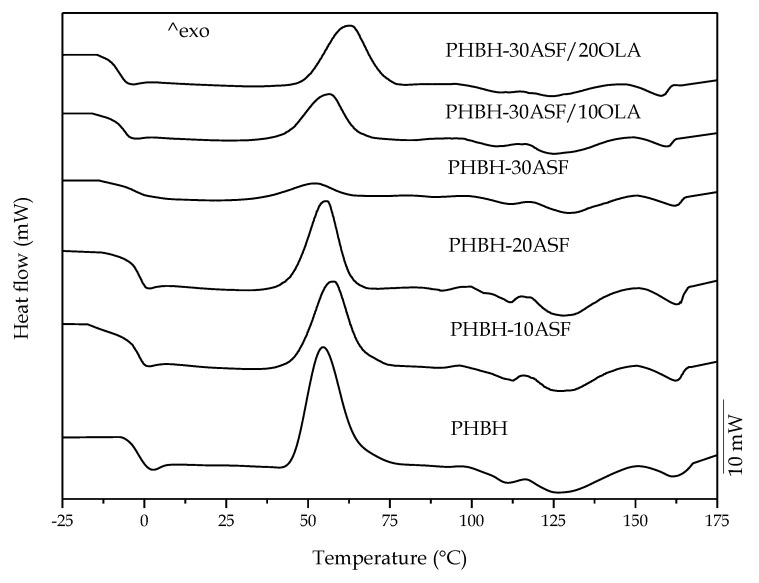
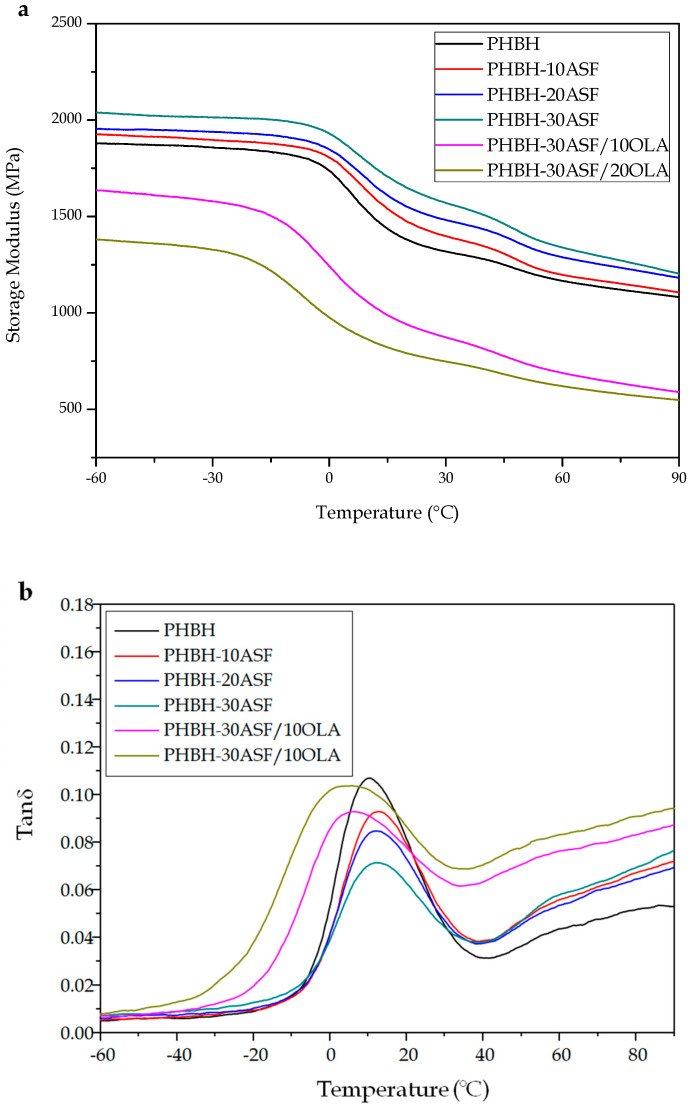
Eco-efficient Wood Plastic Composites (WPCs) have been obtained using poly(hydroxybutyrate-co-hexanoate) (PHBH) as the polymer matrix, and almond shell flour (ASF), a by-product from the agro-food industry, as filler/reinforcement. These WPCs were prepared with different amounts of lignocellulosic fillers (wt %), namely 10, 20 and 30. The mechanical characterization of these WPCs showed an important increase in their stiffness with increasing the wt % ASF content. In addition, lower tensile strength and impact strength were obtained. The field emission scanning electron microscopy (FESEM) study revealed the lack of continuity and poor adhesion among the PHBH-ASF interface. Even with the only addition of 10 wt % ASF, these green composites become highly brittle. Nevertheless, for real applications, the WPC with 30 wt % ASF is the most attracting material since it contributes to lowering the overall cost of the WPC and can be manufactured by injection moulding, but its properties are really compromised due to the lack of compatibility between the hydrophobic PHBH matrix and the hydrophilic lignocellulosic filler. To minimize this phenomenon, 10 and 20 (weight parts of OLA-Oligomeric Lactic Acid per one hundred weight parts of PHBH) were added to PHBH/ASF (30 wt % ASF) composites. Differential scanning calorimetry (DSC) suggested poor plasticization effect of OLA on PHBH-ASF composites. Nevertheless, the most important property OLA can provide to PHBH/ASF composites is somewhat compatibilization since some mechanical ductile properties are improved with OLA addition. The study by thermomechanical analysis (TMA), confirmed the increase of the coefficient of linear thermal expansion (CLTE) with increasing OLA content. The dynamic mechanical characterization (DTMA), revealed higher storage modulus, E', with increasing ASF. Moreover, DTMA results confirmed poor plasticization of OLA on PHBH-ASF (30 wt % ASF) composites, but interesting compatibilization effects.
采用聚(3-羟基丁酸酯-co-3-羟基己酸酯)(PHBH)作为聚合物基体,以及农业食品工业的副产品杏仁壳粉(ASF)作为填料/增强剂,制备了具有生态效率的木塑复合材料(WPC)。这些WPC采用了不同含量(重量百分比)的木质纤维素填料,即10%、20%和30%。这些WPC的力学性能表征表明,随着ASF含量(重量百分比)的增加,其刚度显著提高。此外,还获得了较低的拉伸强度和冲击强度。场发射扫描电子显微镜(FESEM)研究表明,PHBH-ASF界面之间缺乏连续性且粘附性较差。即使仅添加10%(重量)的ASF,这些绿色复合材料也会变得非常脆。然而,对于实际应用而言,含30%(重量)ASF的WPC是最具吸引力的材料,因为它有助于降低WPC的总体成本,并且可以通过注塑成型制造,但其性能因疏水性PHBH基体与亲水性木质纤维素填料之间缺乏相容性而受到严重影响。为了尽量减少这种现象,向PHBH/ASF(30%(重量)ASF)复合材料中添加了10和20(每一百重量份PHBH中低聚乳酸(OLA)的重量份)。差示扫描量热法(DSC)表明OLA对PHBH-ASF复合材料的增塑效果不佳。然而,OLA能够为PHBH/ASF复合材料提供的最重要性能在某种程度上是增容作用,因为添加OLA后一些机械韧性性能得到了改善。热机械分析(TMA)研究证实,随着OLA含量的增加,线性热膨胀系数(CLTE)增大。动态力学性能表征(DTMA)表明,随着ASF含量的增加,储能模量E'升高。此外,DTMA结果证实OLA对PHBH-ASF(30%(重量)ASF)复合材料的增塑效果不佳,但具有有趣的增容作用。