Graduate Doctoral Degree Program in Parasitology, Faculty of Medicine, Chiang Mai University, Chiang Mai, Thailand.
Office of Disease Prevention and Control, 1st Department of Disease Control, Ministry of Public Health, Chiang Mai, Thailand.
Parasit Vectors. 2020 May 13;13(1):250. doi: 10.1186/s13071-020-04115-0.
Strongyloidiasis is a soil borne helminthiasis, which in most cases is caused by Strongyloides stercoralis. Human infections with S. fuelleborni fuelleborni and S. fuelleborni kellyi also occur. Although up to 370 million people are currently estimated to be infected with S. stercoralis, this parasite is frequently overlooked. Strongyloides stercoralis is prevalent among humans in Thailand; however, S. fuelleborni fuelleborni has also been reported. Three recent genomic studies of individual S. stercoralis worms found genetically diverse populations of S. stercoralis, with comparably low heterozygosity in Cambodia and Myanmar, and less diverse populations with high heterozygosity in Japan and southern China that presumably reproduce asexually.
We isolated individual Strongyloides spp. from different localities in northern and western Thailand and determined their nuclear small ribosomal subunit rDNA (18S rDNA, SSU), in particular the hypervariable regions I and IV (HVR-I and HVR-IV), mitochondrial cytochrome c oxidase subunit 1 (cox1) and for a subset whole genome sequences. These sequences were then compared with each other and with published sequences from different geographical locations.
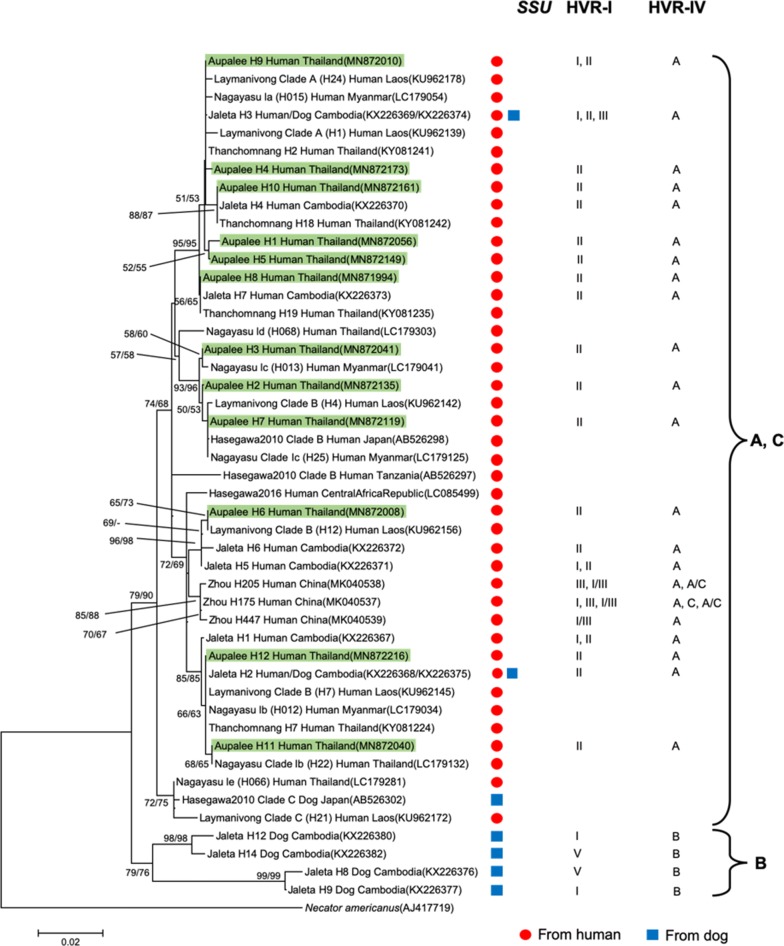
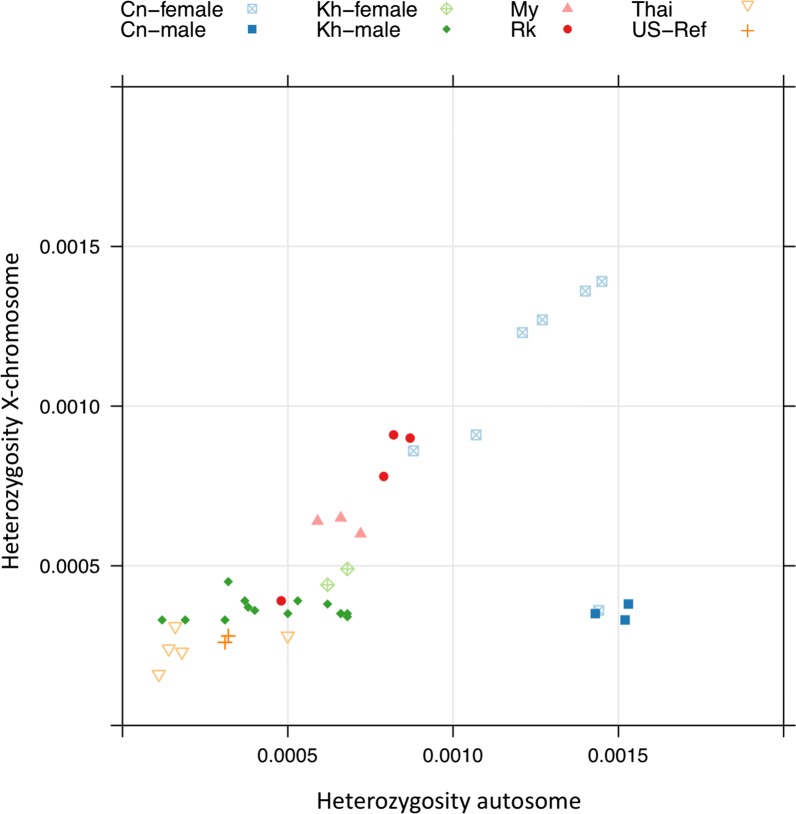
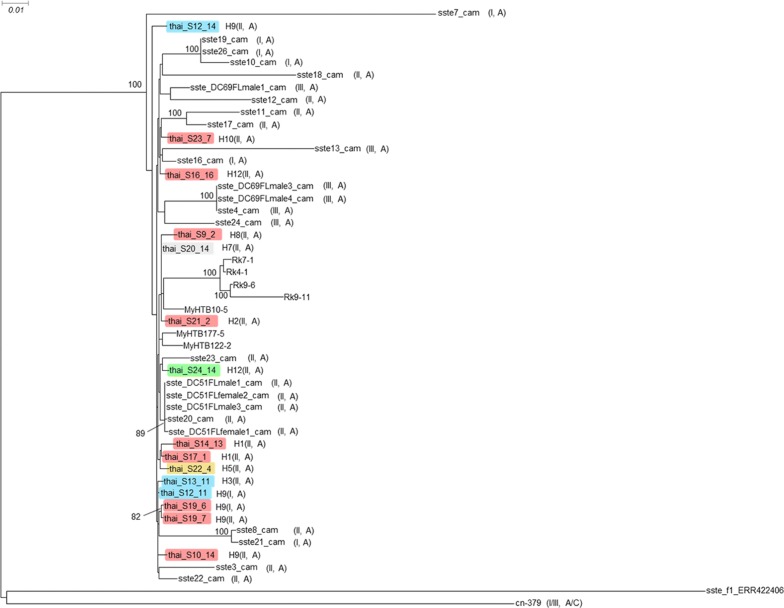
All 237 worms isolated from 16 different human hosts were S. stercoralis, no S. fuelleborni was found. All worms had the common S. stercoralis SSU HVR IV haplotype A. Two different SSU HVR I haplotypes (I and II), both previously described in S. stercoralis, were found. No animal heterozygous for the two haplotypes was identified. Among the twelve cox1 haplotypes found, five had not been previously described. Based upon the mitochondrial cox1 and the nuclear whole genome sequences, S. stercoralis in Thailand was phylogenetically intermixed with the samples from other Southeast Asian countries and did not form its own branch. The genomic heterozygosity was even slightly lower than in the samples from the neighboring countries.
In our sample from humans, all Strongyloides spp. were S. stercoralis. The S. stercoralis from northern and western Thailand appear to be part of a diverse, intermixing continental Southeast Asian population. No obvious indication for genetic sub-structuring of S. stercoralis within Thailand or within the Southeast Asian peninsula was detected.
旋毛虫病是一种土壤传播的寄生虫病,大多数情况下是由旋毛虫引起的。人类也会感染 S. fuelleborni fuelleborni 和 S. fuelleborni kellyi。尽管目前估计有多达 3.7 亿人感染了 S. stercoralis,但这种寄生虫经常被忽视。旋毛虫在泰国的人类中很常见;然而,也有报道称 S. fuelleborni fuelleborni 存在。最近对个体旋毛虫蠕虫的三项基因组研究发现,旋毛虫种群具有遗传多样性,柬埔寨和缅甸的杂合度相对较低,而日本和中国南方的种群则具有较高的多样性和杂合度,这些种群可能是通过无性繁殖产生的。
我们从泰国北部和西部的不同地区分离出个体旋毛虫,并确定了它们的核小核糖体亚单位 rDNA(18S rDNA,SSU),特别是高度可变区 I 和 IV(HVR-I 和 HVR-IV)、线粒体细胞色素 c 氧化酶亚单位 1(cox1),并对一部分全基因组序列进行了分析。然后将这些序列相互比较,并与来自不同地理位置的已发表序列进行比较。
从 16 名不同人类宿主中分离出的 237 条蠕虫均为旋毛虫,未发现 S. fuelleborni。所有蠕虫都具有常见的旋毛虫 SSU HVR IV 单倍型 A。发现了两种不同的 SSU HVR I 单倍型(I 和 II),这两种单倍型以前都在旋毛虫中描述过。没有发现两种单倍型杂合的动物。在所发现的 12 个 cox1 单倍型中,有 5 个以前没有描述过。基于线粒体 cox1 和核全基因组序列,泰国的旋毛虫与来自其他东南亚国家的样本混合在一起,没有形成自己的分支。基因组的杂合度甚至略低于邻国的样本。
在我们从人类中分离的样本中,所有的旋毛虫都是旋毛虫。来自泰国北部和西部的旋毛虫似乎是多样化的、相互混合的大陆东南亚种群的一部分。没有明显迹象表明泰国或东南亚半岛的旋毛虫存在遗传亚结构。