Environmental Health, Flinders University, Adelaide, Australia.
Division of Parasitic Diseases and Malaria, Centers for Disease Control and Prevention, Atlanta, United States of America.
PLoS Negl Trop Dis. 2019 Aug 20;13(8):e0007241. doi: 10.1371/journal.pntd.0007241. eCollection 2019 Aug.
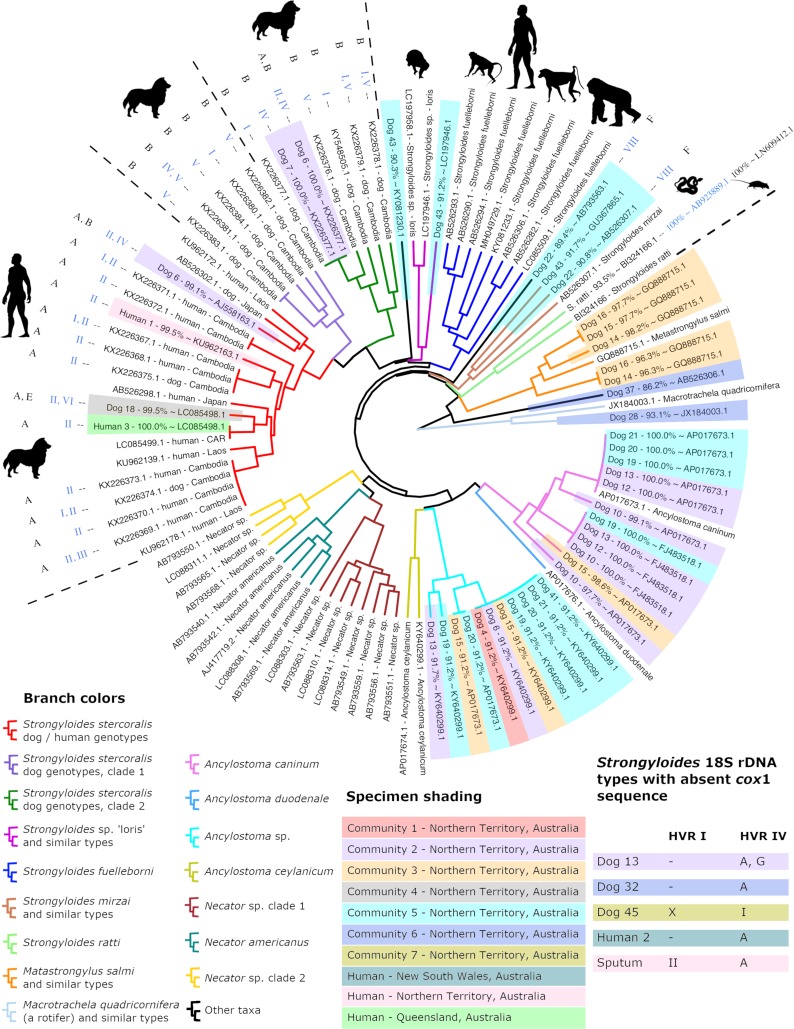
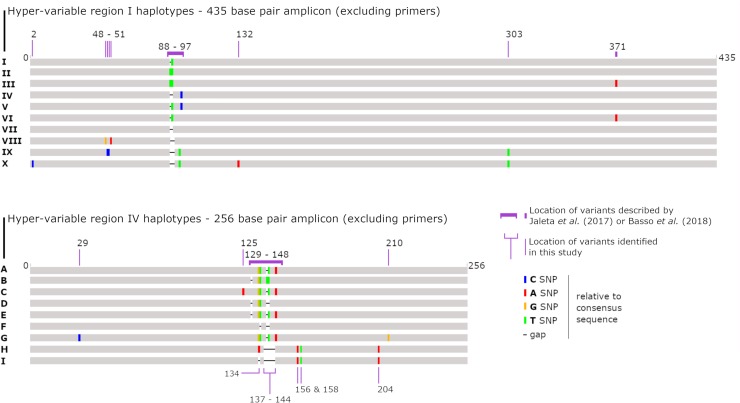
Strongyloidiasis is caused by the human infective nematodes Strongyloides stercoralis, Strongyloides fuelleborni subsp. fuelleborni and Strongyloides fuelleborni subsp. kellyi. The zoonotic potential of S. stercoralis and the potential role of dogs in the maintenance of strongyloidiasis transmission has been a topic of interest and discussion for many years. In Australia, strongyloidiasis is prevalent in remote socioeconomically disadvantaged communities in the north of the continent. Being an isolated continent that has been separated from other regions for a long geological period, description of diversity of Australian Strongyloides genotypes adds to our understanding of the genetic diversity within the genus. Using PCR and amplicon sequencing (Illumina sequencing technology), we sequenced the Strongyloides SSU rDNA hyper-variable I and hyper-variable IV regions using Strongyloides-specific primers, and a fragment of the mtDNA cox1 gene using primers that are broadly specific for Strongyloides sp. and hookworms. These loci were amplified from DNA extracted from Australian human and dog faeces, and one human sputum sample. Using this approach, we confirm for the first time that potentially zoonotic S. stercoralis populations are present in Australia, suggesting that dogs represent a potential reservoir of human strongyloidiasis in remote Australian communities.
类圆线虫病由人类感染性线虫 Strongyloides stercoralis、Strongyloides fuelleborni subsp. fuelleborni 和 Strongyloides fuelleborni subsp. kellyi 引起。类圆线虫的动物源性以及狗在类圆线虫传播中的潜在作用多年来一直是人们关注和讨论的话题。在澳大利亚,北部偏远地区社会经济条件较差的社区流行类圆线虫病。由于澳大利亚是一个与其他地区长期隔绝的孤立大陆,描述澳大利亚类圆线虫基因型的多样性有助于我们了解该属的遗传多样性。本研究使用 PCR 和扩增子测序(Illumina 测序技术),使用类圆线虫特异性引物对 Strongyloides SSU rDNA 超变区 I 和超变区 IV 以及 mtDNA cox1 基因的一个片段进行测序,这些引物广泛用于鉴定类圆线虫属和钩虫。这些基因座从从澳大利亚人类和狗粪便以及一份人类痰样中提取的 DNA 中扩增出来。通过这种方法,我们首次证实澳大利亚存在具有潜在人畜共患性的 S. stercoralis 种群,表明狗可能是澳大利亚偏远社区人类类圆线虫病的潜在传染源。