Department of Molecular Microbiology, Washington University School of Medicine, St. Louis, MO, USA. Key Laboratory of Marine Drugs, Ministry of Education, Ocean University of China, Qingdao, China. Department of Medicine, Division of Infectious Diseases, Washington University School of Medicine, St. Louis, MO, USA. Program in Virology, Harvard Medical School, 200 Longwood Ave, Boston, MA, USA. Department of Medicine, Division of Gastroenterology, Washington School of Medicine, St. Louis, MO, USA. Department of Pathology, Stanford School of Medicine, Stanford, CA, USA. VA Palo Alto Health Care System, Department of Veterans Affairs, Palo Alto, CA, USA. Department of Medicine, Division of Gastroenterology and Hepatology, and Department of Microbiology and Immunology, Stanford School of Medicine, Stanford, CA, USA. Department of Pathology and Immunology, Washington University School of Medicine, St. Louis, MO, USA.
Sci Immunol. 2020 May 13;5(47). doi: 10.1126/sciimmunol.abc3582.
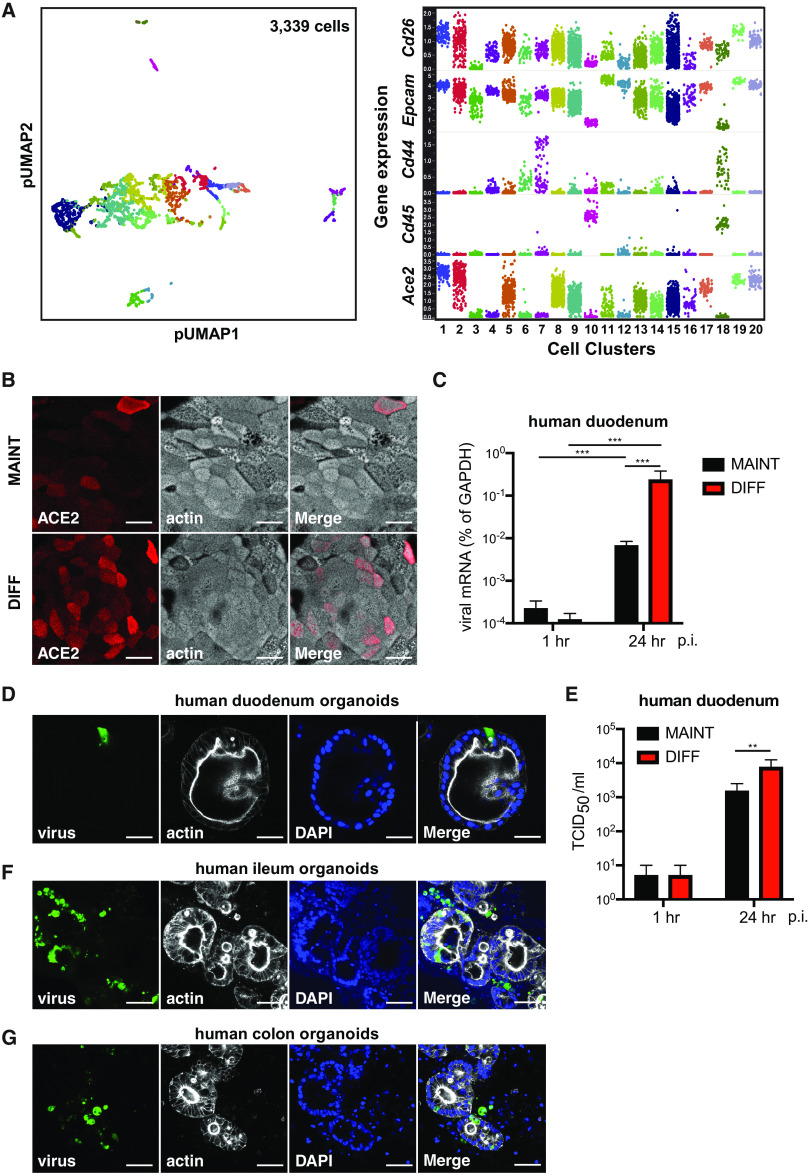
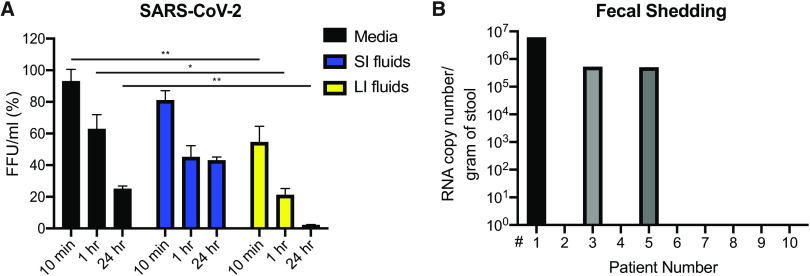
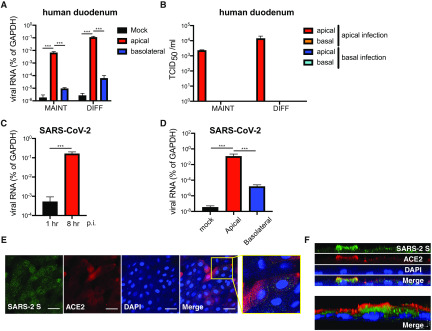
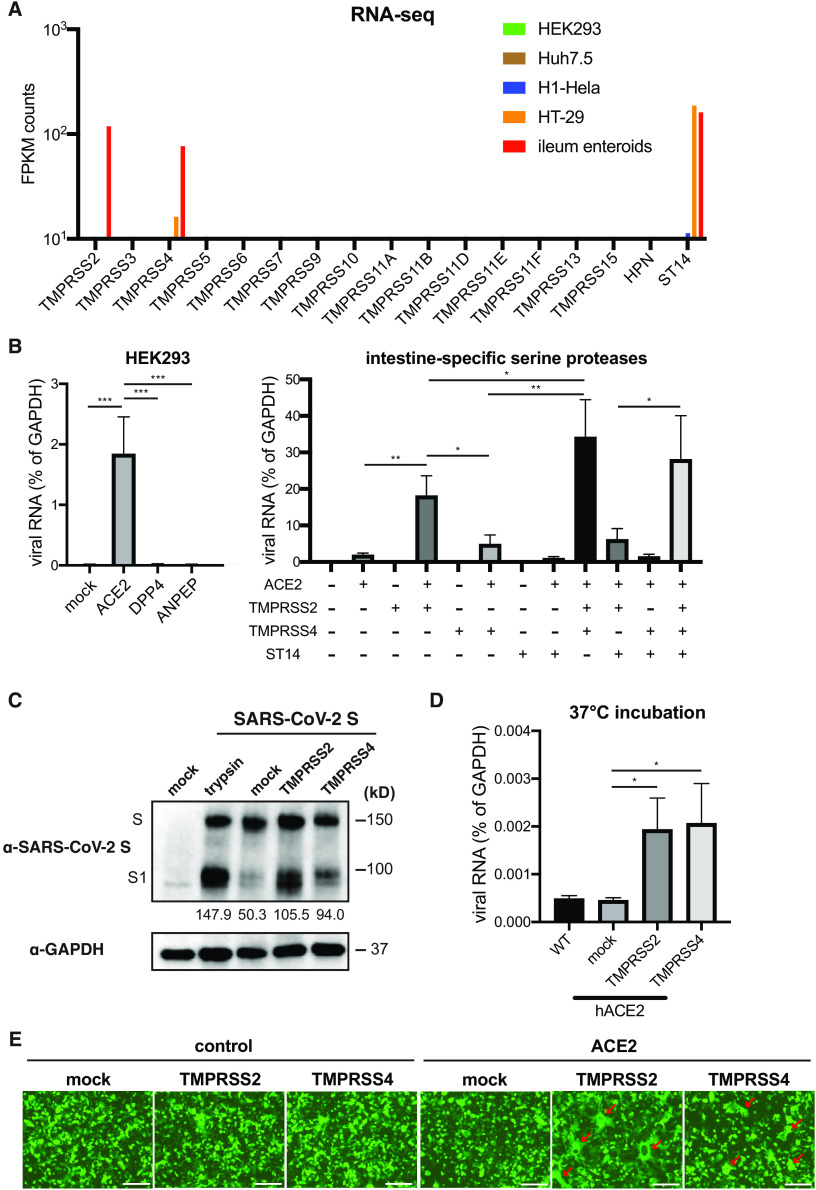
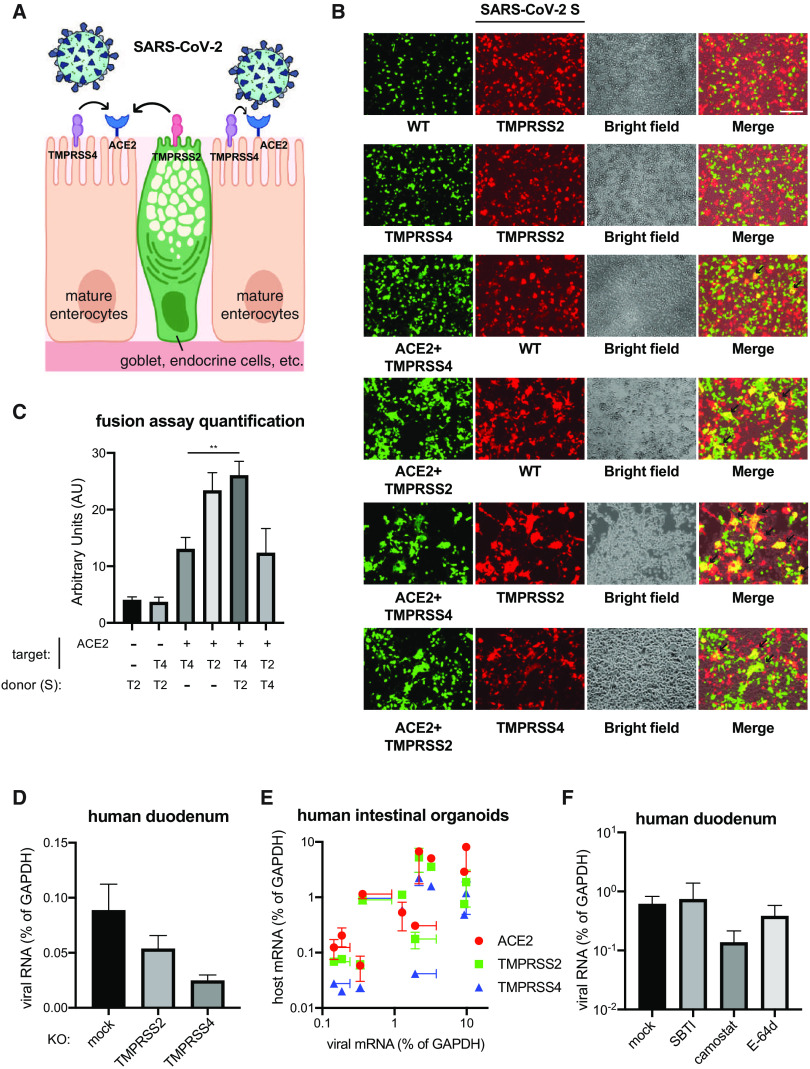
Gastrointestinal symptoms and fecal shedding of SARS-CoV-2 RNA are frequently observed in COVID-19 patients. However, it is unclear whether SARS-CoV-2 replicates in the human intestine and contributes to possible fecal-oral transmission. Here, we report productive infection of SARS-CoV-2 in ACE2 mature enterocytes in human small intestinal enteroids. Expression of two mucosa-specific serine proteases, TMPRSS2 and TMPRSS4, facilitated SARS-CoV-2 spike fusogenic activity and promoted virus entry into host cells. We also demonstrate that viruses released into the intestinal lumen were inactivated by simulated human colonic fluid, and infectious virus was not recovered from the stool specimens of COVID-19 patients. Our results highlight the intestine as a potential site of SARS-CoV-2 replication, which may contribute to local and systemic illness and overall disease progression.
在 COVID-19 患者中,经常观察到胃肠道症状和 SARS-CoV-2 RNA 的粪便脱落。然而,尚不清楚 SARS-CoV-2 是否在人体肠道中复制并导致可能的粪-口传播。在这里,我们报告了 SARS-CoV-2 在人小肠类器官中的 ACE2 成熟肠细胞中的生产性感染。两种粘膜特异性丝氨酸蛋白酶 TMPRSS2 和 TMPRSS4 的表达促进了 SARS-CoV-2 刺突的融合活性,并促进了病毒进入宿主细胞。我们还证明,释放到肠腔中的病毒被模拟的人结肠液灭活,并且从 COVID-19 患者的粪便标本中未回收感染性病毒。我们的结果强调了肠道作为 SARS-CoV-2 复制的潜在部位,这可能导致局部和全身疾病以及整体疾病进展。