Fujita Masako, Wander Katherine, Paredes Ruvalcaba Nerli, Brindle Eleanor
Department of Anthropology, Michigan State University, East Lansing, MI 48824, USA.
Biomarker Laboratory for Anthropological Research, Michigan State University, East Lansing, MI 48824, USA.
Evol Med Public Health. 2019 Nov 11;2019(1):201-211. doi: 10.1093/emph/eoz030. eCollection 2019.
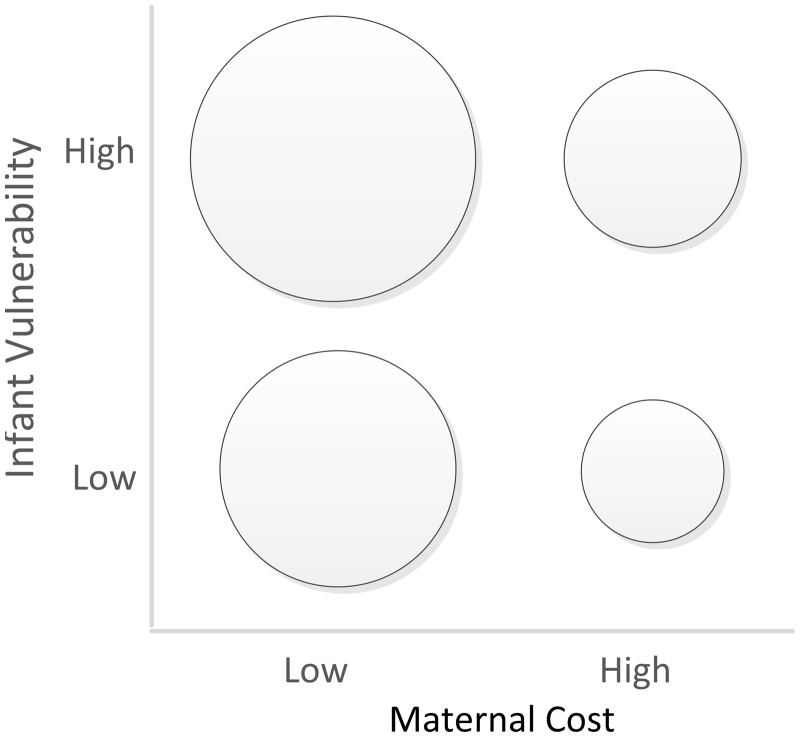
The maternal buffering hypothesis posits that human lactation biology can buffer milk against the mild-to-moderate malnutrition that occurred routinely in evolutionary history through the mobilization of maternal body reserves. This perspective may provide insights for understanding human milk immune content variation, such as milk sIgA, which protects infants' intestines from microbial colonization and prevents diarrheal disease.
To investigate how maternal delivery of sIgA to milk may vary in a way that can buffer milk against maternal malnutrition, while taking into consideration infants' varying needs for immune protection across age or by sex.
A cross-sectional study analyzed archived milk specimens from breastfeeding mothers in Ariaal communities of northern Kenya surveyed during the 2006 Horn-of-Africa drought. Multiple regression models for ln-transformed sIgA were constructed using maternal nutrition, infant age/sex and their interactions as predictors. Maternal nutrition variables included iron-deficiency anemia (IDA), vitamin A deficiency (VAD) and mid-upper arm circumference (MUAC). Infant vulnerability was considered high in young age and/or male sex.
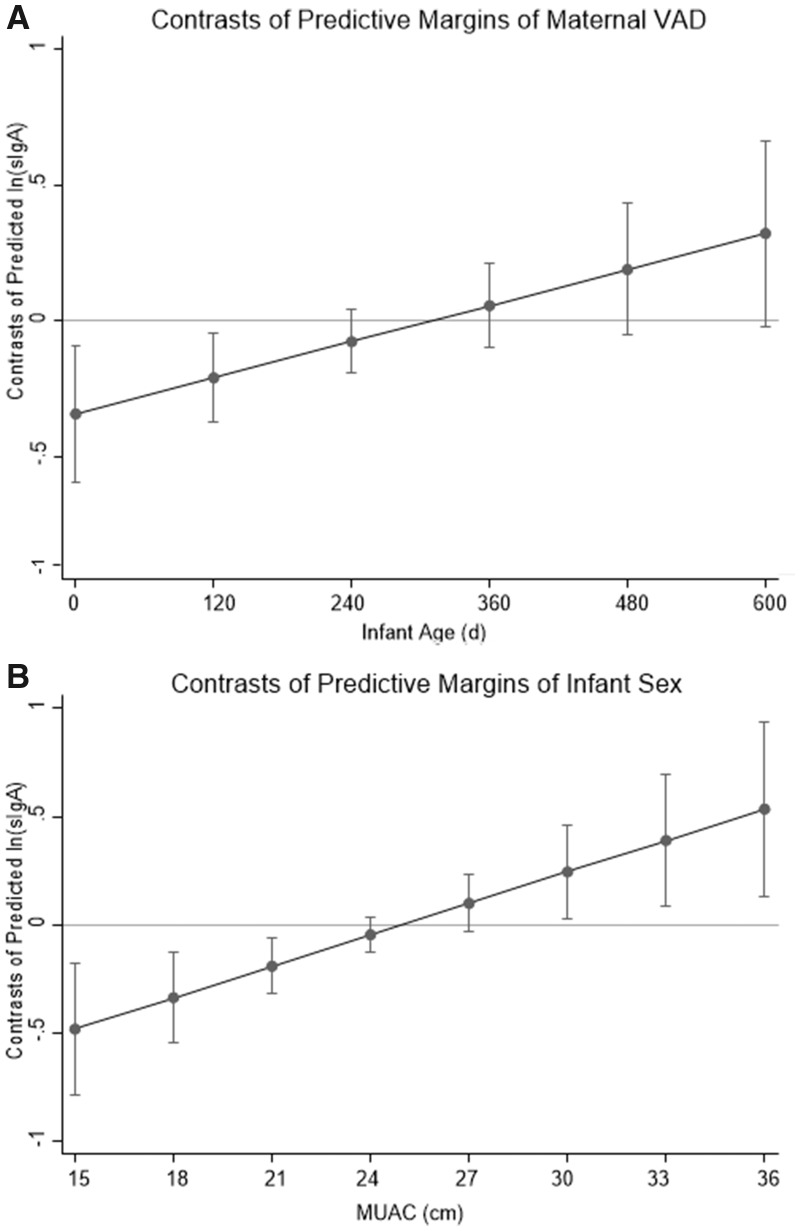
Milk sIgA did not significantly differ by maternal IDA. Milk sIgA increased with infant age and maternal MUAC ( = 202). Significant interactions were observed between infant age and maternal VAD and between infant sex and maternal MUAC, such that milk sIgA content was low for younger infants particularly among VAD mothers, while among mothers with low MUAC, sIgA was lower for male infants. Results imply that mothers' ability to deliver/buffer milk sIgA may be lowered when nutritional stress is combined with high infant vulnerability to infection.
Human milk sIgA antibody content was low for younger infants among vitamin A deficient mothers. Among mothers with small arm-circumference, milk sIgA was lower for sons. Double burden of raising young or male infants with high needs for immune protection and being malnourished, might lower maternal sIgA delivery to milk.
母体缓冲假说认为,人类泌乳生物学可以通过调动母体身体储备,使乳汁能够抵御进化史上经常出现的轻度至中度营养不良。这一观点可能为理解母乳免疫成分的变化提供见解,比如母乳中的分泌型免疫球蛋白A(sIgA),它能保护婴儿肠道免受微生物定植并预防腹泻疾病。
研究母体向乳汁中输送sIgA的方式如何因能使乳汁抵御母体营养不良而有所不同,同时考虑婴儿在不同年龄或性别对免疫保护的不同需求。
一项横断面研究分析了2006年非洲之角干旱期间在肯尼亚北部阿里亚尔社区接受调查的母乳喂养母亲的存档乳汁样本。以母体营养、婴儿年龄/性别及其相互作用作为预测因素,构建了ln转换后的sIgA多元回归模型。母体营养变量包括缺铁性贫血(IDA)、维生素A缺乏(VAD)和上臂中部周长(MUAC)。婴儿年龄小和/或为男性被视为脆弱性高。
母乳sIgA在母体患IDA时无显著差异。母乳sIgA随婴儿年龄和母体MUAC增加(=202)。观察到婴儿年龄与母体VAD之间以及婴儿性别与母体MUAC之间存在显著相互作用,即年龄较小的婴儿尤其是VAD母亲的婴儿,母乳sIgA含量较低,而在MUAC较低的母亲中,男婴的sIgA较低。结果表明,当营养压力与婴儿对感染的高易感性相结合时,母体输送/缓冲母乳sIgA的能力可能会降低。
维生素A缺乏的母亲所生的年幼婴儿,其母乳中sIgA抗体含量较低。在上臂周长较小的母亲中,儿子的母乳sIgA较低。抚养对免疫保护需求高的年幼或男性婴儿且自身营养不良的双重负担,可能会降低母体向乳汁中输送sIgA的量。