Wienholz Anne, Lieberman Amy M
Boston University.
J Cult Cogn Sci. 2019 Nov;3(2):217-234. doi: 10.1007/s41809-019-00024-6. Epub 2019 Jul 11.
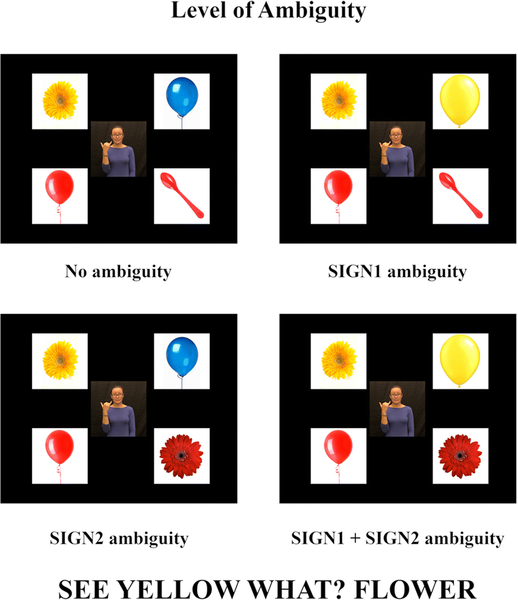
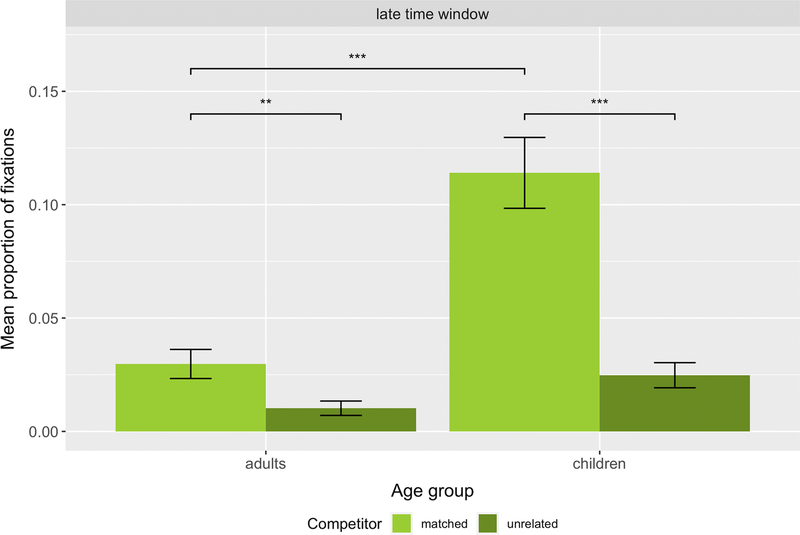
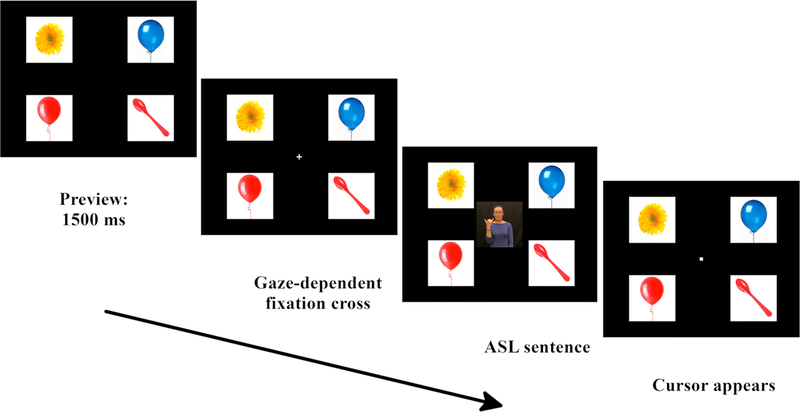
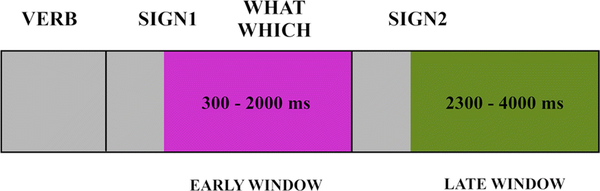
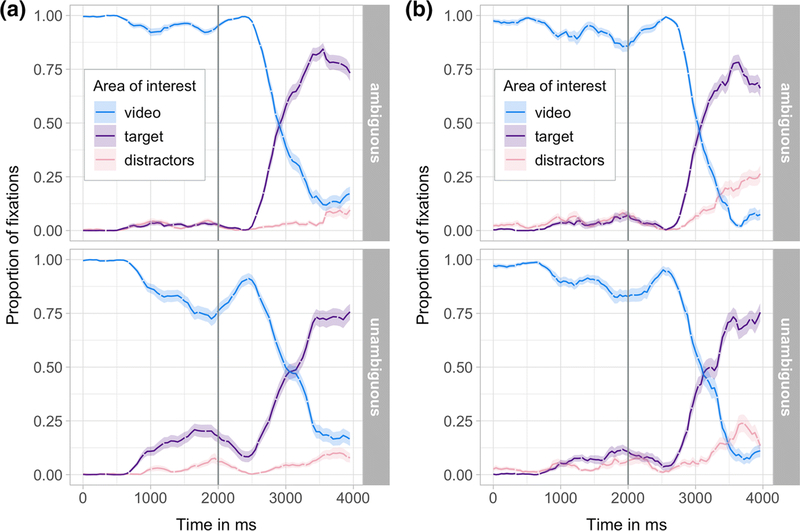
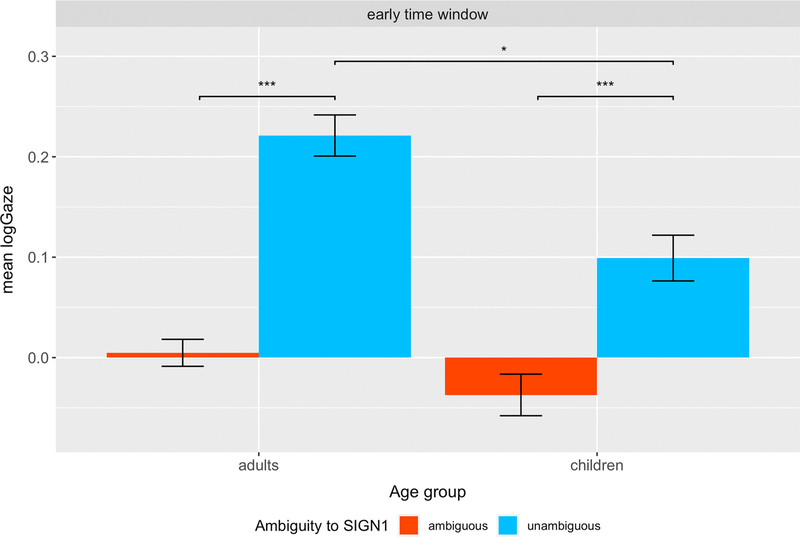
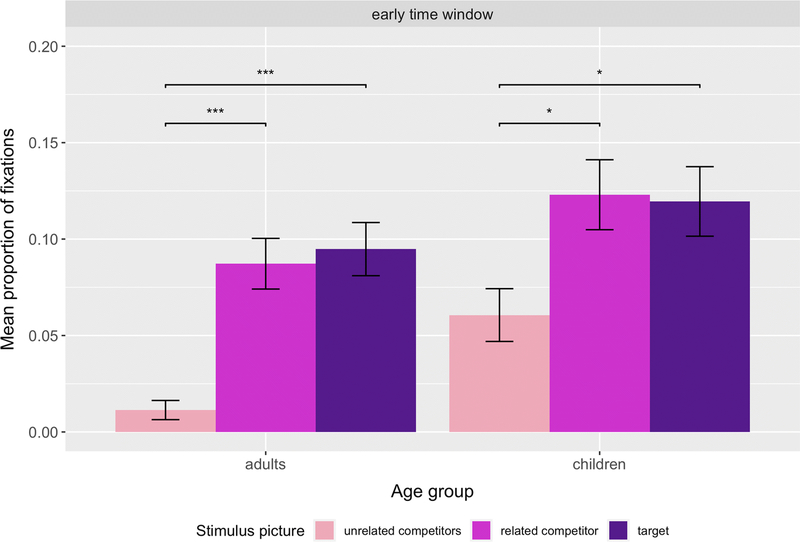
When processing spoken language sentences, listeners continuously make and revise predictions about the upcoming linguistic signal. In contrast, during comprehension of American Sign Language (ASL), signers must simultaneously attend to the unfolding linguistic signal and the surrounding scene via the visual modality. This may affect how signers activate potential lexical candidates and allocate visual attention as a sentence unfolds. To determine how signers resolve referential ambiguity during real-time comprehension of ASL adjectives and nouns, we presented deaf adults (n = 18, 19-61 years) and deaf children (n = 20, 4-8 years) with videos of ASL sentences in a visual world paradigm. Sentences had either an adjective-noun ("SEE YELLOW WHAT? FLOWER") or a noun-adjective ("SEE FLOWER WHICH? YELLOW") structure. The degree of ambiguity in the visual scene was manipulated at the adjective and noun levels (i.e., including one or more yellow items and one or more flowers in the visual array). We investigated effects of ambiguity and word order on target looking at early and late points in the sentence. Analysis revealed that adults and children made anticipatory looks to a target when it could be identified early in the sentence. Further, signers looked more to potential lexical candidates than to unrelated competitors in the early window, and more to matched than unrelated competitors in the late window. Children's gaze patterns largely aligned with those of adults with some divergence. Together, these findings suggest that signers allocate referential attention strategically based on the amount and type of ambiguity at different points in the sentence when processing adjectives and nouns in ASL.
在处理口语句子时,听众会不断对即将出现的语言信号进行预测并修正。相比之下,在理解美国手语(ASL)时,手语使用者必须同时通过视觉通道关注不断展开的语言信号和周围场景。这可能会影响手语使用者在句子展开过程中激活潜在词汇候选以及分配视觉注意力的方式。为了确定手语使用者在实时理解ASL形容词和名词时如何解决指代歧义,我们在视觉世界范式中向成年聋人(n = 18,19 - 61岁)和儿童聋人(n = 20,4 - 8岁)展示了ASL句子的视频。句子具有形容词 - 名词(“看到黄色的什么?花”)或名词 - 形容词(“看到哪朵花?黄色的”)结构。视觉场景中的歧义程度在形容词和名词层面进行了操纵(即视觉阵列中包括一个或多个黄色物品和一个或多个花朵)。我们研究了歧义程度和词序对句子早期和晚期目标注视的影响。分析表明,当目标在句子早期能够被识别时,成年人和儿童都会对其进行预期注视。此外,在早期窗口中,手语使用者看向潜在词汇候选的次数多于无关竞争项,在晚期窗口中,看向匹配项的次数多于无关竞争项。儿童的注视模式在很大程度上与成年人一致,但也存在一些差异。总之,这些发现表明,在处理ASL中的形容词和名词时,手语使用者会根据句子不同点的歧义数量和类型,策略性地分配指代注意力。