State Key Laboratory of Military Stomatology and National Clinical Research Center for Oral Diseases, Department of Periodontology, School of Stomatology, Fourth Military Medical University, Xi'an, China.
Department of Periodontics, Stomatology Hospital, Zhejiang University School of Medicine, Hangzhou, China.
Cell Prolif. 2020 Jun;53(6):e12827. doi: 10.1111/cpr.12827. Epub 2020 May 13.
Previously, we found that by regulating T helper (Th) cell polarization, calcitriol intervention inhibited lipopolysaccharide (LPS)-induced alveolar bone loss in an animal periodontitis model, but the underlying cellular events remain unknown.
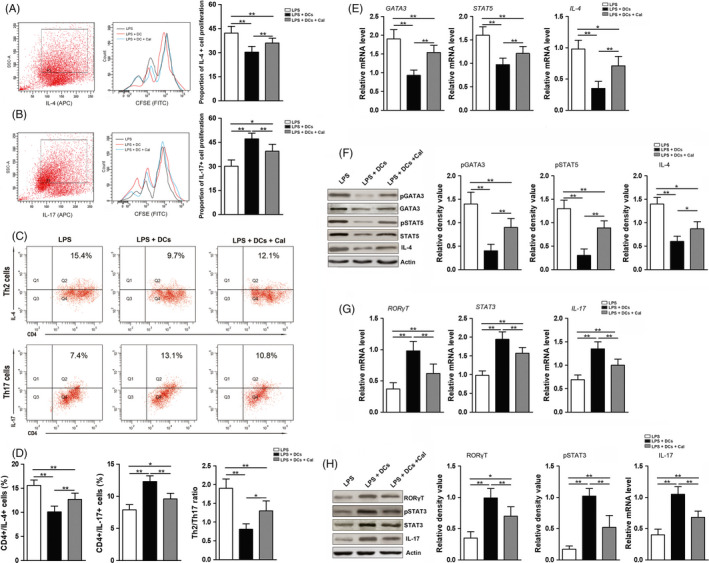
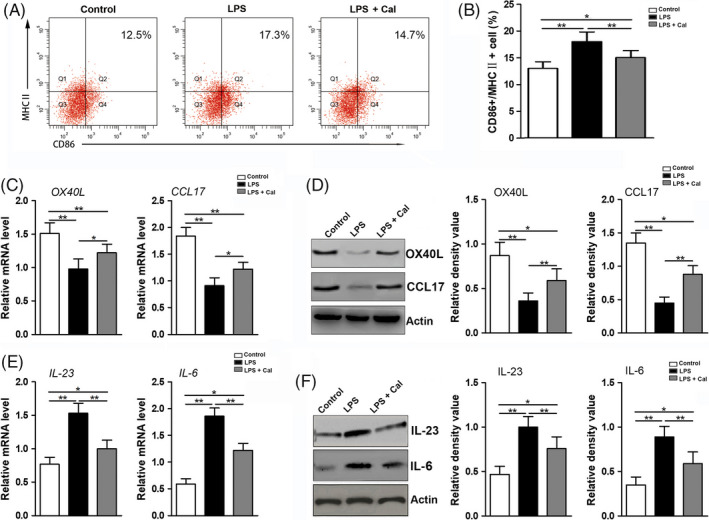
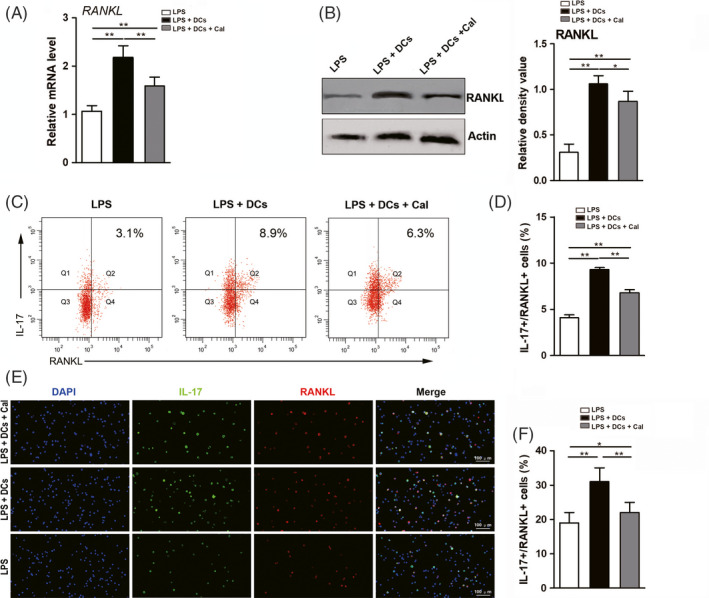
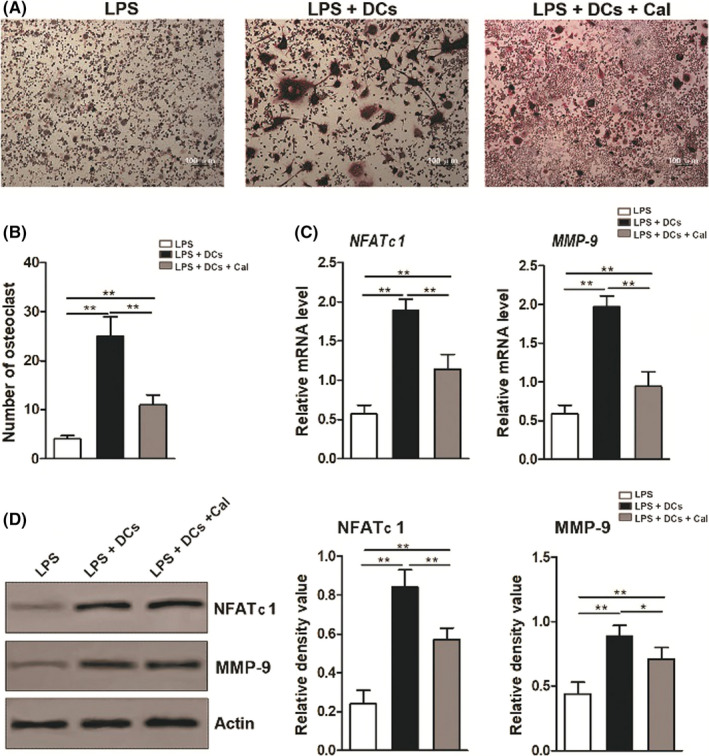
In this study, mouse Th cells were incubated in an inflammatory environment in the presence of dendritic cells (DCs) and LPS. Then, the potential of the Th cells to undergo Th2/Th17 polarization, the RANKL expression of the polarized Th cells and the subsequent influences of the polarized Th cells on RAW264.7 cell osteoclastogenesis in response to calcitriol administration were assessed. Finally, the effects of calcitriol on antigen presentation by DCs during these cellular events were evaluated.
In response to calcitriol administration, Th cells in an inflammatory environment exhibited an enhanced potential for Th2 polarization along with a decreased potential for Th17 polarization. In addition, RANKL expression in Th17-polarized cells was largely inhibited. Furthermore, inflammation-induced osteoclastogenesis in RAW264.7 cells was suppressed following coculture with calcitriol-treated Th cells. During these cellular events, increased expression of Th2 promoters (such as OX-40L and CCL17) and decreased expression of Th17 promoters (such as IL-23 and IL-6) were found in DCs.
Calcitriol can inhibit osteoclastogenesis in an inflammatory environment by changing the proportion and function of Th cell subsets. Our findings suggest that calcitriol may be an effective therapeutic agent for treating periodontitis.
此前,我们发现通过调节辅助性 T 细胞(Th)极化,骨化三醇干预可抑制牙周炎动物模型中脂多糖(LPS)诱导的牙槽骨丢失,但潜在的细胞事件尚不清楚。
在这项研究中,在存在树突状细胞(DC)和 LPS 的炎症环境中孵育小鼠 Th 细胞。然后,评估 Th 细胞向 Th2/Th17 极化的潜能、极化 Th 细胞的 RANKL 表达以及随后在给予骨化三醇后极化 Th 细胞对 RAW264.7 细胞破骨细胞生成的影响。最后,评估骨化三醇在这些细胞事件中对 DC 抗原呈递的影响。
在给予骨化三醇后,炎症环境中的 Th 细胞表现出增强的 Th2 极化潜能,同时 Th17 极化潜能降低。此外,Th17 极化细胞中的 RANKL 表达也受到很大抑制。此外,与经骨化三醇处理的 Th 细胞共培养后,炎症诱导的 RAW264.7 细胞破骨细胞生成受到抑制。在这些细胞事件中,发现 DC 中 Th2 启动子(如 OX-40L 和 CCL17)的表达增加,Th17 启动子(如 IL-23 和 IL-6)的表达减少。
骨化三醇可通过改变 Th 细胞亚群的比例和功能抑制炎症环境中的破骨细胞生成。我们的研究结果表明,骨化三醇可能是治疗牙周炎的有效治疗剂。