Wang Ying, Xue Ningning, Wang Ziyuan, Zeng Xin, Ji Ning, Chen Qianming
State Key Laboratory of Oral Diseases, National Clinical Research Center for Oral Diseases, Research Unit of Oral Carcinogenesis and Management, Chinese Academy of Medical Sciences, West China Hospital of Stomatology, Sichuan University, Chengdu, Sichuan, China.
Front Immunol. 2023 Jul 26;14:1236856. doi: 10.3389/fimmu.2023.1236856. eCollection 2023.
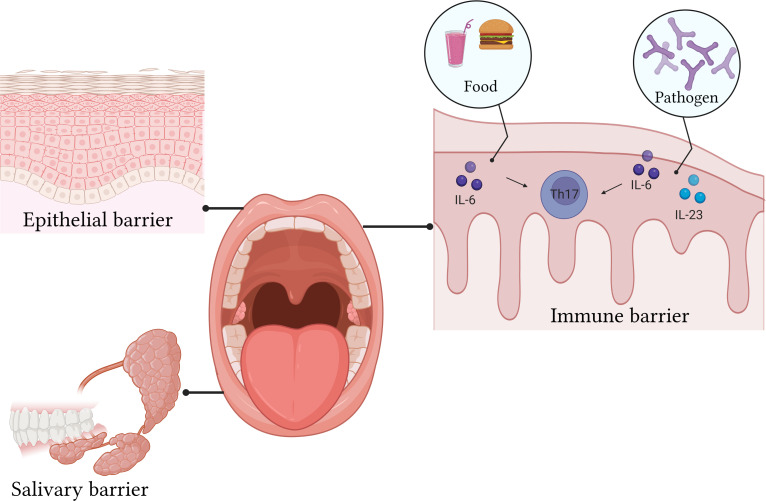
With the improved quality of life, oral health is under increased pressure. Numerous common oral mucosal diseases, such as oral lichen planus(OLP) and gingivitis, are related to the destruction of the oral immune barrier. The cytokines secreted by T-helper 17 (Th17) cells are essential for maintaining oral immune homeostasis and play essential roles in immune surveillance. When antigens stimulate the epithelium, Th17 cells expand, differentiate, and generate inflammatory factors to recruit other lymphocytes, such as neutrophils, to clear the infection, which helps to maintain the integrity of the epithelial barrier. In contrast, excessive Th17/IL-17 axis reactions may cause autoimmune damage. Therefore, an in-depth understanding of the role of Th17 cells in oral mucosa may provide prospects for treating oral mucosal diseases. We reviewed the role of Th17 cells in various oral and skin mucosal systemic diseases with oral characteristics, and based on the findings of these reports, we emphasize that Th17 cellular response may be a critical factor in inflammatory diseases of the oral mucosa. In addition, we should pay attention to the role and relationship of "pathogenic Th17" and "non-pathogenic Th17" in oral mucosal diseases. We hope to provide a reference for Th17 cells as a potential therapeutic target for treating oral mucosal inflammatory disorders in the future.
随着生活质量的提高,口腔健康面临着越来越大的压力。许多常见的口腔黏膜疾病,如口腔扁平苔藓(OLP)和牙龈炎,都与口腔免疫屏障的破坏有关。辅助性T细胞17(Th17)细胞分泌的细胞因子对于维持口腔免疫稳态至关重要,并且在免疫监视中发挥着重要作用。当抗原刺激上皮细胞时,Th17细胞会扩增、分化并产生炎症因子,以募集其他淋巴细胞,如中性粒细胞,来清除感染,这有助于维持上皮屏障的完整性。相反,过度的Th17/IL-17轴反应可能会导致自身免疫损伤。因此,深入了解Th17细胞在口腔黏膜中的作用可能为治疗口腔黏膜疾病提供前景。我们综述了Th17细胞在各种具有口腔特征的口腔和皮肤黏膜系统性疾病中的作用,并基于这些报告的结果,我们强调Th17细胞反应可能是口腔黏膜炎症性疾病的一个关键因素。此外,我们应该关注“致病性Th17”和“非致病性Th17”在口腔黏膜疾病中的作用和关系。我们希望为Th17细胞作为未来治疗口腔黏膜炎症性疾病的潜在治疗靶点提供参考。