Department of Orthopaedics, Sir Run Run Shaw Hospital, School of Medicine, Zhejiang University, Hangzhou, Zhejiang, China.
Key Laboratory of Musculoskeletal System Degeneration and Regeneration Translational Research of Zhejiang Province, Hangzhou, Zhejiang, China.
Ann Rheum Dis. 2020 Aug;79(8):1111-1120. doi: 10.1136/annrheumdis-2019-216911. Epub 2020 May 14.
FBXO6, a component of the ubiquitin E3 ligases, has been shown to bind high mannose N-linked glycoproteins and act as ubiquitin ligase subunits. Most proteins in the secretory pathway, such as matrix metalloproteinases, are modified with N-glycans and play important roles in the development of osteoarthritis (OA). However, whether FBXO6 exerts regulatory effects on the pathogenesis of OA remains undefined.
The expression of FBXO6 was examined in the cartilage of human and multiple mouse OA models. The role of FBXO6 in cartilage degeneration was analysed with mice, transgenic mice. The FBXO6 interacting partner MMP14 and its regulatory transcriptional factor SMAD2/3 were identified and validated in different pathological models as well as mice.
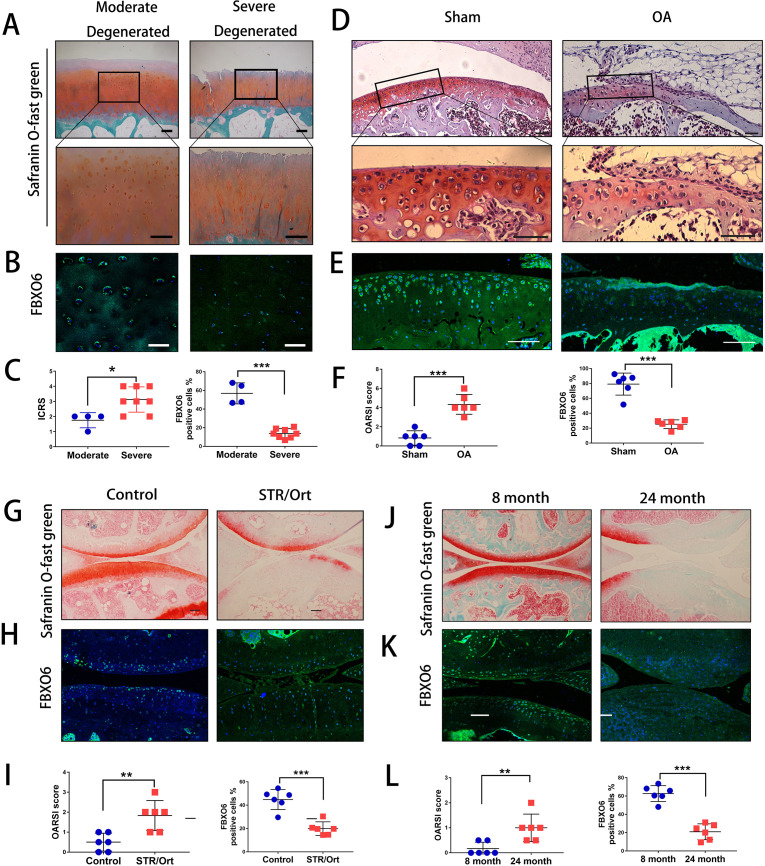
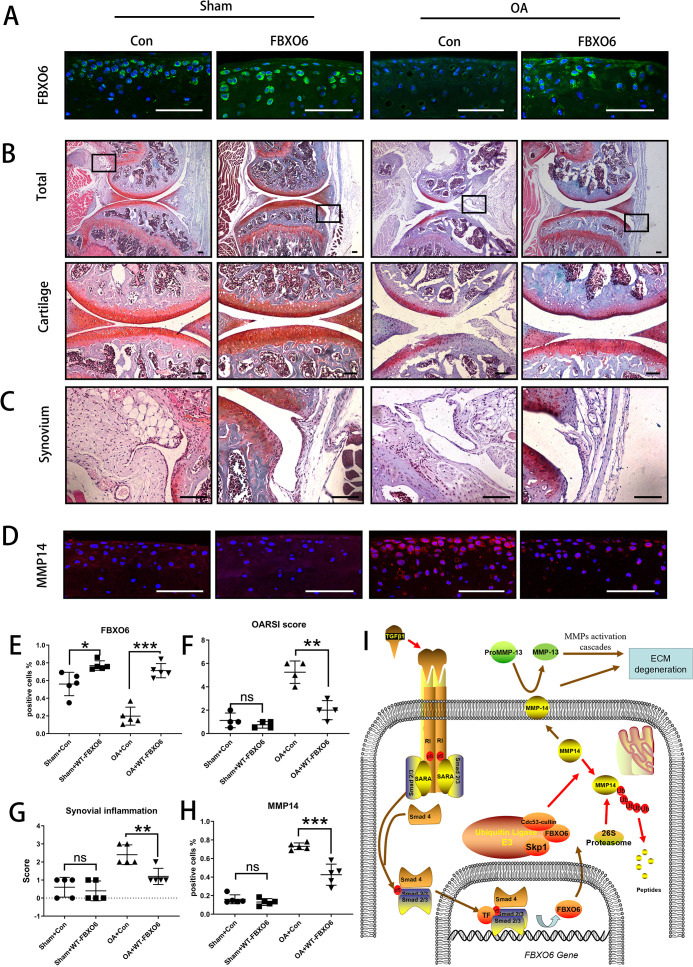
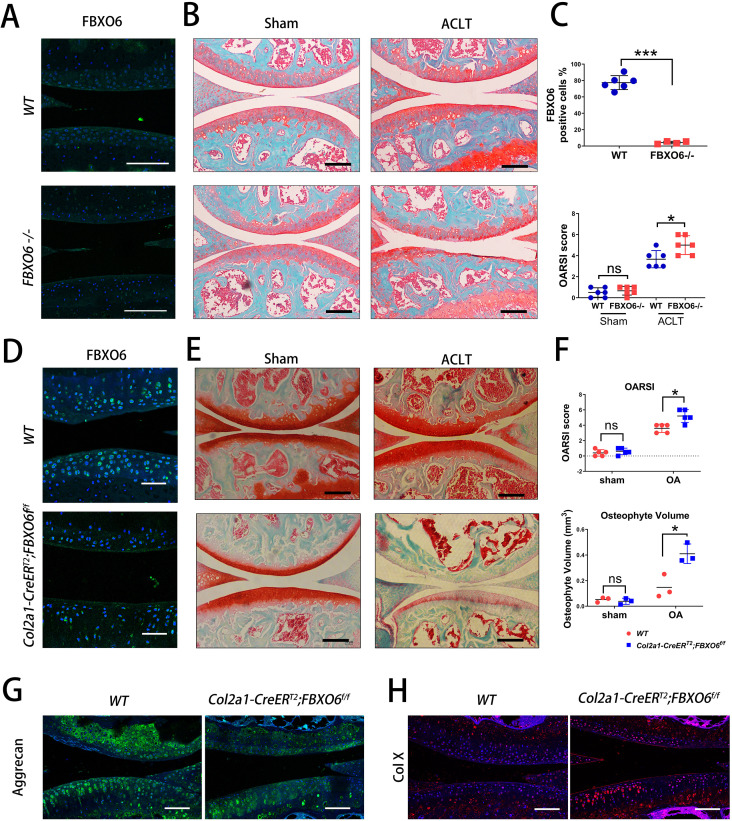
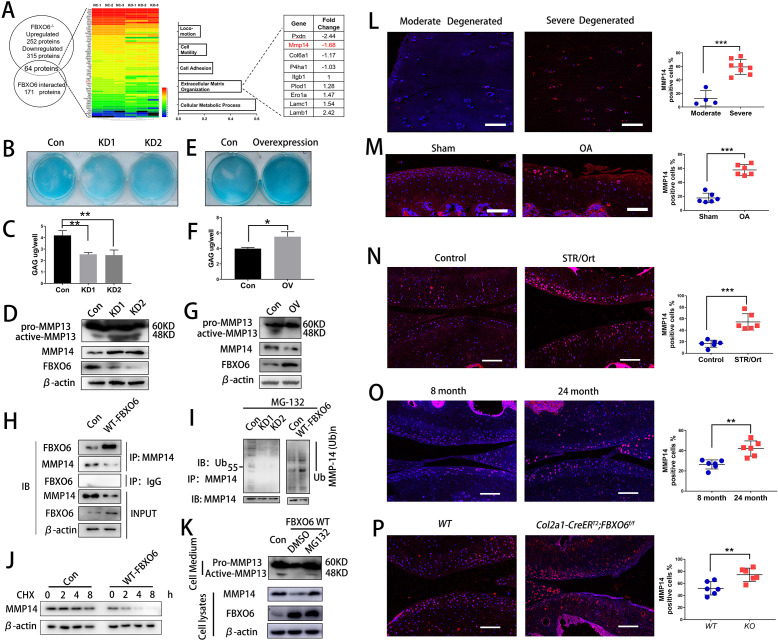
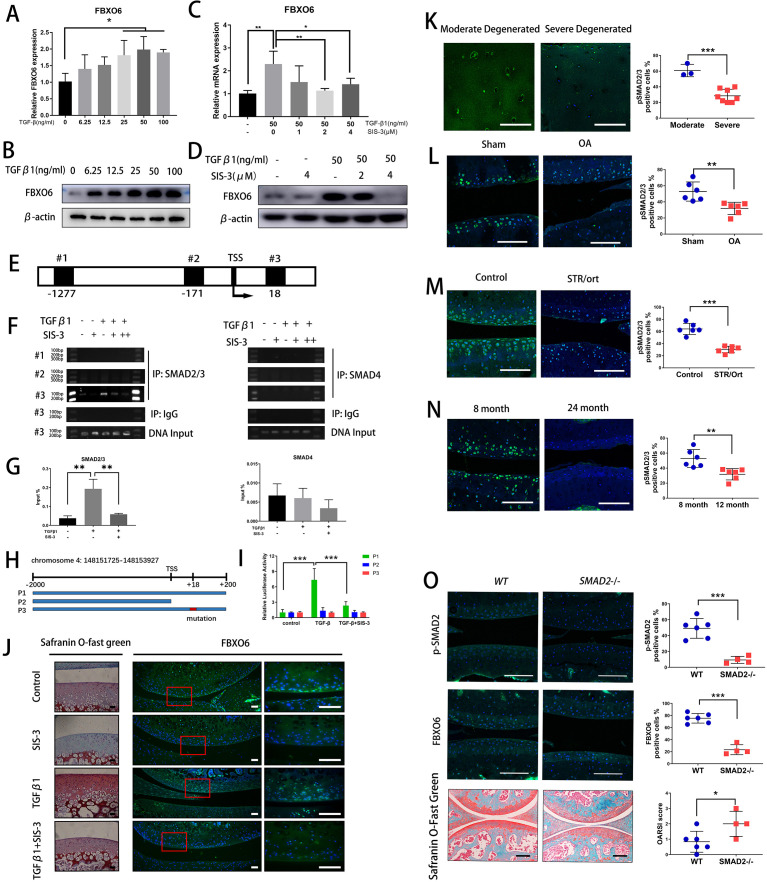
The expression of FBXO6 decreased in the cartilage from human OA samples, anterior cruciate ligament transaction (ACLT) -induced OA samples, spontaneous OA STR/ort samples and aged mice samples. Global knockout or conditional knockout of FBXO6 in cartilage promoted experimental OA process. The molecular mechanism study revealed that FBXO6 decreased MMP14 by ubiquitination and degradation, leading to inhibited proteolytic activation of MMP13. Interestingly, FBXO6 expression is regulated by transforming growth factor β (TGFβ)-SMAD2/3 signalling pathway. Therefore, the overexpression of FBXO6 protected mice from post-injury OA development.
TGFβ-SMAD2/3 signalling pathway suppressed MMP13 activation by upregulating of FBXO6 transcription and consequently promoting MMP14 proteasomal degradation. Inducement of FBXO6 expression in OA cartilage might provide a promising OA therapeutic strategy.
FBXO6 是泛素 E3 连接酶的一个组成部分,已被证明能与高甘露糖型 N-连接糖蛋白结合,并作为泛素连接酶亚基发挥作用。分泌途径中的大多数蛋白质,如基质金属蛋白酶,都经过 N-糖基化修饰,在骨关节炎(OA)的发展中发挥着重要作用。然而,FBXO6 是否对 OA 的发病机制发挥调节作用仍未确定。
检测了 FBXO6 在人及多种小鼠 OA 模型软骨中的表达。利用 小鼠、转基因 小鼠分析 FBXO6 在软骨退变中的作用。在不同的病理模型以及 小鼠中鉴定和验证了 FBXO6 的相互作用伙伴 MMP14 及其调控转录因子 SMAD2/3。
OA 患者软骨、前交叉韧带切断(ACLT)诱导 OA 模型、自发性 OA STR/ort 模型及老龄小鼠软骨中 FBXO6 的表达降低。软骨中 FBXO6 的全局敲除或条件性敲除促进了实验性 OA 进程。分子机制研究表明,FBXO6 通过泛素化和降解降低 MMP14 的表达,从而抑制 MMP13 的蛋白水解激活。有趣的是,FBXO6 的表达受转化生长因子β(TGFβ)-SMAD2/3 信号通路调控。因此,FBXO6 的过表达可保护小鼠免受损伤后 OA 的发展。
TGFβ-SMAD2/3 信号通路通过上调 FBXO6 的转录来抑制 MMP13 的激活,从而促进 MMP14 的蛋白酶体降解。OA 软骨中 FBXO6 的表达诱导可能为 OA 治疗提供一种有前景的策略。