Siegfried Weller Research Institute, BG Unfallklinik, Eberhard Karls University Tuebingen, Schnarrenbergstr. 95, 72076, Tuebingen, Germany.
Department of Trauma and Reconstructive Surgery, BG Unfallklinik, Eberhard Karls University, Tuebingen, Germany.
Arch Toxicol. 2020 Jun;94(6):2163-2177. doi: 10.1007/s00204-020-02769-4. Epub 2020 May 14.
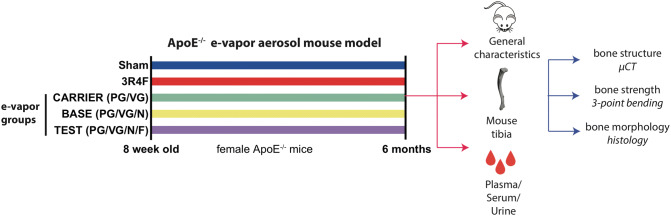
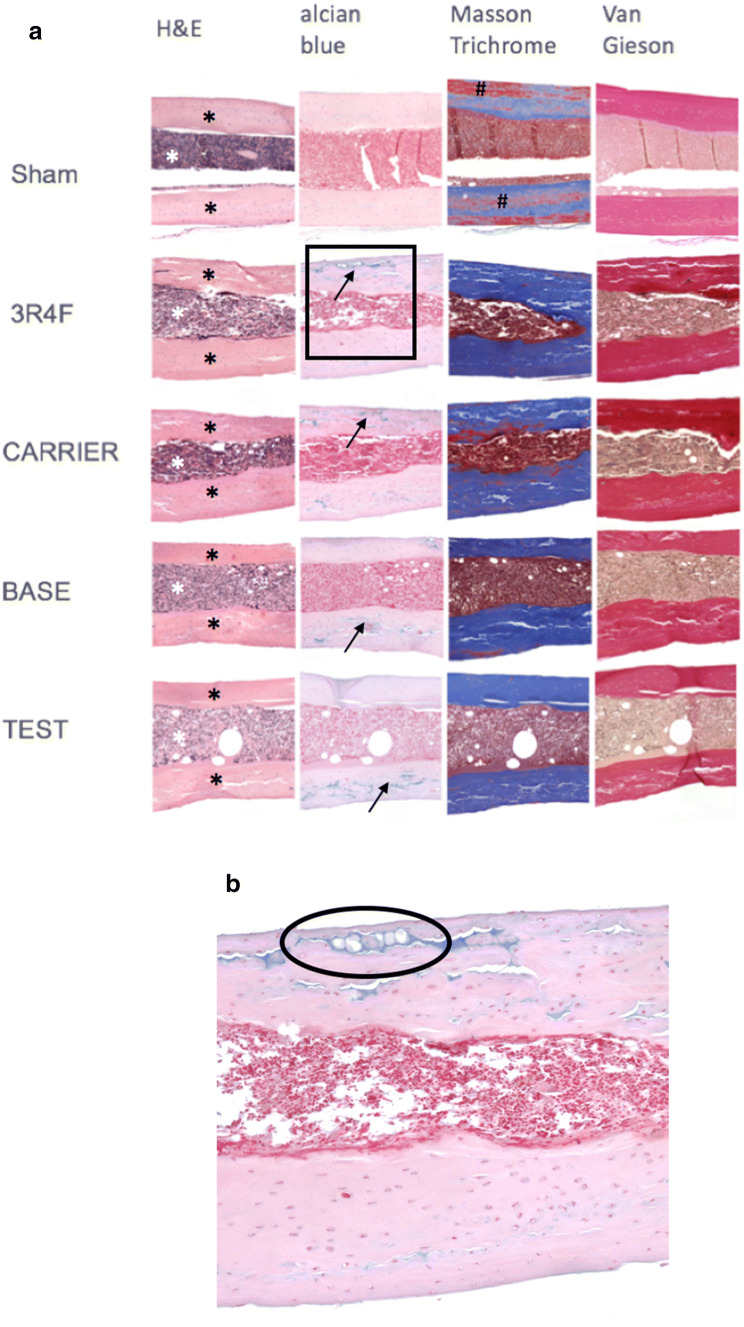
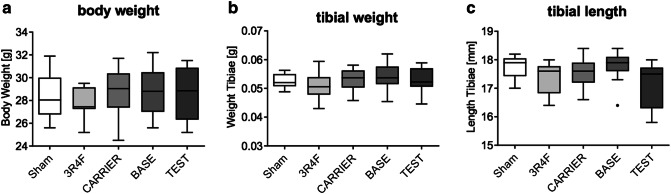
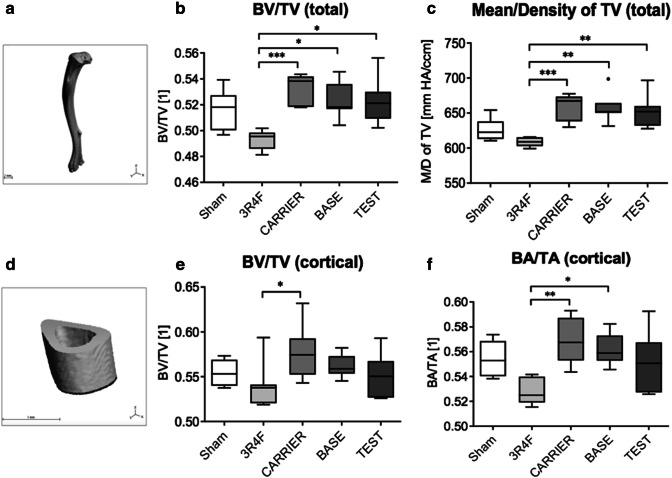
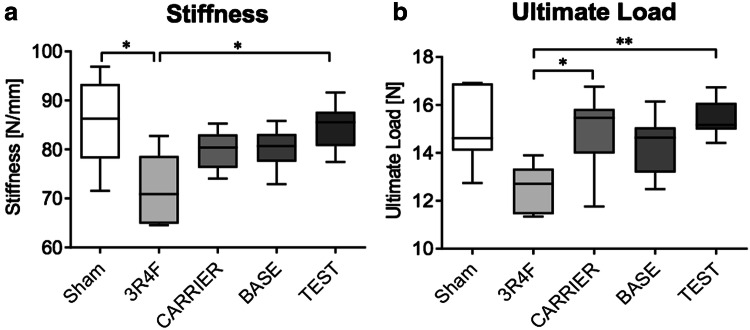
Cigarette smoke (CS) exposure is one of the leading risk factors for human health. Nicotine-containing inhalable products, such as e-cigarettes, can effectively support tobacco harm reduction approaches. However, there are limited comparative data on the effects of the aerosols generated from electronic vapor products (e-vapor) and CS on bone. Here, we report the effects of e-vapor aerosols and CS on bone morphology, structure, and strength in a 6-month inhalation study. Eight-week-old ApoE mice were exposed to aerosols from three different e-vapor formulations-CARRIER (propylene glycol and vegetable glycerol), BASE (CARRIER and nicotine), TEST (BASE and flavor)-to CS from 3R4F reference cigarettes at matched nicotine concentrations (35 µg/L) or to fresh air (Sham) (N = 10 per group). Tibiae were analyzed for bone morphology by µCT imaging, biomechanics by three-point bending, and by histological analysis. CS inhalation caused a significant decrease in cortical and total bone volume fraction and bone density relative to e-vapor aerosols. Additionally, CS exposure caused a decrease in ultimate load and stiffness. In contrast, bone structural and biomechanical parameters were not significantly affected by e-vapor aerosol or Sham exposure. At the dissection time point, there was no significant difference in body weight or tibia bone weight or length among the groups. Histological findings revealed microcracks in cortical bone areas among all exposed groups compared to Sham control. In conclusion, because of the bone-preserving effect of e-vapor aerosols relative to CS exposure, e-vapor products could potentially constitute less harmful alternatives to cigarettes in situations in which bone health is of importance.
香烟烟雾(CS)暴露是影响人类健康的主要风险因素之一。含有尼古丁的可吸入产品,如电子烟,可以有效地支持减少烟草危害的方法。然而,关于电子雾化产品(e-vapor)和 CS 产生的气溶胶对骨骼影响的比较数据有限。在这里,我们报告了为期 6 个月的吸入研究中,e-vapor 气溶胶和 CS 对骨骼形态、结构和强度的影响。将 8 周大的载脂蛋白 E (ApoE)小鼠暴露于三种不同的 e-vapor 配方(载体:丙二醇和植物甘油;基础:载体和尼古丁;测试:基础和口味)的气溶胶中,或暴露于匹配尼古丁浓度(35μg/L)的 3R4F 参考香烟的 CS 中,或暴露于新鲜空气中(Sham)(每组 10 只)。通过微 CT 成像分析骨骼形态,通过三点弯曲分析生物力学,通过组织学分析分析。与 e-vapor 气溶胶相比,CS 吸入导致皮质骨和总骨体积分数以及骨密度显著降低。此外,CS 暴露导致极限负荷和刚度降低。相比之下,e-vapor 气溶胶或 Sham 暴露对骨骼结构和生物力学参数没有显著影响。在解剖时间点,各组之间的体重或胫骨骨重或长度没有显著差异。组织学发现,与 Sham 对照组相比,所有暴露组的皮质骨区域都出现了微裂缝。总之,由于 e-vapor 气溶胶相对于 CS 暴露具有保留骨骼的作用,因此在骨骼健康重要的情况下,e-vapor 产品可能构成比香烟危害更小的替代品。