Liu Yifan, Wu Jianhua, Huang Weiwei, Weng Shaowen, Wang Baochun, Chen Yiming, Wang Hao
The First Department of Gastrointestinal Surgery, Hainan General Hospital, Hainan Affiliated Hospital of Hainan Medical University, Haikou, China.
Department of General Surgery, Shanghai Ninth People's Hospital, School of Medicine, Shanghai Jiao Tong University, Shanghai, China.
J Transl Med. 2020 May 14;18(1):201. doi: 10.1186/s12967-020-02366-0.
Increasing evidences have found that the clinical importance of the interaction between hypoxia and immune status in gastric cancer microenvironment. However, reliable prognostic signatures based on combination of hypoxia and immune status have not been well-established. This study aimed to develop a hypoxia-immune-based gene signature for risk stratification in gastric cancer.
Hypoxia and immune status was estimated with transcriptomic profiles for a discovery cohort from GEO database using the t-SNE and ESTIMATE algorithms, respectively. The Cox regression model with the LASSO method was applied to identify prognostic genes and to develop a hypoxia-immune-based gene signature. The TCGA cohort and two independent cohorts from GEO database were used for external validation.
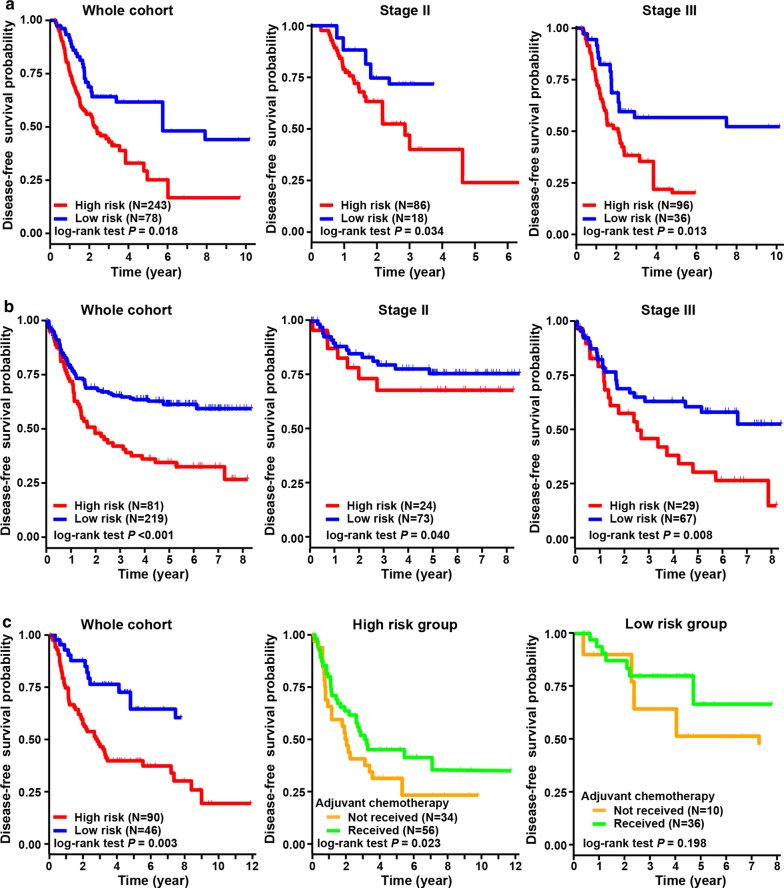
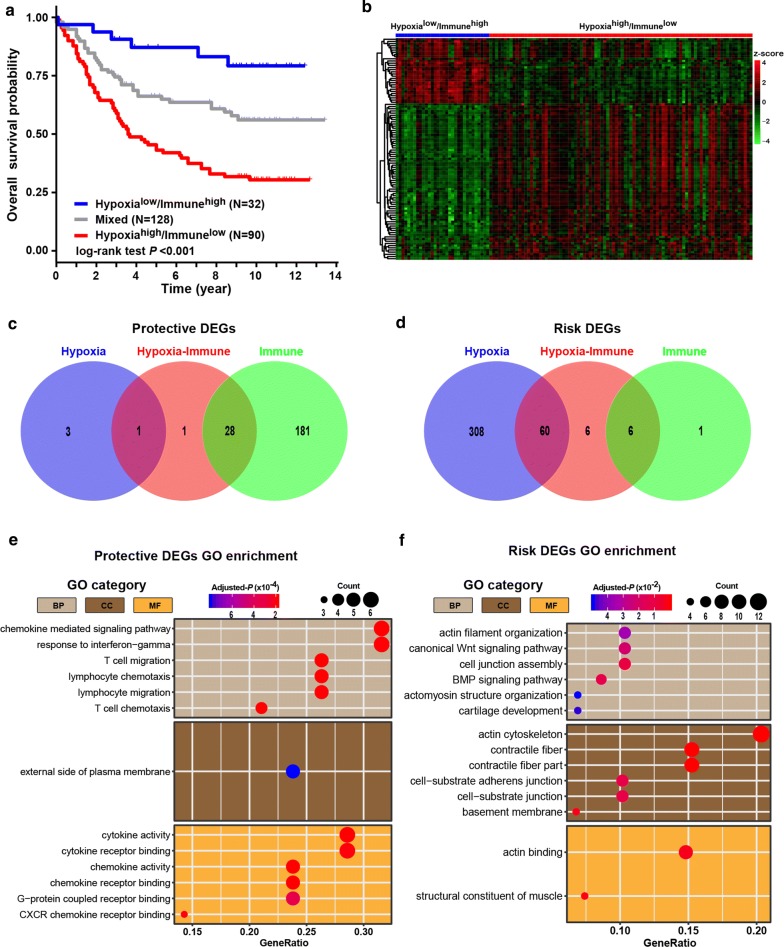
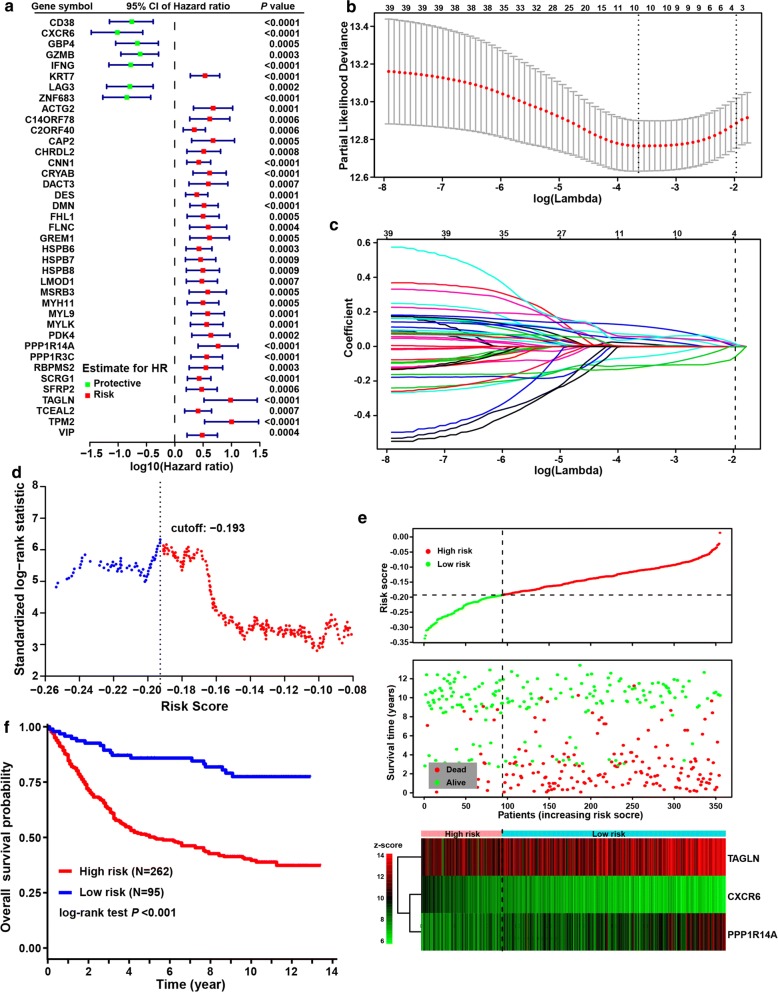
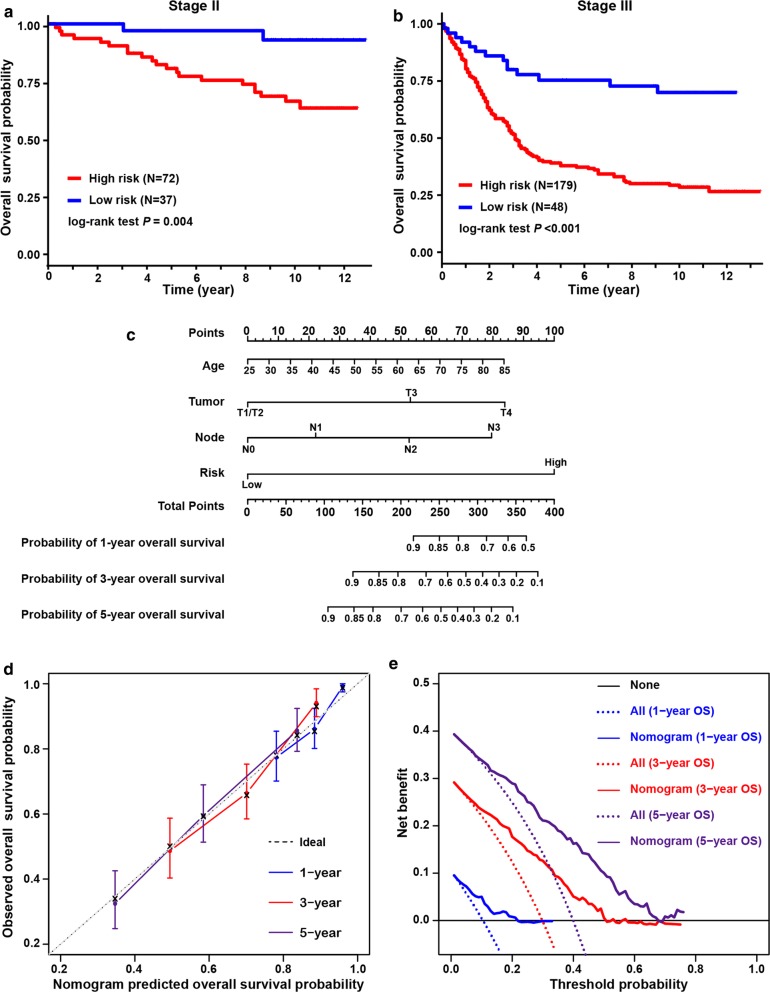
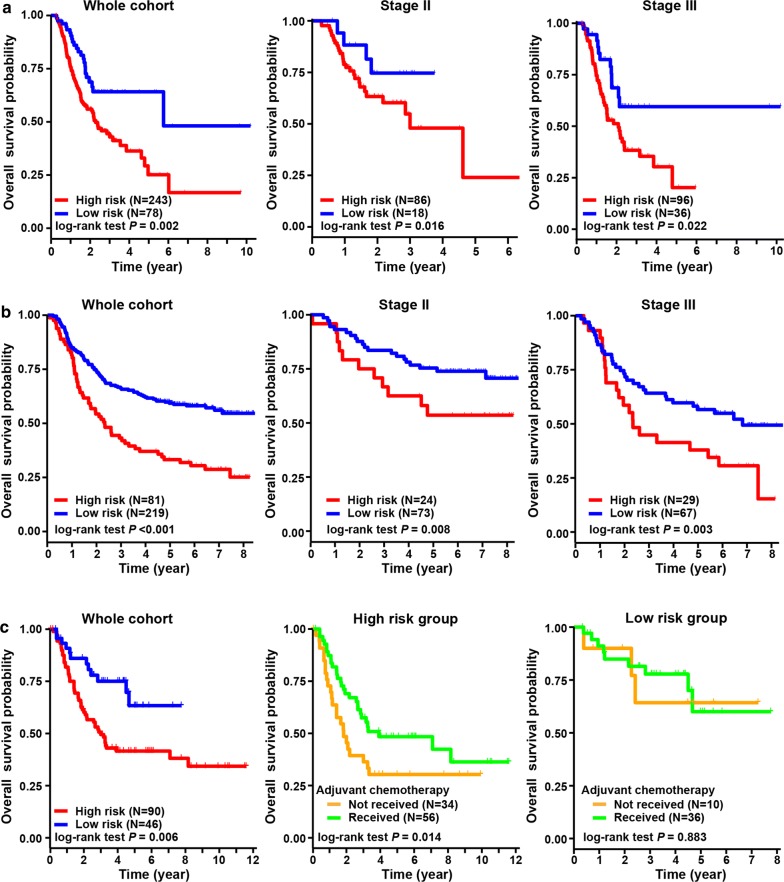
Low hypoxia status (p < 0.001) and high immune status (p = 0.005) were identified as favorable factors for patients' overall survival. By using the LASSO model, four genes, including CXCR6, PPP1R14A and TAGLN, were identified to construct a gene signature for risk stratification. In the discovery cohort (n = 357), patients with low risk yielded better outcomes than those with high risk regarding overall survival across and within TNM stage subgroups. Multivariate analysis identified the hypoxia-immune-based gene signature as an independent prognostic factor (p < 0.001). A nomogram integrating the gene signature and known risk factors yielded better performance and net benefits in calibration and decision curve analyses. Similar results were validated in the TCGA (n = 321) and two independent GEO (n = 300 and n = 136, respectively) cohorts.
The hypoxia-immune-based gene signature represents a promising tool for risk stratification tool in gastric cancer. It might serve as a prognostic classifier for clinical decision-making regarding individualized prognostication and treatment, and follow-up scheduling.
越来越多的证据表明,胃癌微环境中缺氧与免疫状态之间的相互作用具有临床重要性。然而,基于缺氧与免疫状态相结合的可靠预后特征尚未得到很好的确立。本研究旨在开发一种基于缺氧-免疫的基因特征用于胃癌的风险分层。
分别使用t-SNE和ESTIMATE算法,通过GEO数据库中一个发现队列的转录组谱来评估缺氧和免疫状态。应用带有LASSO方法的Cox回归模型来识别预后基因并开发一种基于缺氧-免疫的基因特征。TCGA队列以及来自GEO数据库的两个独立队列用于外部验证。
低缺氧状态(p < 0.001)和高免疫状态(p = 0.005)被确定为患者总生存的有利因素。通过使用LASSO模型,鉴定出包括CXCR6、PPP1R14A和TAGLN在内的四个基因,以构建用于风险分层的基因特征。在发现队列(n = 357)中,低风险患者在TNM分期亚组内及整体上的总生存结局均优于高风险患者。多因素分析确定基于缺氧-免疫的基因特征为独立预后因素(p < 0.001)。整合基因特征和已知风险因素的列线图在校准和决策曲线分析中表现出更好的性能和净效益。在TCGA队列(n = 321)以及两个独立的GEO队列(分别为n = 300和n = 136)中验证了类似结果。
基于缺氧-免疫的基因特征是胃癌风险分层的一种有前景的工具。它可作为一种预后分类器,用于关于个体化预后、治疗及随访安排的临床决策。