Metaorganism Immunity Section, Laboratory of Immune System Biology, National Institute of Allergy and Infectious Diseases (NIAID), National Institutes of Health (NIH), Bethesda, MD, 20892, USA.
Clinical Monitoring Research Program Directorate, Frederick National Laboratory for Cancer Research, National Cancer Institute, Bethesda, USA.
Nat Commun. 2020 May 15;11(1):2448. doi: 10.1038/s41467-020-16222-8.
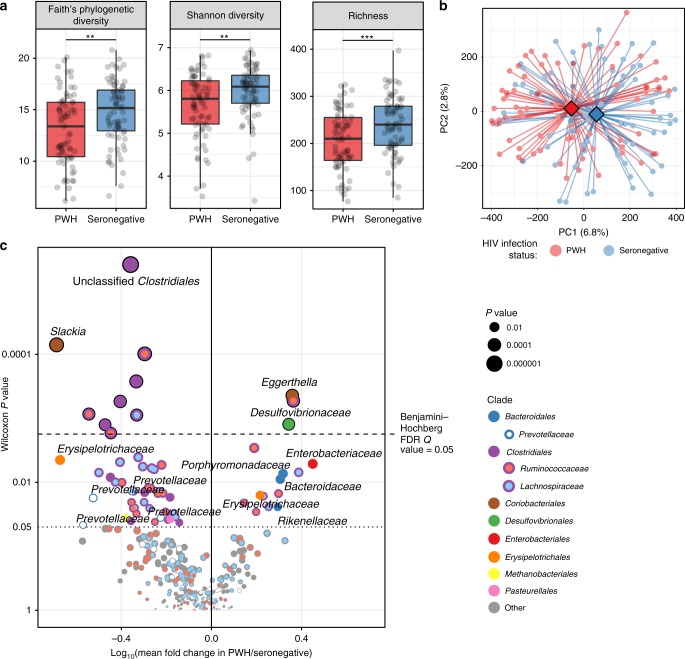
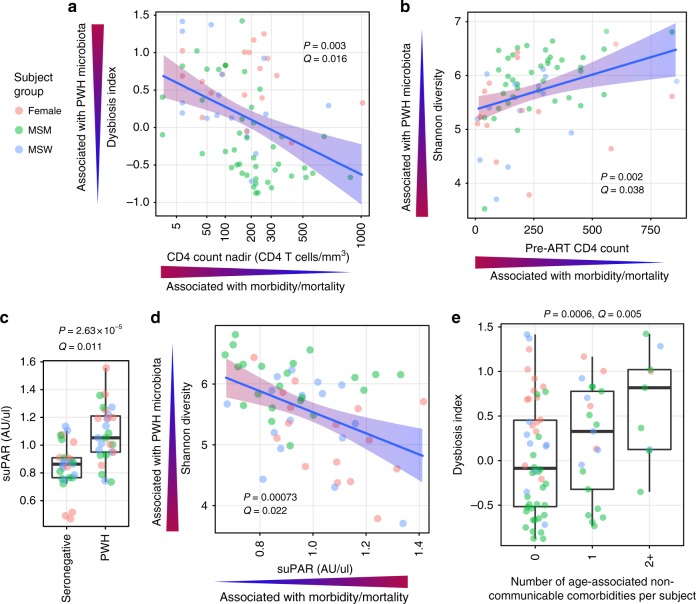
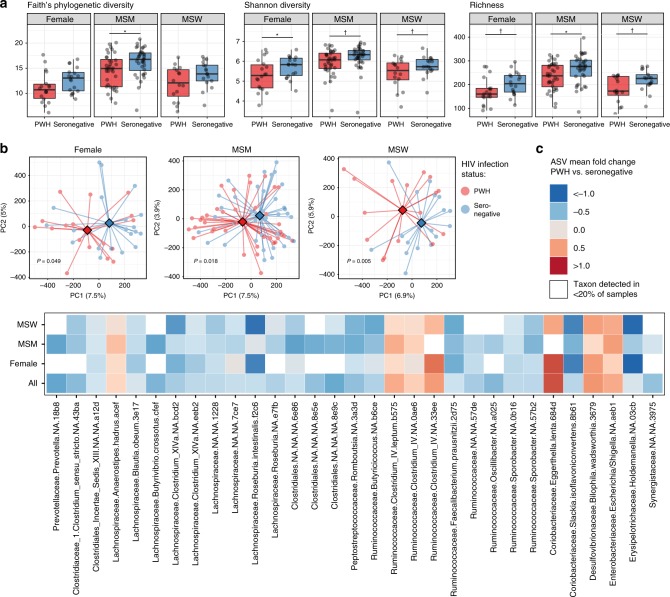
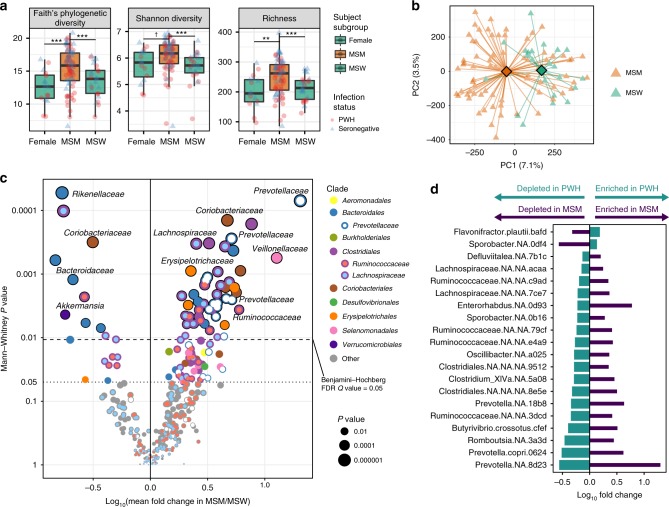
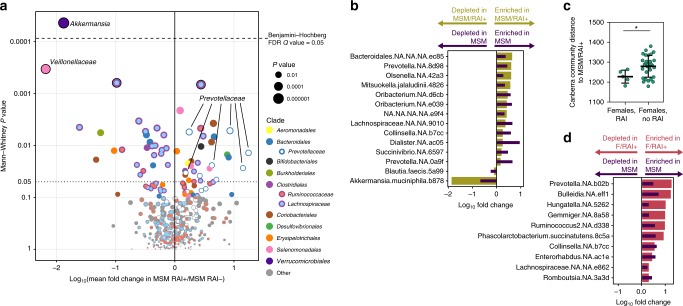
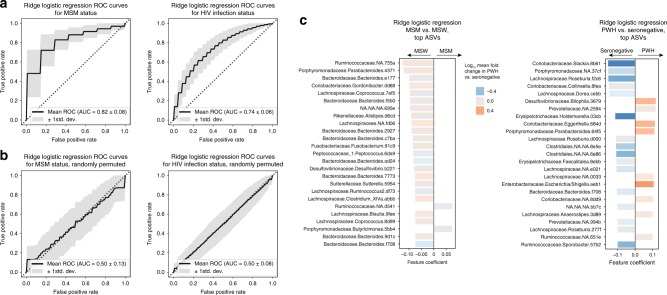
Loss of gut mucosal integrity and an aberrant gut microbiota are proposed mechanisms contributing to chronic inflammation and increased morbidity and mortality during antiretroviral-treated HIV disease. Sexual practice has recently been uncovered as a major source of microbiota variation, potentially confounding prior observations of gut microbiota alterations among persons with HIV (PWH). To overcome this and other confounding factors, we examine a well-powered subset of AGEhIV Cohort participants comprising antiretroviral-treated PWH and seronegative controls matched for age, body-mass index, sex, and sexual practice. We report significant gut microbiota differences in PWH regardless of sex and sexual practice including Gammaproteobacteria enrichment, Lachnospiraceae and Ruminococcaceae depletion, and decreased alpha diversity. Men who have sex with men (MSM) exhibit a distinct microbiota signature characterized by Prevotella enrichment and increased alpha diversity, which is linked with receptive anal intercourse in both males and females. Finally, the HIV-associated microbiota signature correlates with inflammatory markers including suPAR, nadir CD4 count, and prevalence of age-associated noncommunicable comorbidities.
肠道黏膜完整性的丧失和肠道微生物群落的异常被认为是导致接受抗逆转录病毒治疗的 HIV 感染者慢性炎症以及发病率和死亡率增加的机制。最近发现,性行为是微生物群落变异的主要来源之一,这可能会影响先前观察到的 HIV 感染者肠道微生物群落的改变。为了克服这一问题和其他混杂因素,我们对 AGEhIV 队列研究中的一个具有较大影响力的亚组参与者进行了检查,这些参与者包括接受抗逆转录病毒治疗的 HIV 感染者和年龄、体重指数、性别和性行为相匹配的血清阴性对照者。我们报告称,无论性别和性行为如何,HIV 感染者的肠道微生物群落存在显著差异,包括γ变形菌门富集、lachnospiraceae 和 ruminococcaceae 耗竭以及α多样性降低。男男性行为者(MSM)表现出独特的微生物群落特征,其特点是普雷沃氏菌富集和α多样性增加,这与男性和女性的接受性肛交有关。最后,与 HIV 相关的微生物群落特征与炎症标志物相关,包括 suPAR、CD4 计数最低点和与年龄相关的非传染性合并症的患病率。