Clinic of Dental and Oral Diseases, Faculty of Dentistry, Lithuanian University of Health Sciences, Eiveniu 2, 5009, Kaunas, Lithuania.
BMC Oral Health. 2020 May 18;20(1):143. doi: 10.1186/s12903-020-01127-1.
Periodontitis is microbially-associated, host-mediated inflammatory condition that results in loss of periodontal attachment. The goals of periodontal therapy include arresting the disease progression, establishing healthy, stable, maintainable periodontal conditions. A fundamental strategy of treating periodontitis is scaling and root planning (SRP), however its efficacy may be restricted in areas inaccessible for mechanical instrumentation. As periodontitis is infectious in nature, it might be helpful to use additional antimicrobial adjuncts, in order to eliminate or inactivate pathogenic microflora. The aim of this study is to evaluate the current evidence regarding the potential clinical benefits of using additional antiseptics for SRP in nonsurgical periodontal therapy.
An electronic literature search was conducted in the MEDLINE (Ovid) and Cohrane Central Register of Controlled Trials (CENTRAL) databases for articles published between January 1, 2000 and September 22, 2019. Randomized controlled clinical trials in English that compare the effectiveness of one or more antiseptic agents as adjuncts to SRP with a follow-up of ≥6 months were included. A meta-analysis using the random-effects model was performed on the selected qualifying articles.
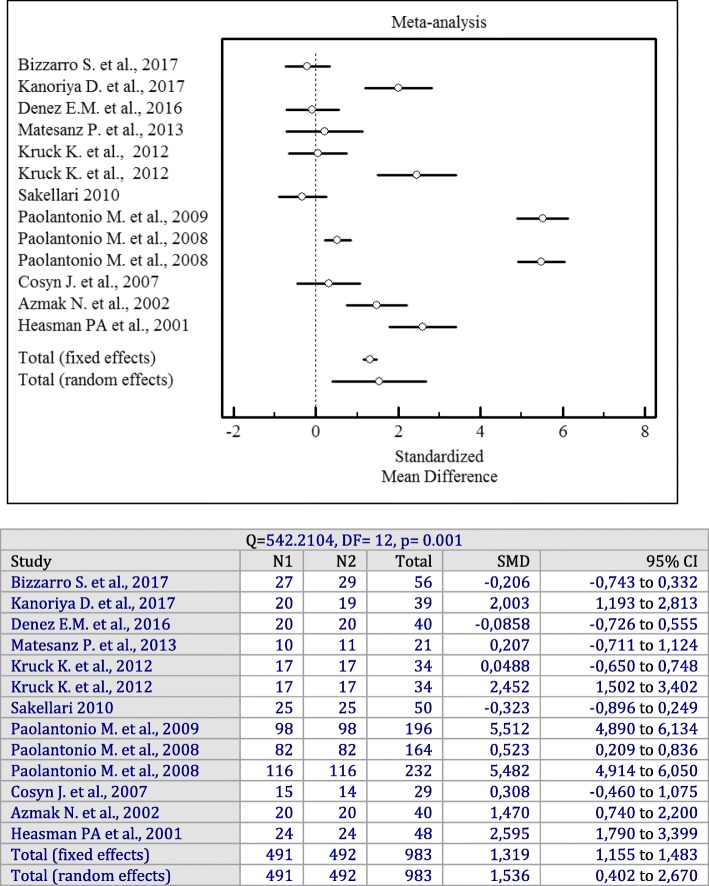
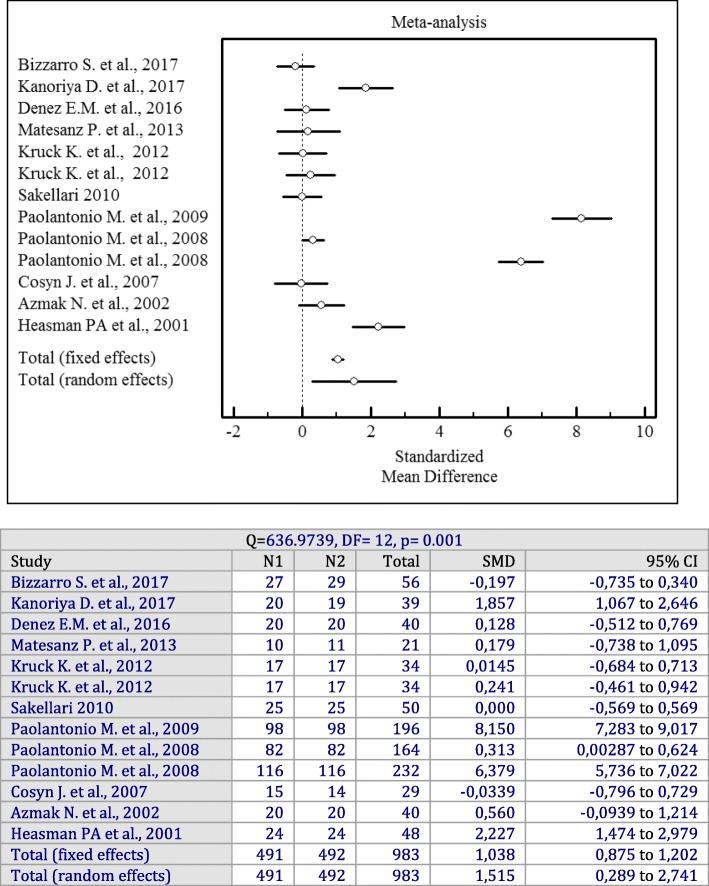
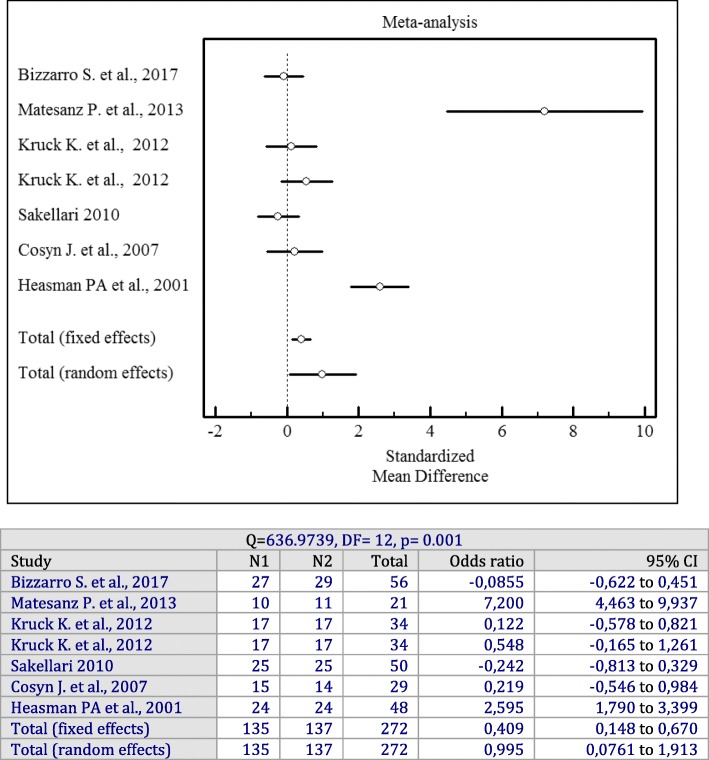
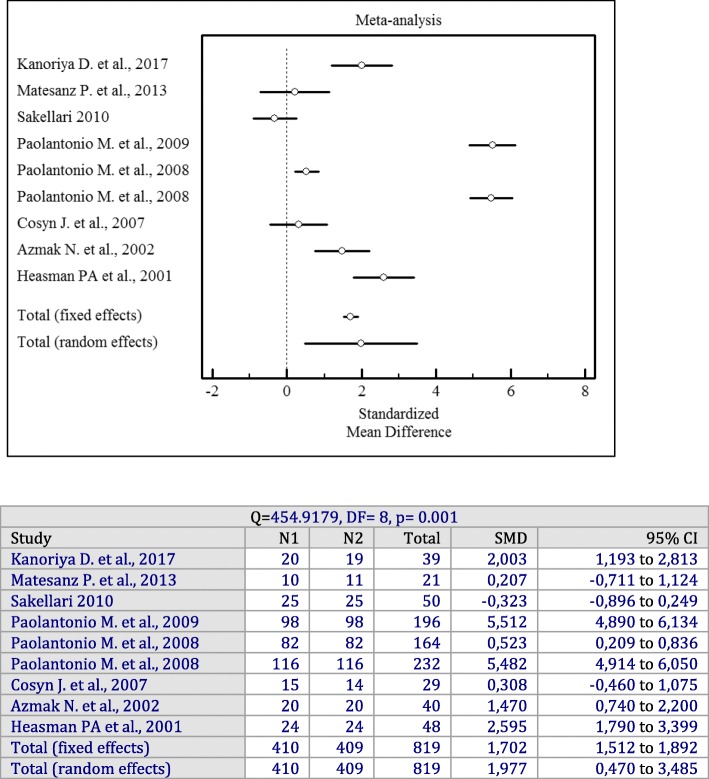
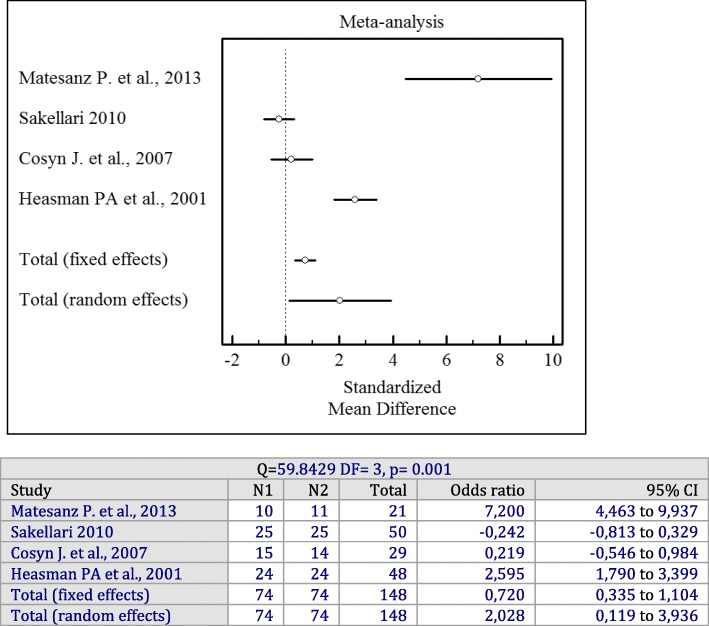
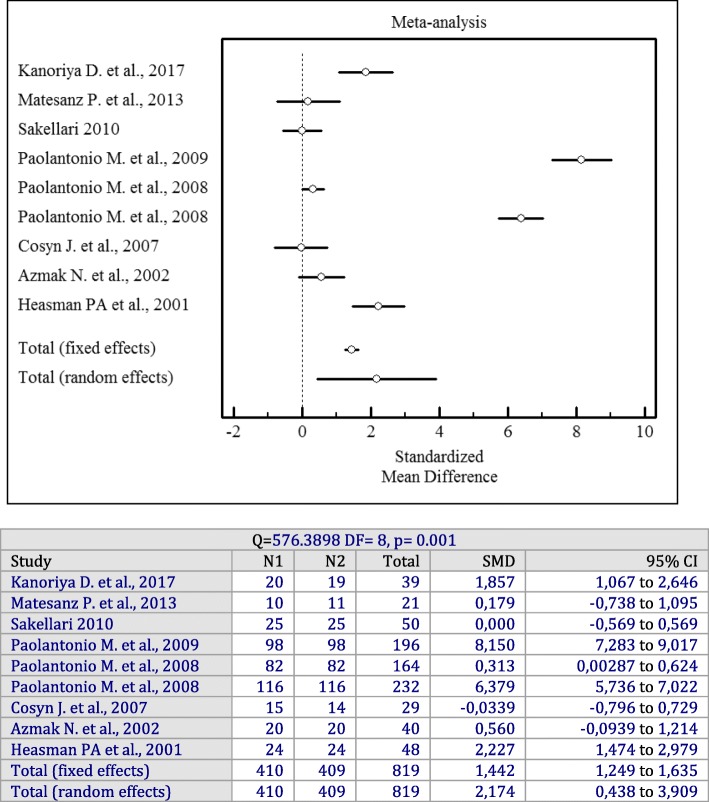
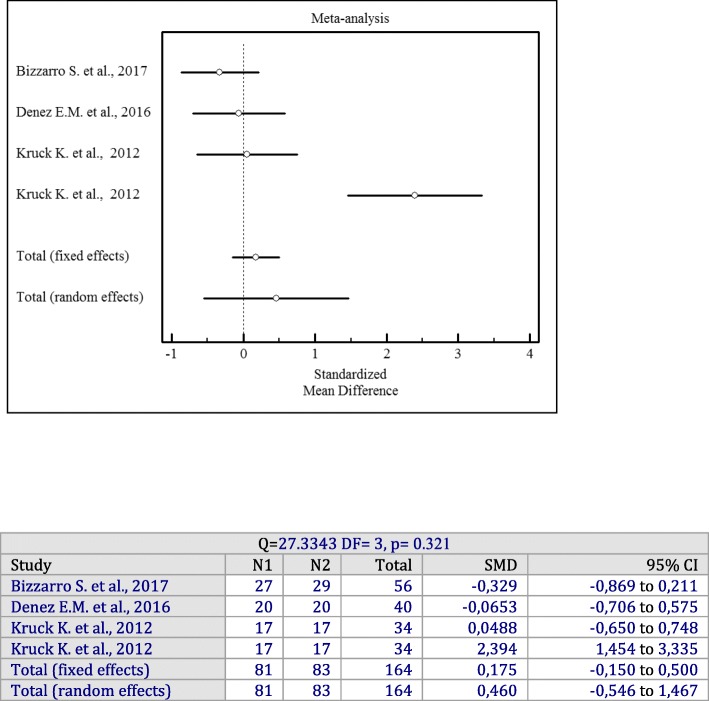
The search resulted in 12 articles that met the inclusion criteria. Based on the vehicle employed to deliver the antiseptic agent, studies were divided into adjunctive sustained-release antiseptics (gels, chips and varnish) and adjunctive irrigation with antiseptics. The meta-analysis demonstrated significant improvements in probing depth (PD) reduction (p = 0.001), clinical attachment level (CAL) gain (p = 0.001), and bleeding on probing (BOP) values (p = 0.001) following the adjunctive subgingival application of sustained-release antiseptics. Additional subgingival irrigation with antiseptics failed to show significant improvements in PD (p = 0.321), CAL (p = 0.7568), or BOP values (p = 0.3549) over SRP alone.
Adjunctive subgingivally delivered antiseptics with a sustained-release delivery have significant clinical benefits compared to SRP alone.
牙周炎是一种由微生物引起的、由宿主介导的炎症性疾病,会导致牙周附着丧失。牙周治疗的目标包括阻止疾病进展,建立健康、稳定、可维持的牙周状况。牙周炎的基本治疗策略是牙周洁治术(SRP),然而其疗效可能在机械器械无法到达的区域受到限制。由于牙周炎本质上具有感染性,因此使用额外的抗菌辅助剂来消除或灭活致病微生物可能会有所帮助。本研究旨在评估在非手术性牙周治疗中使用额外防腐剂辅助 SRP 的潜在临床益处的现有证据。
在 MEDLINE(Ovid)和 Cochrane 对照试验中心注册数据库(CENTRAL)中进行了电子文献检索,检索了 2000 年 1 月 1 日至 2019 年 9 月 22 日期间发表的文章。纳入了以英文发表的比较一种或多种防腐剂作为 SRP 辅助剂与随访时间≥6 个月的有效性的随机对照临床试验。对符合条件的文章采用随机效应模型进行荟萃分析。
检索结果得到了 12 篇符合纳入标准的文章。根据所使用的载体将研究分为辅助性缓释防腐剂(凝胶、药膜和涂料)和辅助性防腐剂冲洗。荟萃分析显示,辅助性龈下应用缓释防腐剂后,探诊深度(PD)减小(p=0.001)、临床附着水平(CAL)增加(p=0.001)和探诊出血(BOP)值降低(p=0.001)有显著改善。额外的龈下用防腐剂冲洗与 SRP 相比,在 PD(p=0.321)、CAL(p=0.7568)或 BOP 值(p=0.3549)方面没有显著改善。
与单独的 SRP 相比,辅助性龈下缓释递送的防腐剂具有显著的临床益处。