Department of Clinical Laboratory, The Third Xiangya Hospital of Central South University , Changsha, R.P. China.
Virulence. 2020 Jan 1;11(1):636-651. doi: 10.1080/21505594.2020.1770493.
MRSA is a major concern in community settings and in health care. The emergence of biofilms and persister cells substantially increases its antimicrobial resistance. It is very urgent to develop new antimicrobials to solve this problem.
Idarubicin was profiled to assess its antimicrobial effects and , and the underlying mechanisms.
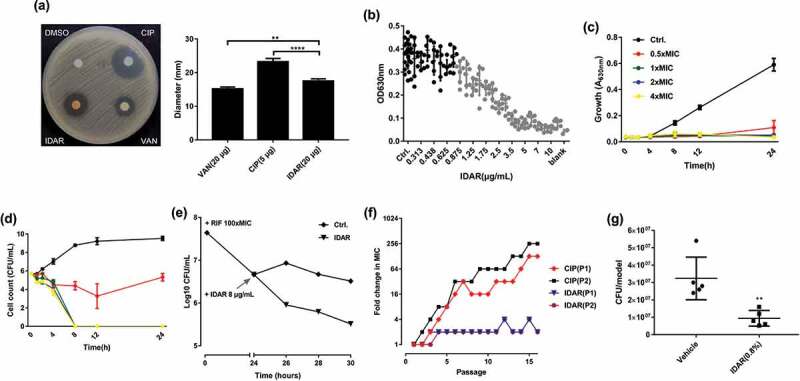
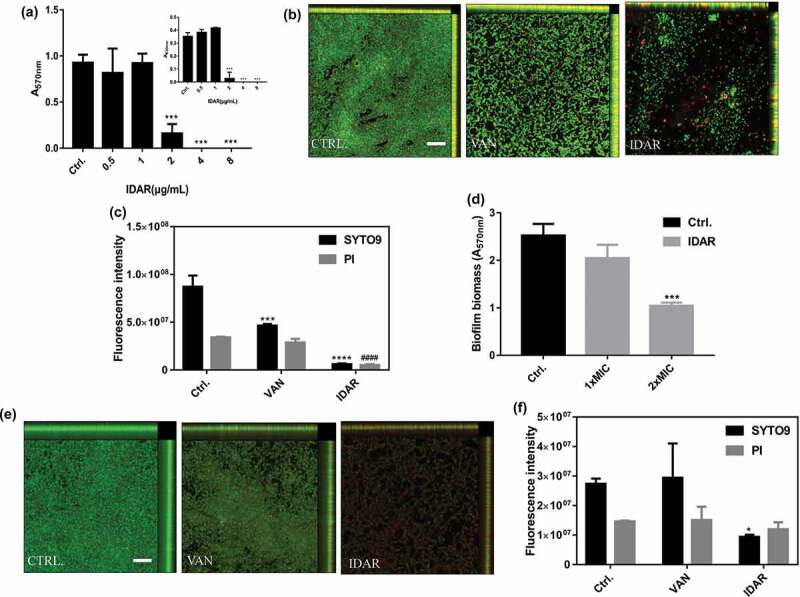
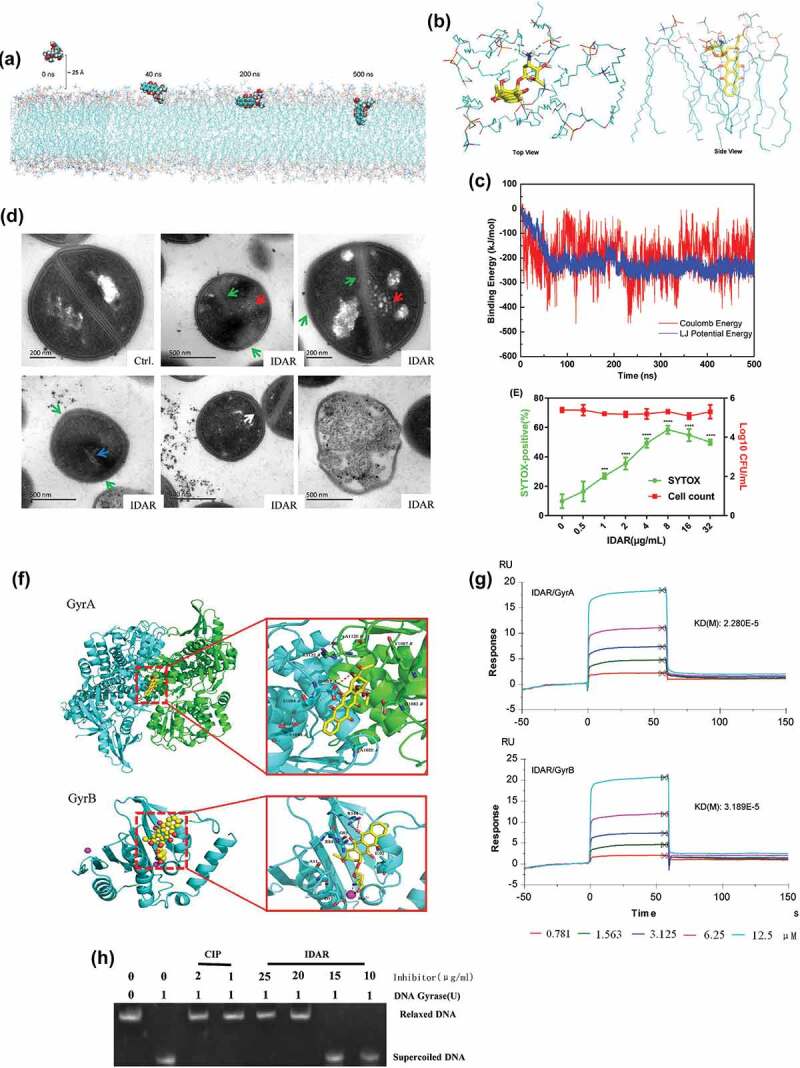
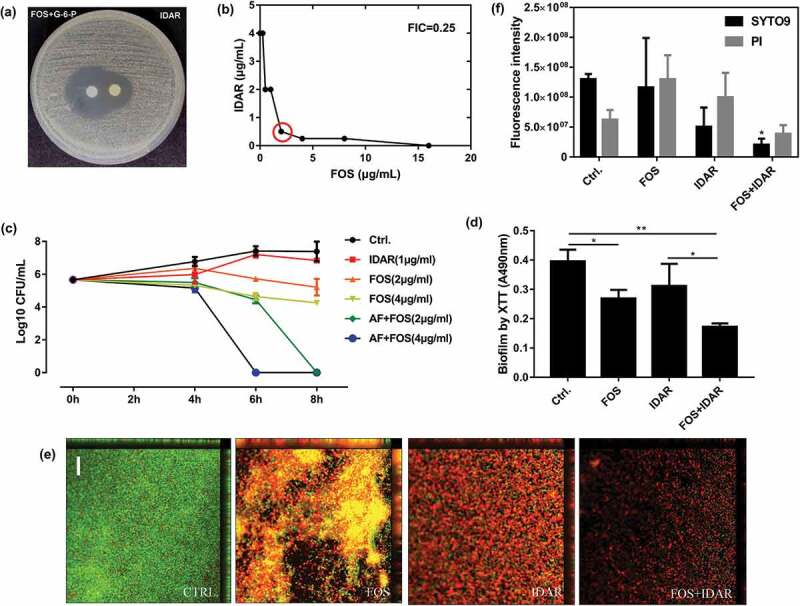
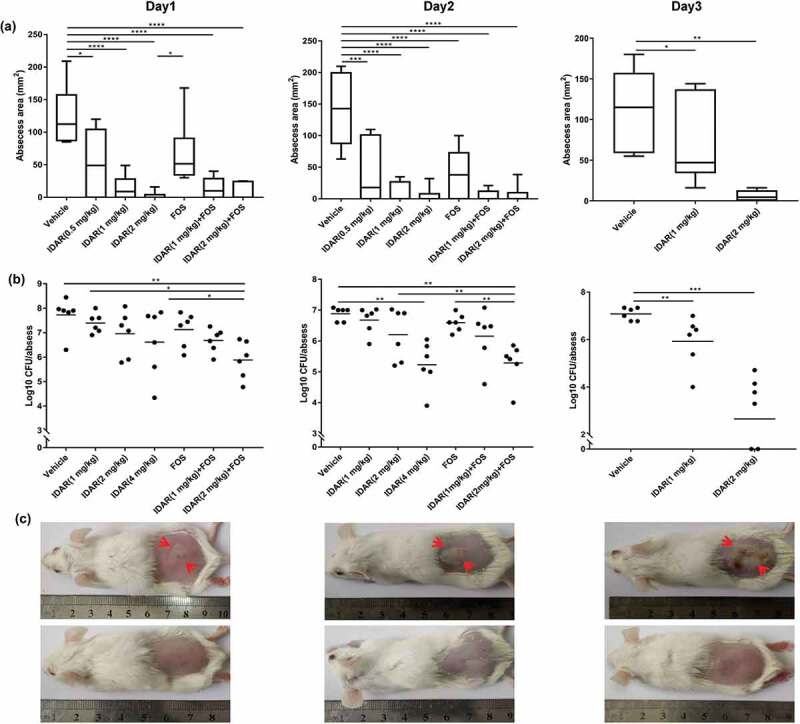
We investigated the antimicrobial effects of idarubicin against MRSA by time-kill analysis. The antibiofilm efficacy of idarubicin was assessed by crystal violet and XTT staining, followed by laser confocal microscopy observation. The mechanisms underlying the antimicrobial effects were studied by transmission electron microscopy, all-atom molecular dynamic simulations, SYTOX staining, surface plasma resonance, and DNA gyrase inhibition assay. Further, we addressed the antimicrobial efficacy in wound and subcutaneous abscess infection .
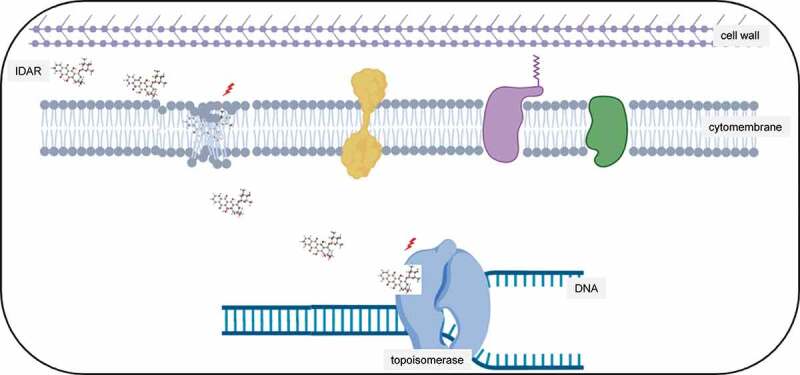
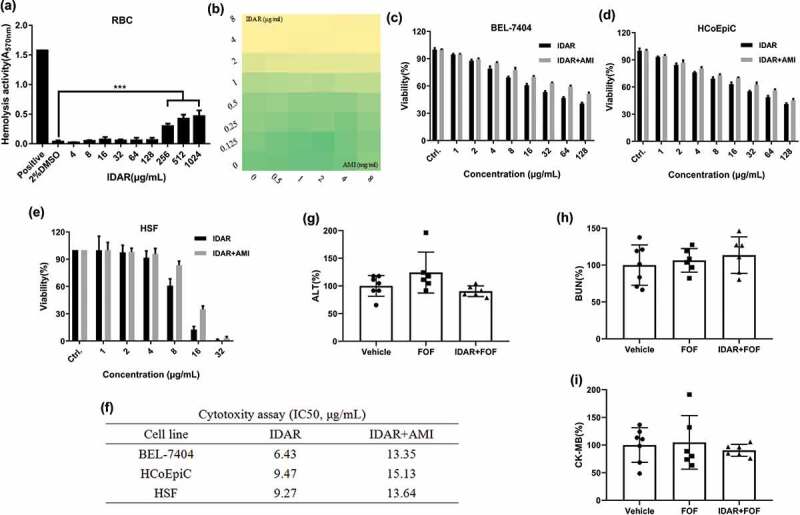
Idarubicin kills MRSA cells by disrupting the lipid bilayers and interrupting the DNA topoisomerase IIA subunits, and idarubicin shows synergistic antimicrobial effects with fosfomycin. Through synergy with a single dose treatment fosfomycin and the addition of the cell protector amifostine, the cytotoxicity and cardiotoxicity of idarubicin were significantly reduced without affecting its antimicrobial effects. Idarubicin alone or in combination with fosfomycin exhibited considerable efficacy in a subcutaneous abscess mouse model of MRSA infection. In addition, idarubicin also showed a low probability of causing resistance and good postantibiotic effects.
Idarubicin and its analogs have the potential to become a new class of antimicrobials for the treatment of MRSA-related infections.
耐甲氧西林金黄色葡萄球菌(MRSA)是社区环境和医疗保健中的一个主要关注点。生物膜和持久细胞的出现大大增加了其抗微生物的耐药性。非常迫切需要开发新的抗菌药物来解决这个问题。
对柔红霉素进行了剖析,以评估其抗菌作用和作用机制。
我们通过时间杀伤分析研究了柔红霉素对 MRSA 的抗菌作用。通过结晶紫和 XTT 染色评估柔红霉素的抗生物膜功效,然后通过激光共聚焦显微镜观察。通过透射电子显微镜、全原子分子动力学模拟、SYTOX 染色、表面等离子体共振和 DNA 拓扑异构酶抑制试验研究了抗菌作用的机制。此外,我们还研究了在伤口和皮下脓肿感染中的抗菌功效。
柔红霉素通过破坏脂质双层和中断 DNA 拓扑异构酶 IIA 亚基来杀死 MRSA 细胞,并且与磷霉素具有协同抗菌作用。通过与单剂量治疗磷霉素的协同作用以及添加细胞保护剂氨磷汀,柔红霉素的细胞毒性和心脏毒性显著降低,而不影响其抗菌作用。柔红霉素单独或与磷霉素联合在 MRSA 感染的皮下脓肿小鼠模型中表现出相当大的功效。此外,柔红霉素还表现出较低的耐药性和良好的后抗生素效应的可能性。
柔红霉素及其类似物有可能成为治疗 MRSA 相关感染的一类新的抗菌药物。