Venturini Andressa Monteiro, Nakamura Fernanda Mancini, Gontijo Júlia Brandão, da França Aline Giovana, Yoshiura Caio Augusto, Mandro Jéssica Adriele, Tsai Siu Mui
Cell and Molecular Biology Laboratory, Center for Nuclear Energy in Agriculture, University of São Paulo, Avenida Centenário, 303, Piracicaba, SP, 13416-000, Brazil.
Heliyon. 2020 May 13;6(5):e03830. doi: 10.1016/j.heliyon.2020.e03830. eCollection 2020 May.
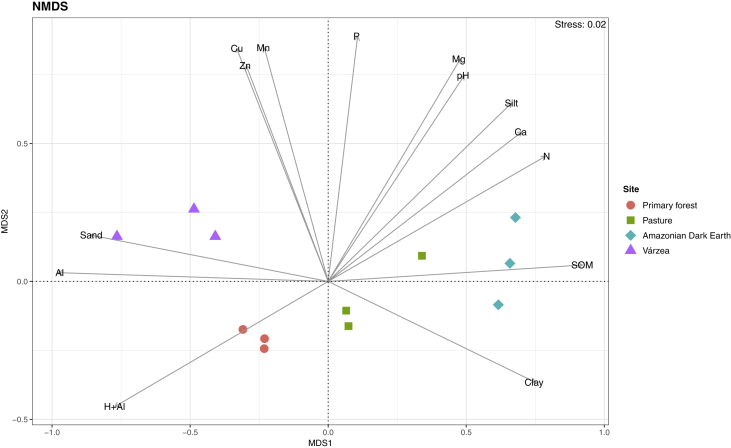
Studies in the Amazon are being intensified to evaluate the alterations in the microbial communities of soils and sediments in the face of increasing deforestation and land-use changes in the region. However, since these environments present highly heterogeneous physicochemical properties, including contaminants that hinder nucleic acids isolation and downstream techniques, the development of best molecular practices is crucial. This work aimed to optimize standard protocols for DNA extraction and gene quantification by quantitative real-time PCR (qPCR) based on natural and anthropogenic soils and sediments (primary forest, pasture, Amazonian Dark Earth, and várzea, a seasonally flooded area) of the Eastern Amazon. Our modified extraction protocol increased the fluorometric DNA concentration by 48%, reaching twice the original amount for most of the pasture and várzea samples, and the 260/280 purity ratio by 15% to values between 1.8 to 2.0, considered ideal for DNA. The addition of bovine serum albumin in the qPCR reaction improved the quantification of the 16S rRNA genes of and and its precision among technical replicates, as well as allowed their detection in previously non-amplifiable samples. It is concluded that the changes made in the protocols improved the parameters of the DNA samples and their amplification, thus increasing the reliability of microbial communities' analysis and its ecological interpretations.
针对亚马逊地区的研究正在加强,以评估该地区森林砍伐增加和土地利用变化情况下土壤和沉积物微生物群落的改变。然而,由于这些环境具有高度异质的物理化学性质,包括阻碍核酸分离及下游技术的污染物,因此开发最佳分子方法至关重要。这项工作旨在基于亚马逊东部的天然和人为土壤及沉积物(原始森林、牧场、亚马逊黑土和várzea,一个季节性洪泛区),优化用于DNA提取和通过定量实时PCR(qPCR)进行基因定量的标准方案。我们改进的提取方案使荧光DNA浓度提高了48%,对于大多数牧场和várzea样本,达到了原始量的两倍,并且260/280纯度比提高了15%,达到1.8至2.0之间的值,这被认为是DNA的理想值。在qPCR反应中添加牛血清白蛋白改善了 和 的16S rRNA基因的定量及其在技术重复间的精度,还使得能够在先前无法扩增的样本中检测到它们。得出的结论是,方案中的改变改善了DNA样本及其扩增的参数,从而提高了微生物群落分析及其生态学解释的可靠性。