Ji Wei, Yuan Chengqian, Chakraborty Priyadarshi, Makam Pandeeswar, Bera Santu, Rencus-Lazar Sigal, Li Junbai, Yan Xuehai, Gazit Ehud
Department of Molecular Microbiology and Biotechnology, George S. Wise Faculty of Life Sciences, Tel Aviv University, Tel Aviv 6997801, Israel.
State Key Laboratory of Biochemical Engineering, Institute of Process Engineering, Chinese Academy of Sciences 100190 Beijing, China.
ACS Nano. 2020 Jun 23;14(6):7181-7190. doi: 10.1021/acsnano.0c02138. Epub 2020 May 22.
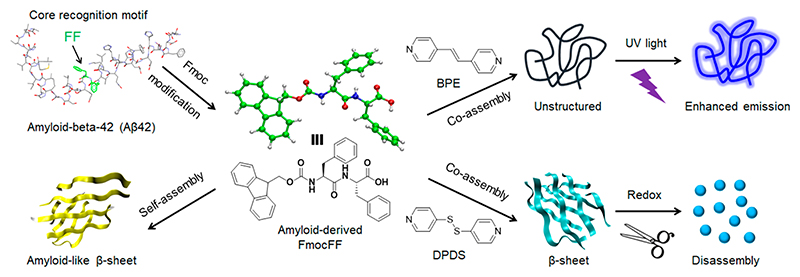
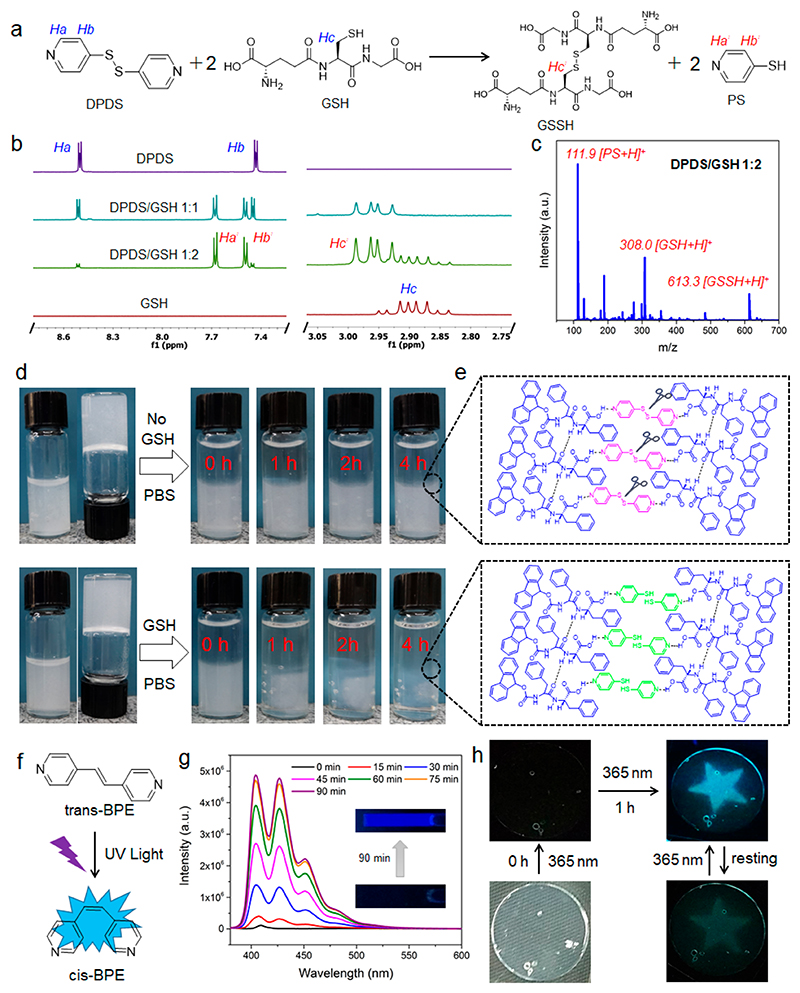
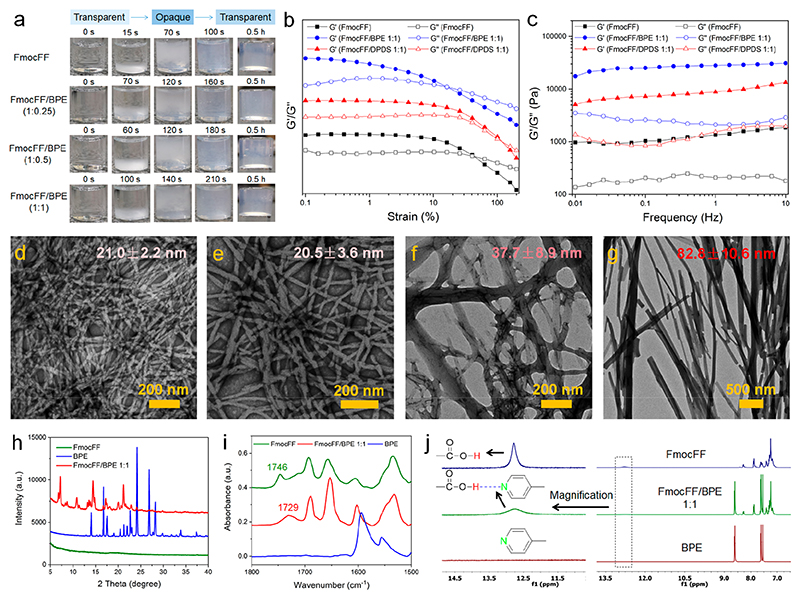
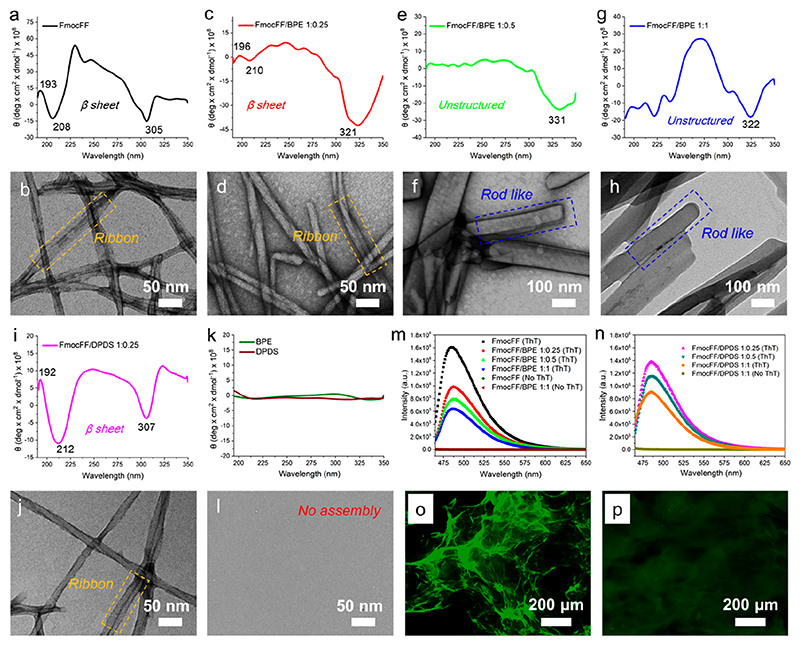
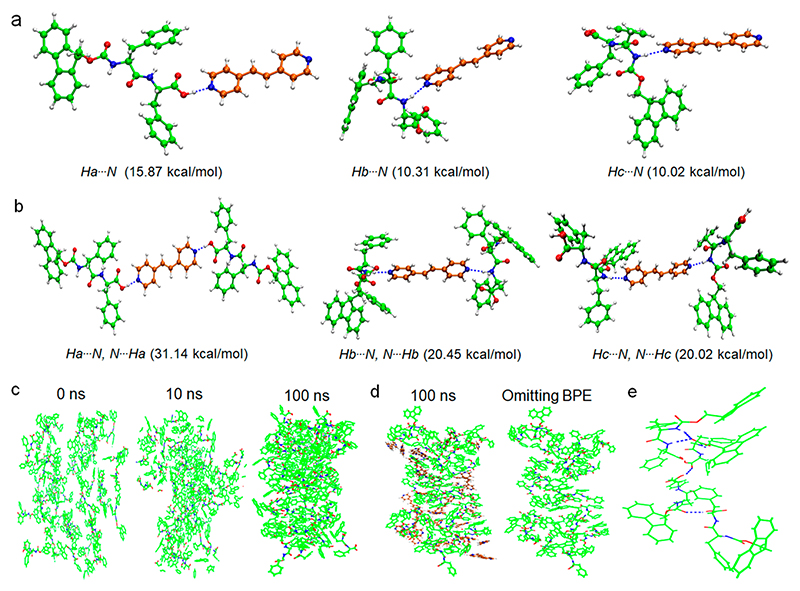
Conformational transition of proteins and peptides into highly stable, β-sheet-rich structures is observed in many amyloid-associated neurodegenerative disorders, yet the precise mechanism of amyloid formation at the molecular level remains poorly understood due to the complex molecular structures. Short peptides provide simplified models for studying the molecular basis of the assembly mechanism that governs β-sheet fibrillation processes underlying the formation and inhibition of amyloid-like structures. Herein, we report a supramolecular coassembly strategy for the inhibition and transformation of stable β-sheet-rich amyloid-derived dipeptide self-assemblies into adaptable secondary structural fibrillar assemblies by mixing with bipyridine derivatives. The interplay between the type and mixing ratio of bipyridine derivatives allowed the variable coassembly process with stimuli-responsive functional properties, studied by various experimental characterizations and computational methods. Furthermore, the resulting coassemblies showed functional redox- and photoresponsive properties, making them promising candidates for controllable drug release and fluorescent imprint. This work presents a coassembly strategy not only to explore the mechanism of amyloid-like structure formation and inhibition at the molecular level but also to manipulate amyloid-like structures into responsive supramolecular coassemblies for material science and biotechnology applications.
在许多与淀粉样蛋白相关的神经退行性疾病中,都观察到蛋白质和肽向高度稳定的、富含β-折叠结构的构象转变。然而,由于分子结构复杂,淀粉样蛋白形成的精确分子机制仍知之甚少。短肽为研究控制淀粉样蛋白样结构形成和抑制的β-折叠纤维形成过程的组装机制的分子基础提供了简化模型。在此,我们报告了一种超分子共组装策略,通过与联吡啶衍生物混合,抑制稳定的富含β-折叠的淀粉样二肽自组装体并将其转化为适应性二级结构的纤维状组装体。联吡啶衍生物的类型和混合比例之间的相互作用允许可变的共组装过程具有刺激响应功能特性,通过各种实验表征和计算方法进行研究。此外,所得的共组装体表现出功能性氧化还原和光响应特性,使其成为可控药物释放和荧光印记的有前途的候选物。这项工作提出了一种共组装策略,不仅可以在分子水平上探索淀粉样蛋白样结构形成和抑制的机制,还可以将淀粉样蛋白样结构转化为响应性超分子共组装体,用于材料科学和生物技术应用。