Institute of Cognitive Neuroscience, University College London, London, United Kingdom; Wellcome Centre for Human Neuroimaging, University College London, London, UK.
Institute of Cognitive and Clinical Neuroscience, Central Institute of Mental Health, Medical Faculty Mannheim, Heidelberg University, Mannheim, Germany; Department of Psychology, School of Social Sciences, University of Mannheim, Germany; Center for Neuroplasticity and Pain (CNAP), Department of Health Science and Technology, Aalborg University, Aalborg, Denmark.
Neuroimage. 2020 Sep;218:116943. doi: 10.1016/j.neuroimage.2020.116943. Epub 2020 May 16.
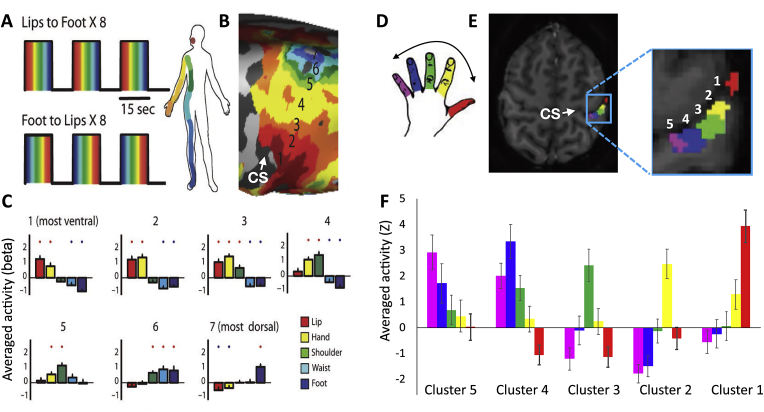
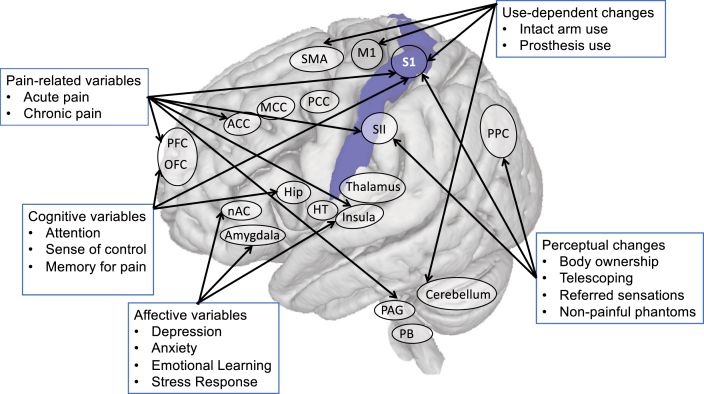
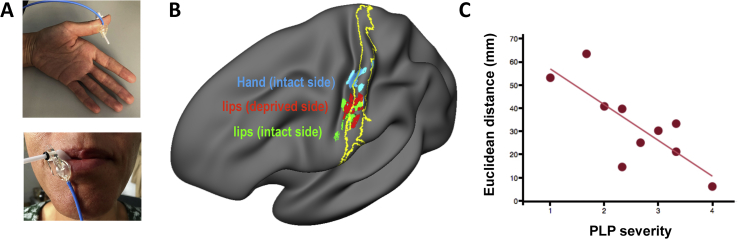
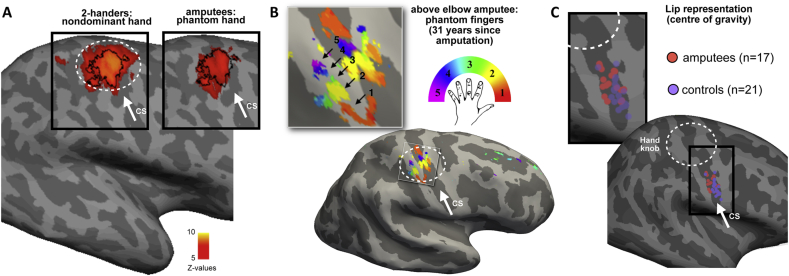
Following arm amputation the region that represented the missing hand in primary somatosensory cortex (S1) becomes deprived of its primary input, resulting in changed boundaries of the S1 body map. This remapping process has been termed 'reorganisation' and has been attributed to multiple mechanisms, including increased expression of previously masked inputs. In a maladaptive plasticity model, such reorganisation has been associated with phantom limb pain (PLP). Brain activity associated with phantom hand movements is also correlated with PLP, suggesting that preserved limb functional representation may serve as a complementary process. Here we review some of the most recent evidence for the potential drivers and consequences of brain (re)organisation following amputation, based on human neuroimaging. We emphasise other perceptual and behavioural factors consequential to arm amputation, such as non-painful phantom sensations, perceived limb ownership, intact hand compensatory behaviour or prosthesis use, which have also been related to both cortical changes and PLP. We also discuss new findings based on interventions designed to alter the brain representation of the phantom limb, including augmented/virtual reality applications and brain computer interfaces. These studies point to a close interaction of sensory changes and alterations in brain regions involved in body representation, pain processing and motor control. Finally, we review recent evidence based on methodological advances such as high field neuroimaging and multivariate techniques that provide new opportunities to interrogate somatosensory representations in the missing hand cortical territory. Collectively, this research highlights the need to consider potential contributions of additional brain mechanisms, beyond S1 remapping, and the dynamic interplay of contextual factors with brain changes for understanding and alleviating PLP.
手臂截肢后,初级躯体感觉皮层(S1)中代表缺失手部的区域会失去其主要输入,导致 S1 身体图的边界发生变化。这个重新映射的过程被称为“重组”,归因于多种机制,包括先前被掩盖的输入的表达增加。在适应性不良的可塑性模型中,这种重组与幻肢痛(PLP)有关。与幻手运动相关的大脑活动也与 PLP 相关,这表明保留的肢体功能表示可能是一个补充过程。在这里,我们基于人类神经影像学,回顾了一些关于截肢后大脑(重新)组织的潜在驱动因素和后果的最新证据。我们强调了手臂截肢后其他与知觉和行为相关的因素,例如无痛的幻肢感觉、感知的肢体所有权、完整的手部代偿行为或假体使用,这些因素也与皮质变化和 PLP 有关。我们还讨论了基于旨在改变幻肢大脑表示的干预措施的新发现,包括增强/虚拟现实应用程序和脑机接口。这些研究表明,感觉变化与涉及身体表示、疼痛处理和运动控制的大脑区域的改变密切相关。最后,我们回顾了基于高场神经影像学和多元技术等方法学进展的最新证据,这些进展为研究缺失手部皮质区域的体感表示提供了新的机会。总的来说,这项研究强调了需要考虑除 S1 重新映射之外的其他大脑机制的潜在贡献,以及上下文因素与大脑变化之间的动态相互作用,以理解和缓解 PLP。