Boston University School of Medicine, Boston, Massachusetts, USA.
J Diabetes Investig. 2020 Nov;11(6):1403-1419. doi: 10.1111/jdi.13303. Epub 2020 Jul 7.
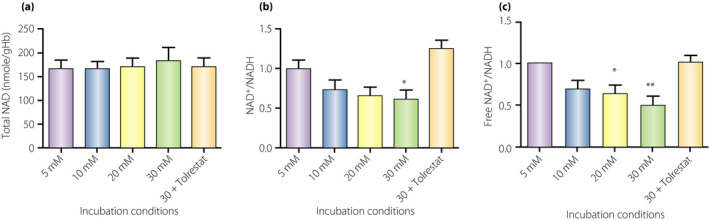
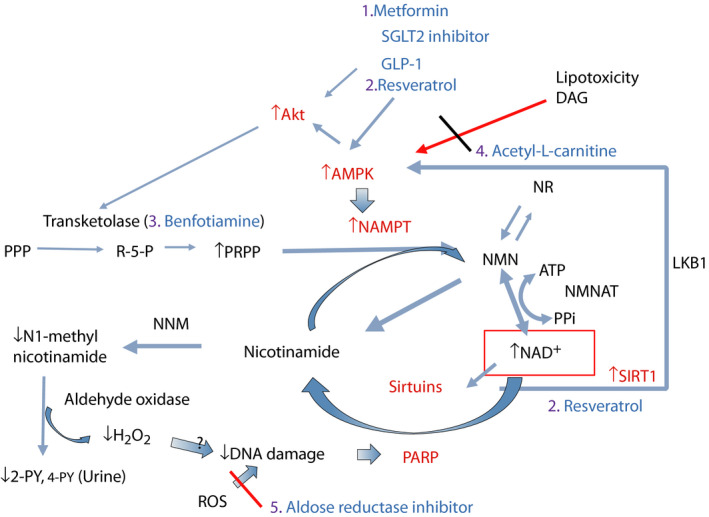
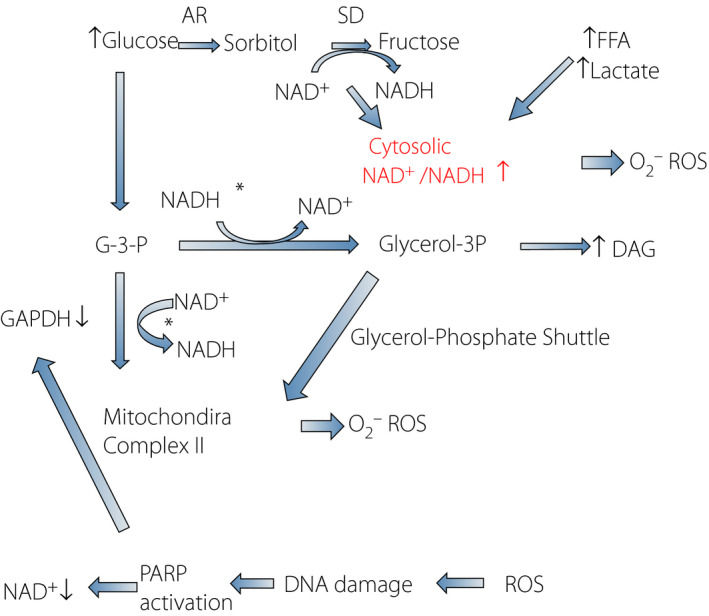
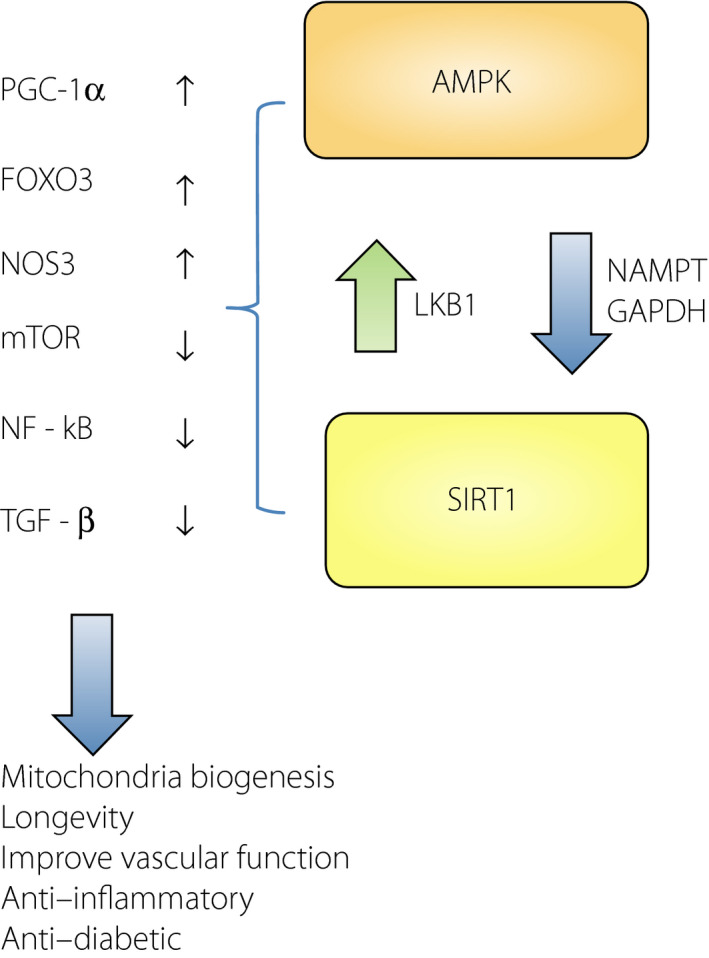
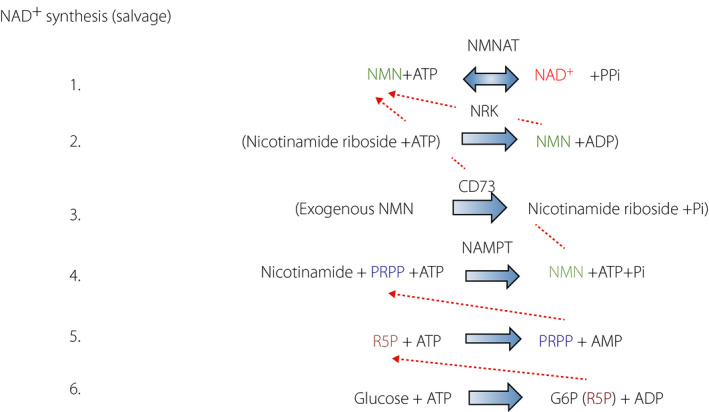
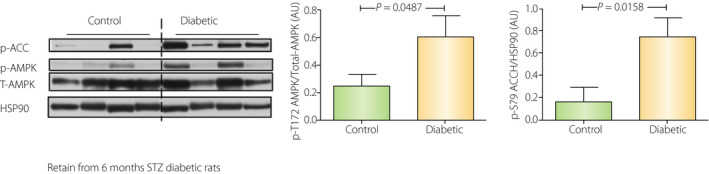
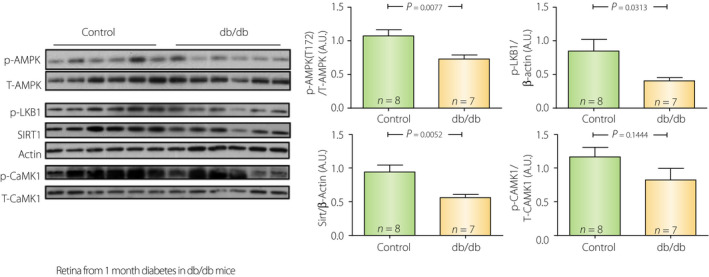
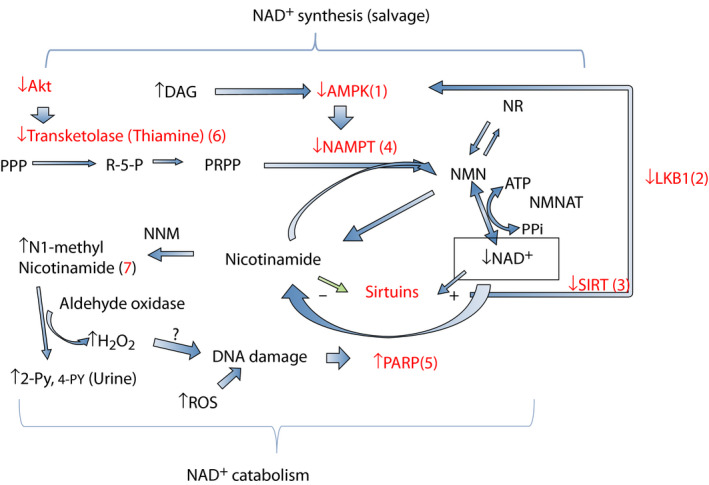
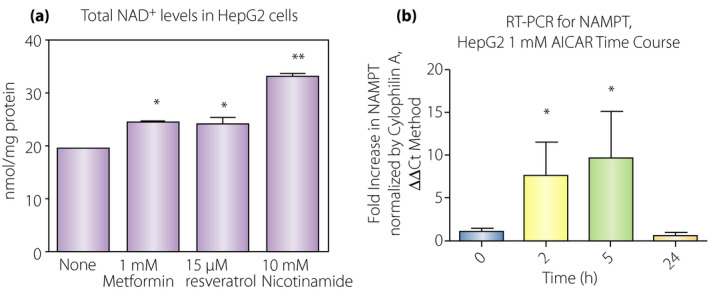
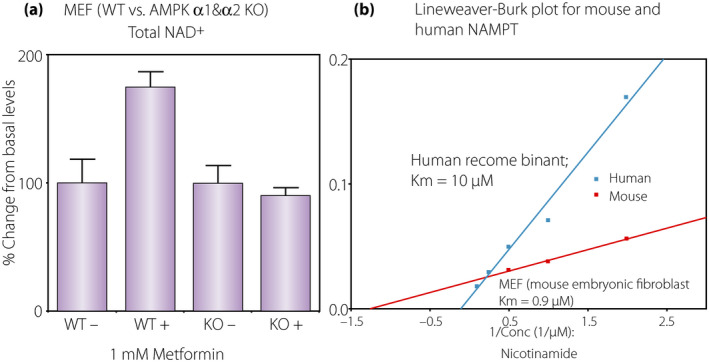
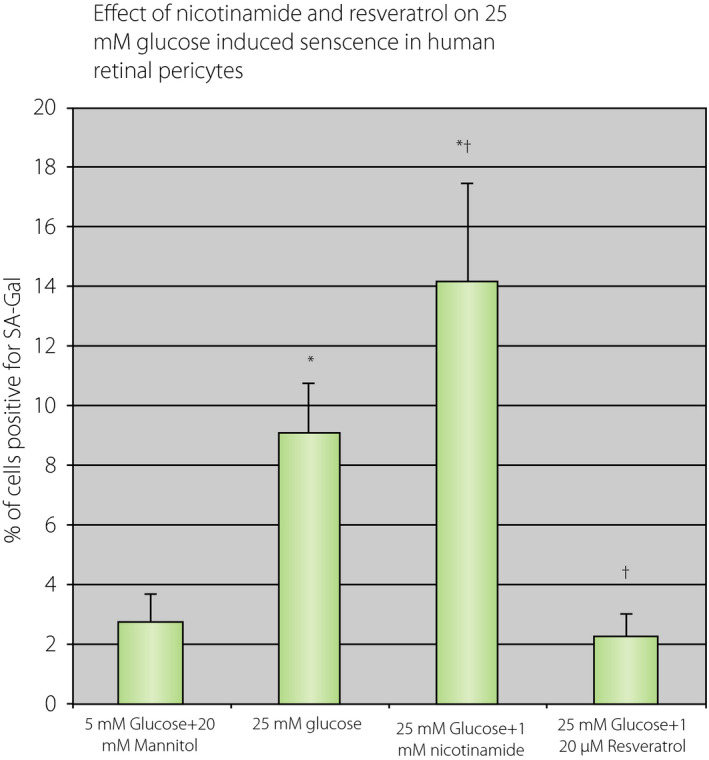
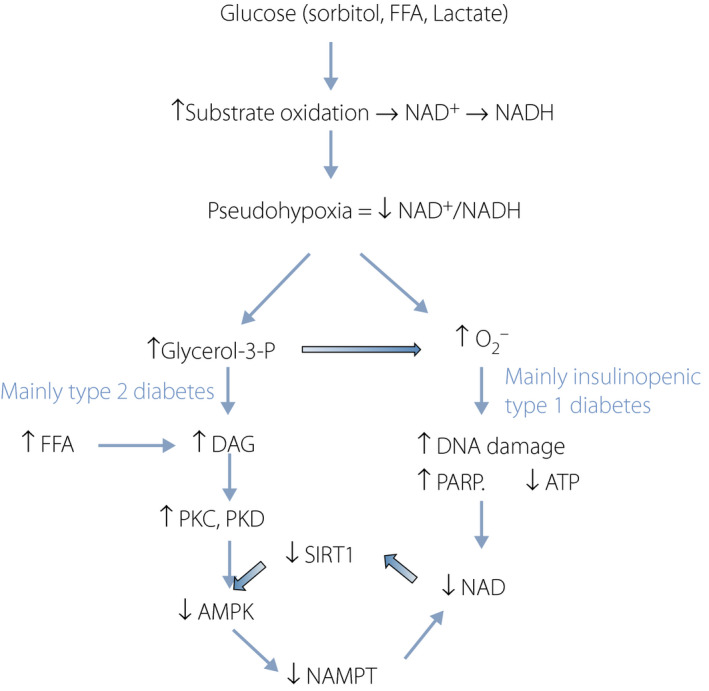
One of the biochemical abnormalities found in diabetic tissues is a decrease in the cytosolic oxidized to reduced forms of the nicotinamide adenine dinucleotide ratio (NAD /NADH also known as pseudohypoxia) caused by oxidation of excessive substrates (glucose through the polyol pathway, free fatty acids and lactate). Subsequently, a decline in NAD levels as a result of the activation of poly adenine nucleotide diphosphate-ribose polymerase (mainly in type 1 diabetes) or the inhibition of adenine nucleotide monophosphate-activated protein kinase (in type 2 diabetes). Thus, replenishment of NAD levels by nicotinamide-related compounds could be beneficial. However, these compounds also increase nicotinamide catabolites that cause oxidative stress. This is particularly troublesome for patients with diabetes, because they have impaired nicotinamide salvage pathway reactions at the level of nicotinamide phosphoribosyl transferase and phosphoribosyl pyrophosphate, which occurs by the following mechanisms. First, phosphoribosyl pyrophosphate synthesis from pentose phosphate pathway is compromised by a decrease in plasma thiamine and transketolase activity. Second, nicotinamide phosphoribosyl transferase expression is decreased because of reduced adenosine monophosphate-activated protein kinase activity, which occurs in type 2 diabetes. The adenosine monophosphate-activated protein kinase inhibition is caused by an activation of protein kinase C and D1 as a result of enhanced diacylglycerol synthesis caused by pseudohypoxia and increased fatty acids levels. In this regard, nicotinamide-related compounds should be given with caution to treat diabetes. To minimize the risk and maximize the benefit, nicotinamide-related compounds should be taken with insulin sensitizers (for type 2 diabetes), polyphenols, benfotiamine, acetyl-L-carnitine and aldose reductase inhibitors. The efficacy of these regimens can be monitored by measuring serum NAD and urinary nicotinamide catabolites.
糖尿病组织中发现的生化异常之一是,由于过量底物(通过多元醇途径的葡萄糖、游离脂肪酸和乳酸)的氧化,导致胞质中氧化型烟酰胺腺嘌呤二核苷酸与还原型烟酰胺腺嘌呤二核苷酸比值(NAD/NADH,也称为假性缺氧)降低。随后,由于多聚腺嘌呤核苷酸二磷酸核糖基转移酶的激活(主要在 1 型糖尿病中)或腺嘌呤核苷酸单磷酸激活蛋白激酶的抑制(在 2 型糖尿病中),导致 NAD 水平下降。因此,通过烟酰胺相关化合物补充 NAD 水平可能是有益的。然而,这些化合物也会增加导致氧化应激的烟酰胺分解产物。这对糖尿病患者尤其麻烦,因为他们在烟酰胺磷酸核糖基转移酶和磷酸核糖焦磷酸水平的烟酰胺回收途径反应受损,这是通过以下机制发生的。首先,由于血浆硫胺素和转酮醇酶活性降低,戊糖磷酸途径的磷酸核糖焦磷酸合成受到损害。其次,由于腺苷单磷酸激活蛋白激酶活性降低,烟酰胺磷酸核糖基转移酶表达减少,这在 2 型糖尿病中发生。由于假性缺氧导致二酰基甘油合成增加和脂肪酸水平升高,导致蛋白激酶 C 和 D1 激活,从而抑制腺苷单磷酸激活蛋白激酶。在这方面,应谨慎使用烟酰胺相关化合物来治疗糖尿病。为了最大限度地降低风险和最大化获益,烟酰胺相关化合物应与胰岛素增敏剂(用于 2 型糖尿病)、多酚、苯磷硫胺、乙酰左旋肉碱和醛糖还原酶抑制剂一起使用。可以通过测量血清 NAD 和尿烟酰胺分解产物来监测这些方案的疗效。