Department of Microbiology, Immunology and Genetics; Graduate School of Biomedical Science, University of North Texas Health Science Center, 3500 Camp Bowie Blvd., Fort Worth, TX, USA.
BMC Med Genomics. 2020 May 19;13(1):71. doi: 10.1186/s12920-020-0727-9.
Methylation of mitochondrial tRNAs (mt-tRNA) at the 9th position ("p9 site") is known to impact translational efficiency and downstream mitochondrial function; however, direct assessment of mt-RNA methylation is challenging. Recent RNA sequence-based methods have been developed to reliably identify post-transcriptional methylation. Though p9 methylation has been studied in healthy human populations and in the context of cancer, it has not yet been analyzed in neurodegenerative disease, where mitochondrial dysfunction is a prominent and early hallmark of disease progression.
Mitochondrial p9 methylation was inferred from multi-allelic calls in RNA-seq data. Gene-based association studies were performed in FUMA. Correlations between nuclear gene expression and p9 methylation were tested using Spearman's rho. Fisher's Exact test was used in PANTHER and IPA to test for overrepresentation and enrichment of biological processes and pathways in the top nuclear genes correlated with p9 methylation.
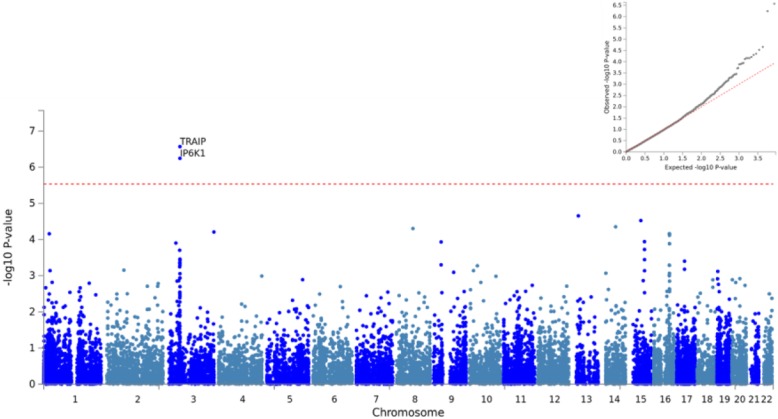
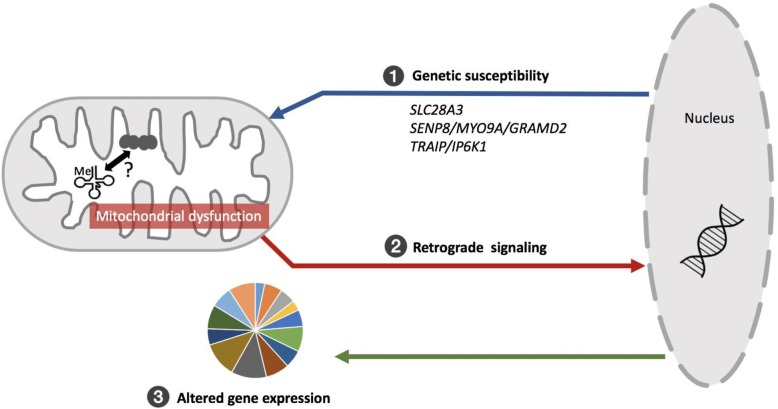
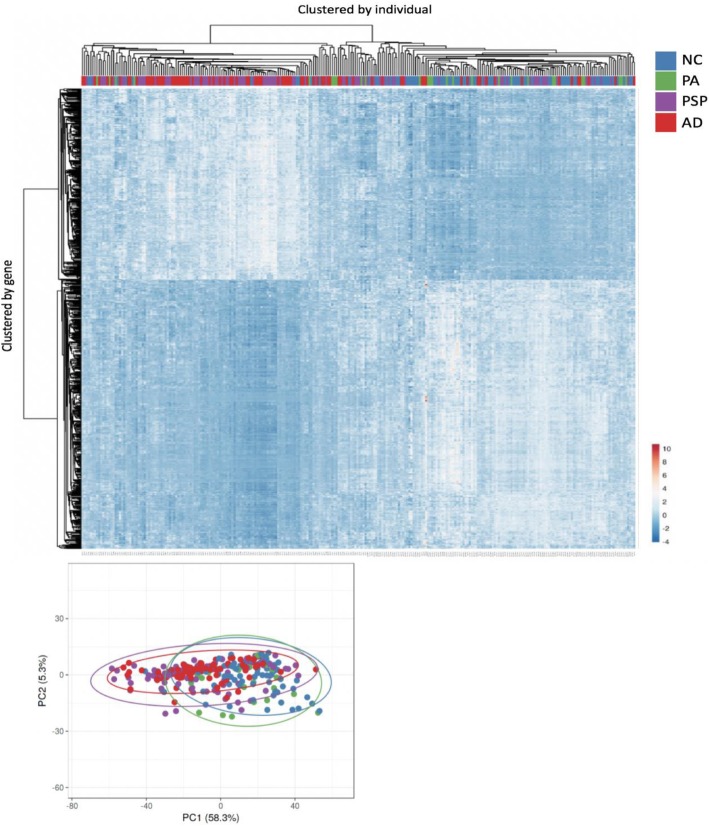
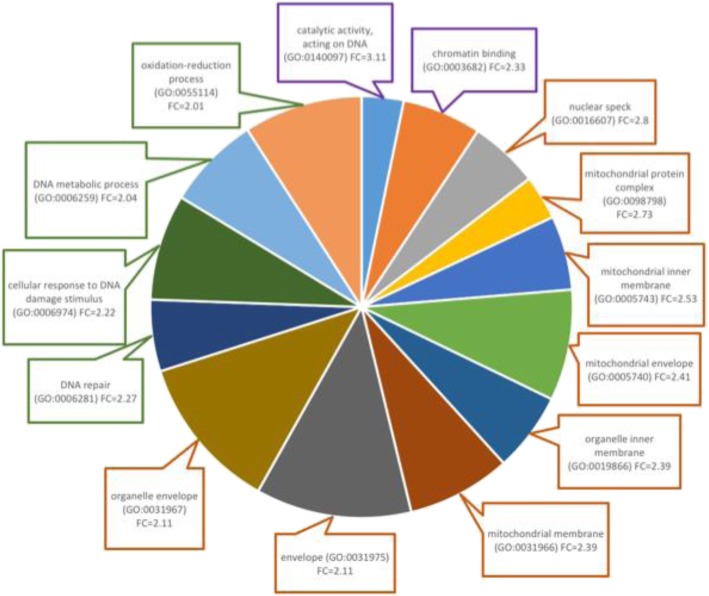
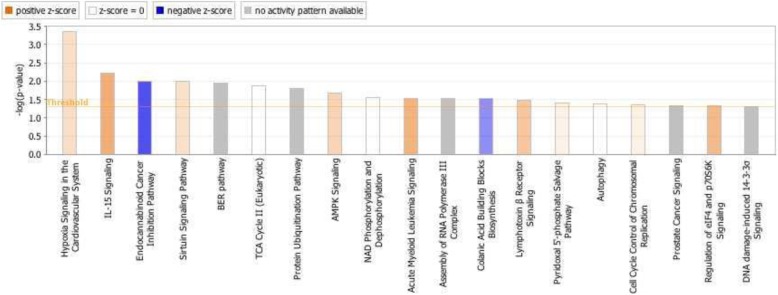
Variable methylation was observed at 11 p9 sites in post-mortem cerebellar tissue of elderly subjects who were either healthy or diagnosed with Alzheimer's disease (AD), progressive supranuclear palsy (PSP) or pathological aging (PA). Similarities in degree of methylation were observed between AD and PSP. Certain nuclear encoded genes were identified as significantly associated with p9 methylation. Expression of 5300 nuclear encoded genes was significantly correlated with p9 methylation, with AD and PSP subjects exhibiting similar expression profiles. Overrepresentation and enrichment testing using the top transcripts revealed enrichment for a number of molecular processes, terms and pathways including many of which that were mitochondrial-related.
With mitochondrial dysfunction being an established hallmark of neurodegenerative disease pathophysiology, this work sheds light on the potential molecular underpinnings of this dysfunction. Here we show overlap in cerebellar pathophysiology between common tauopathies such as Alzheimer's disease and progressive supranuclear palsy. Whether p9 hypermethylation is a cause or consequence of pathology remains an area of focus.
线粒体 tRNA(mt-tRNA)在第 9 位的甲基化(“p9 位”)已知会影响翻译效率和下游线粒体功能;然而,直接评估 mt-RNA 甲基化具有挑战性。最近已经开发出基于 RNA 序列的方法来可靠地鉴定转录后甲基化。虽然 p9 甲基化已在健康人群和癌症背景下进行了研究,但在神经退行性疾病中尚未进行分析,而线粒体功能障碍是疾病进展的突出和早期标志。
从 RNA-seq 数据中的多等位基因调用推断线粒体 p9 甲基化。在 FUMA 中进行基于基因的关联研究。使用 Spearman 的 rho 检验核基因表达与 p9 甲基化之间的相关性。使用 Fisher's Exact 检验在 PANTHER 和 IPA 中检验与 p9 甲基化相关的前核基因中生物学过程和途径的过度表达和富集。
在老年受试者死后的小脑组织中观察到 11 个 p9 位的可变甲基化,这些受试者要么健康,要么被诊断为阿尔茨海默病 (AD)、进行性核上性麻痹 (PSP) 或病理性衰老 (PA)。AD 和 PSP 之间观察到相似程度的甲基化。确定了一些与 p9 甲基化显著相关的核编码基因。5300 个核编码基因的表达与 p9 甲基化显著相关,AD 和 PSP 受试者表现出相似的表达谱。使用顶级转录本进行的过度表达和富集检验显示,许多分子过程、术语和途径都得到了富集,其中许多与线粒体有关。
由于线粒体功能障碍是神经退行性疾病病理生理学的既定标志,这项工作揭示了这种功能障碍的潜在分子基础。在这里,我们展示了常见 tau 病(如阿尔茨海默病和进行性核上性麻痹)之间小脑病理生理学的重叠。p9 高甲基化是病理的原因还是后果仍然是一个关注的焦点。