1Eijkman Institute for Molecular Biology, Jakarta, Indonesia.
2Department of Parasitology, Faculty of Medicine, Universitas Hasanuddin, Makassar, Indonesia.
Am J Trop Med Hyg. 2020 Jul;103(1):344-358. doi: 10.4269/ajtmh.19-0554. Epub 2020 May 14.
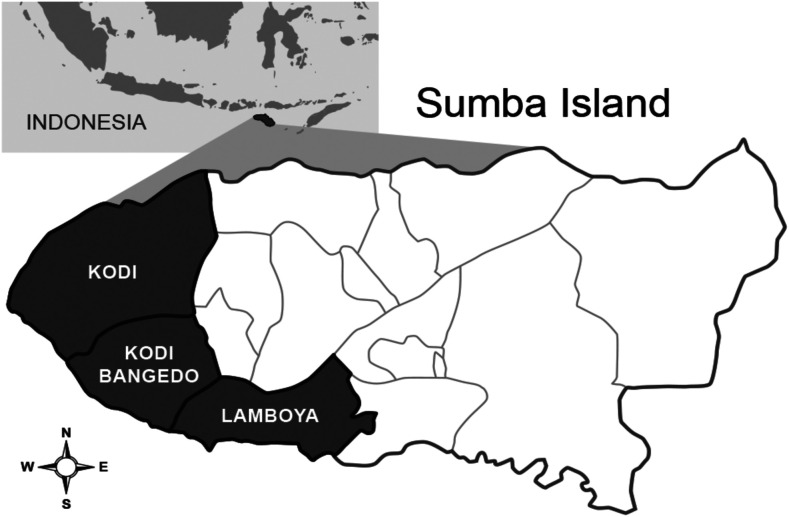
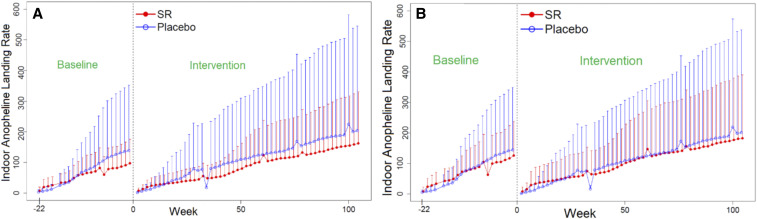
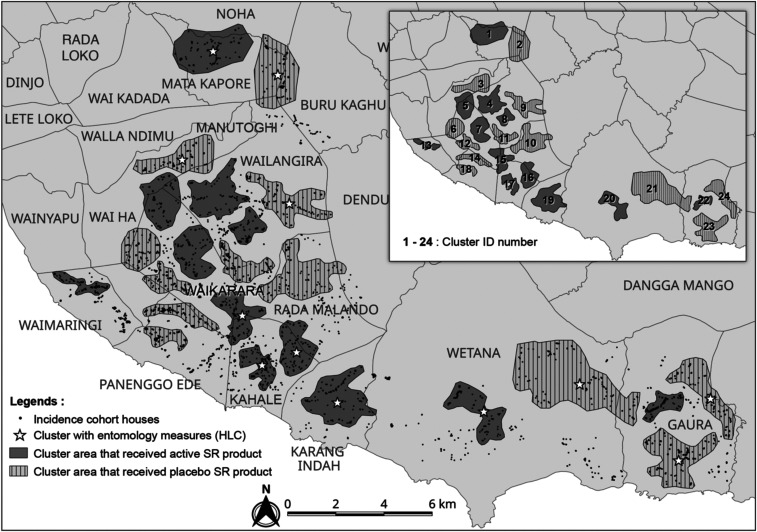
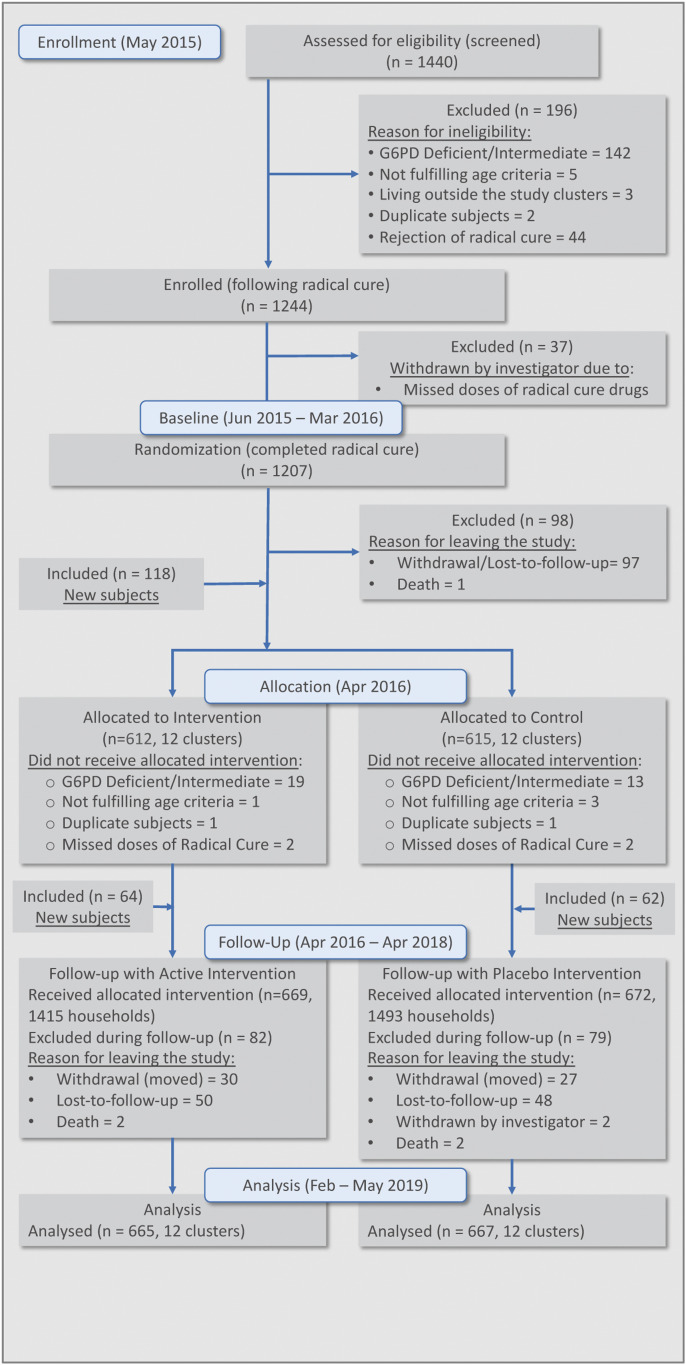
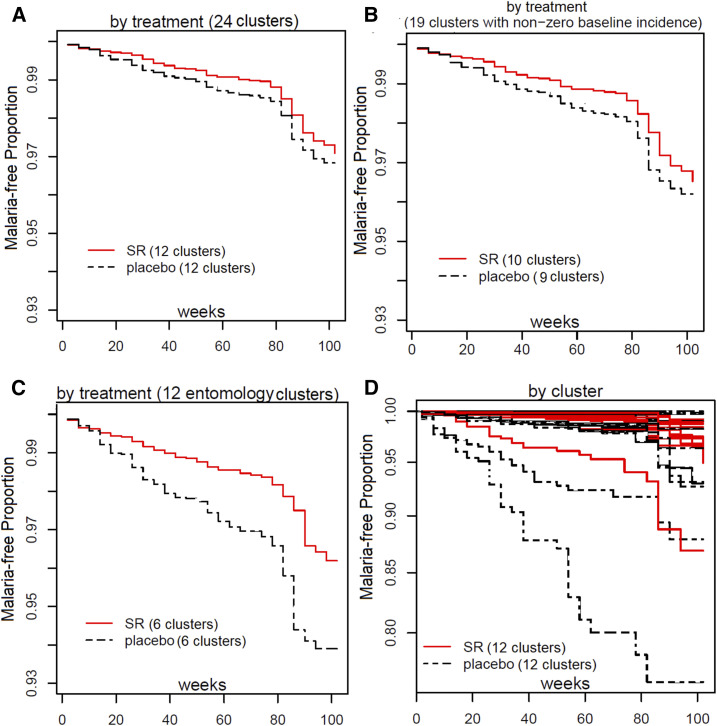
A cluster-randomized, double-blinded, placebo-controlled trial was conducted to estimate the protective efficacy (PE) of a spatial repellent (SR) against malaria infection in Sumba, Indonesia. Following radical cure in 1,341 children aged ≥ 6 months to ≤ 5 years in 24 clusters, households were given transfluthrin or placebo passive emanators (devices designed to release vaporized chemical). Monthly blood screening and biweekly human-landing mosquito catches were performed during a 10-month baseline (June 2015-March 2016) and a 24-month intervention period (April 2016-April 2018). Screening detected 164 first-time infections and an accumulative total of 459 infections in 667 subjects in placebo-control households, and 134 first-time and 253 accumulative total infections among 665 subjects in active intervention households. The 24-cluster protective effect of 27.7% and 31.3%, for time to first-event and overall (total new) infections, respectively, was not statistically significant. Purportedly, this was due in part to zero to low incidence in some clusters, undermining the ability to detect a protective effect. Subgroup analysis of 19 clusters where at least one infection occurred during baseline showed 33.3% (-value = 0.083) and 40.9% (-value = 0.0236, statistically significant at the one-sided 5% significance level) protective effect to first infection and overall infections, respectively. Among 12 moderate- to high-risk clusters, a statistically significant decrease in infection by intervention was detected (60% PE). Primary entomological analysis of impact was inconclusive. Although this study suggests SRs prevent malaria, additional evidence is required to demonstrate the product class provides an operationally feasible and effective means of reducing malaria transmission.
一项集群随机、双盲、安慰剂对照试验旨在评估空间驱避剂(SR)对印度尼西亚松巴岛疟疾感染的保护效果。在 24 个集群中,对 1341 名年龄在 6 个月至 5 岁的儿童进行根治治疗后,给家庭发放了四氟丙烯或安慰剂被动散发器(设计用于释放蒸发化学物质的装置)。在 10 个月的基线期(2015 年 6 月至 2016 年 3 月)和 24 个月的干预期(2016 年 4 月至 2018 年 4 月)期间,每月进行血液筛查和每两周进行人类着陆蚊捕获。在安慰剂对照家庭中,667 名受试者中有 164 名首次感染,459 名累计感染;在主动干预家庭中,665 名受试者中有 134 名首次感染,253 名累计感染。24 个集群的保护效果分别为 27.7%和 31.3%,用于首次发病和总(新)感染的时间。这两个指标都没有统计学意义。据称,这部分是由于一些集群的发病率为零到低,从而削弱了检测保护效果的能力。对至少在基线期间发生过一次感染的 19 个集群进行亚组分析显示,首次感染和总感染的保护效果分别为 33.3%(-值=0.083)和 40.9%(-值=0.0236,在单侧 5%显著性水平上具有统计学意义)。在 12 个中等到高风险集群中,干预措施检测到感染率显著下降(60%的保护效果)。主要的昆虫学影响分析没有定论。尽管这项研究表明 SR 可预防疟疾,但需要更多证据证明该产品类别提供了一种可行且有效的减少疟疾传播的方法。