Soukarieh Fadi, Liu Ruiling, Romero Manuel, Roberston Shaun N, Richardson William, Lucanto Simone, Oton Eduard Vico, Qudus Naim Ruhul, Mashabi Alaa, Grossman Scott, Ali Sadiqur, Sou Tomás, Kukavica-Ibrulj Irena, Levesque Roger C, Bergström Christel A S, Halliday Nigel, Mistry Shailesh N, Emsley Jonas, Heeb Stephan, Williams Paul, Cámara Miguel, Stocks Michael J
School of Life Sciences, University of Nottingham Biodiscovery Institute, University of Nottingham, Nottingham, United Kingdom.
The National Biofilms Innovation Centre, University of Nottingham, Nottingham, United Kingdom.
Front Chem. 2020 May 4;8:204. doi: 10.3389/fchem.2020.00204. eCollection 2020.
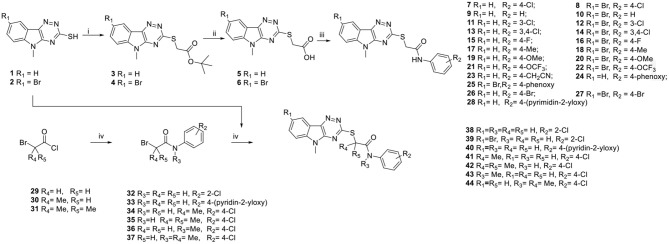
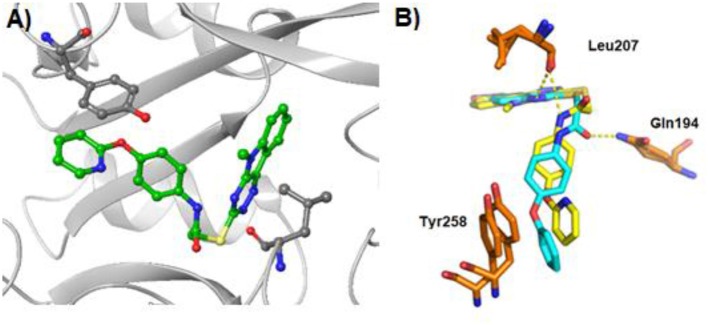
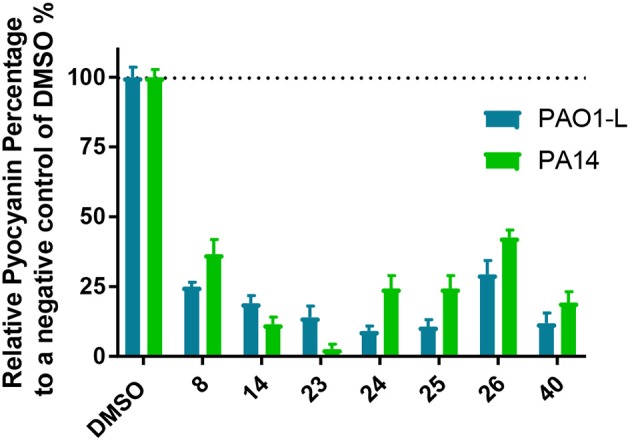
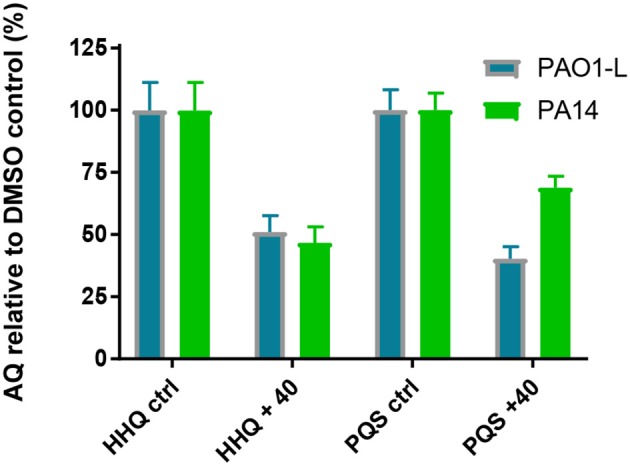
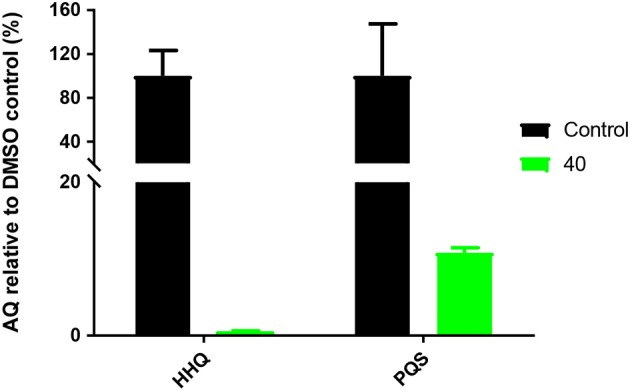
Current treatments for infections are becoming less effective because of the increasing rates of multi-antibiotic resistance. Pharmacological targeting of virulence through inhibition of quorum sensing (QS) dependent virulence gene regulation has considerable therapeutic potential. In , the QS system regulates the production of multiple virulence factors as well as biofilm maturation and is a promising approach for developing antimicrobial adjuvants for combatting drug resistance. In this work, we report the hit optimisation for a series of potent novel inhibitors of PqsR, a key regulator of the system, bearing a 2-((5-methyl-5-[1,2,4]triazino[5,6-]indol-3-yl)thio) acetamide scaffold. The initial hit compound (PAO1-L IC 0.98 ± 0.02 μM, PA14 inactive at 10 μM) was obtained through a virtual screening campaign performed on the PqsR ligand binding domain using the University of Nottingham Managed Chemical Compound Collection. Hit optimisation gave compounds with enhanced potency against strains PAO1-L and PA14, evaluated using -based QS bioreporter assays. Compound (PAO1-L IC 0.25 ± 0.12 μM, PA14 IC 0.34 ± 0.03 μM) is one of the most potent PqsR antagonists reported showing significant inhibition of pyocyanin production and system signaling in both planktonic cultures and biofilms. The co-crystal structure of with the PqsR ligand binding domain revealed the specific binding interactions occurring between inhibitor and this key regulatory protein.
由于多重抗生素耐药率不断上升,目前针对感染的治疗方法正变得越来越低效。通过抑制群体感应(QS)依赖性毒力基因调控对毒力进行药理学靶向具有相当大的治疗潜力。在[具体细菌名称]中,QS系统调节多种毒力因子的产生以及生物膜成熟,是开发用于对抗耐药性的抗菌佐剂的一种有前景的方法。在这项工作中,我们报告了一系列针对PqsR([具体细菌名称]系统的关键调节因子)的强效新型抑制剂的命中优化,这些抑制剂带有2 - ((5 - 甲基 - 5 - [1,2,4]三嗪并[5,6 - ]吲哚 - 3 - 基)硫代)乙酰胺支架。最初的命中化合物[化合物名称](PAO1 - L的IC为0.98 ± 0.02 μM,PA14在10 μM时无活性)是通过使用诺丁汉大学管理的化合物库对PqsR配体结合域进行虚拟筛选活动获得的。命中优化得到了对PAO1 - L和PA14菌株效力增强的化合物,使用基于[具体检测方法]的QS生物报告分析进行评估。化合物[化合物名称](PAO1 - L的IC为0.25 ± 0.12 μM,PA14的IC为0.34 ± 0.03 μM)是报道的最有效的PqsR拮抗剂之一,在浮游培养物和生物膜中均显示出对绿脓菌素产生和[具体细菌名称]系统信号传导的显著抑制作用。[化合物名称]与PqsR配体结合域的共晶体结构揭示了抑制剂与这种关键调节蛋白之间发生的特异性结合相互作用。