Department of Physiology, Faculty of Medicine, University of Toronto, Ontario, Canada.
Donnelly Centre for Cellular & Biomolecular Research, University of Toronto, Ontario, Canada.
Elife. 2020 Aug 4;9:e59153. doi: 10.7554/eLife.59153.
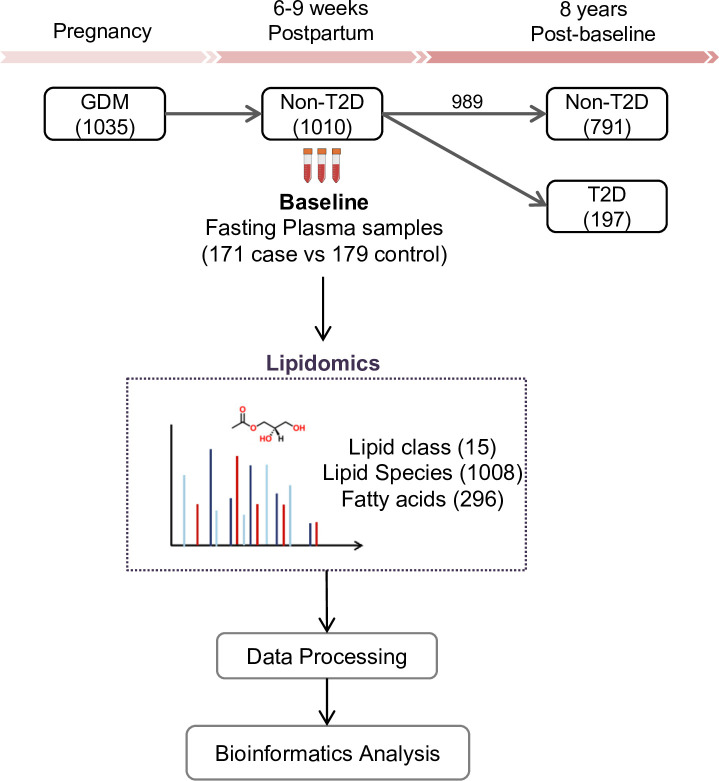
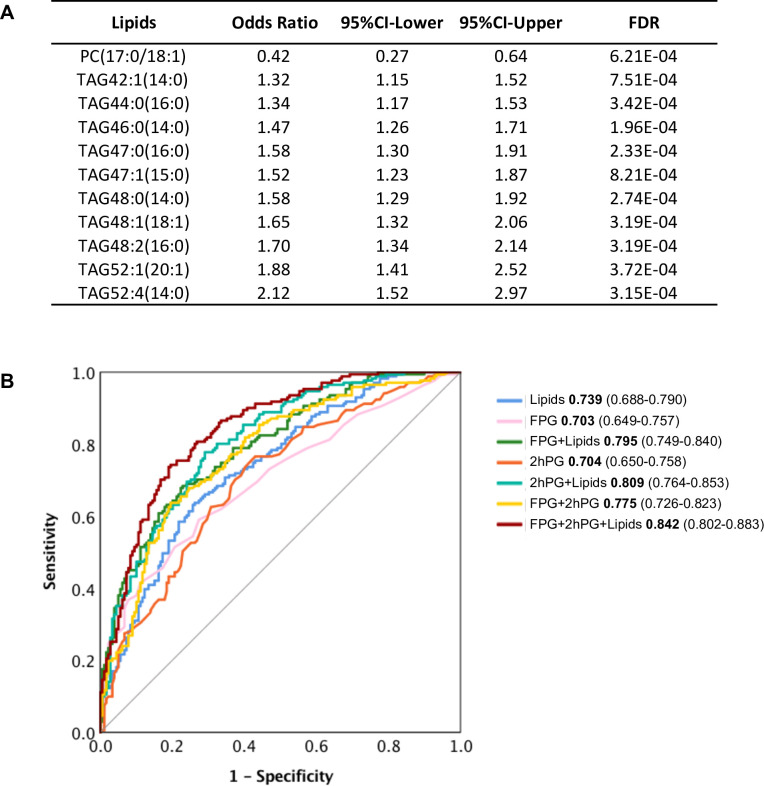
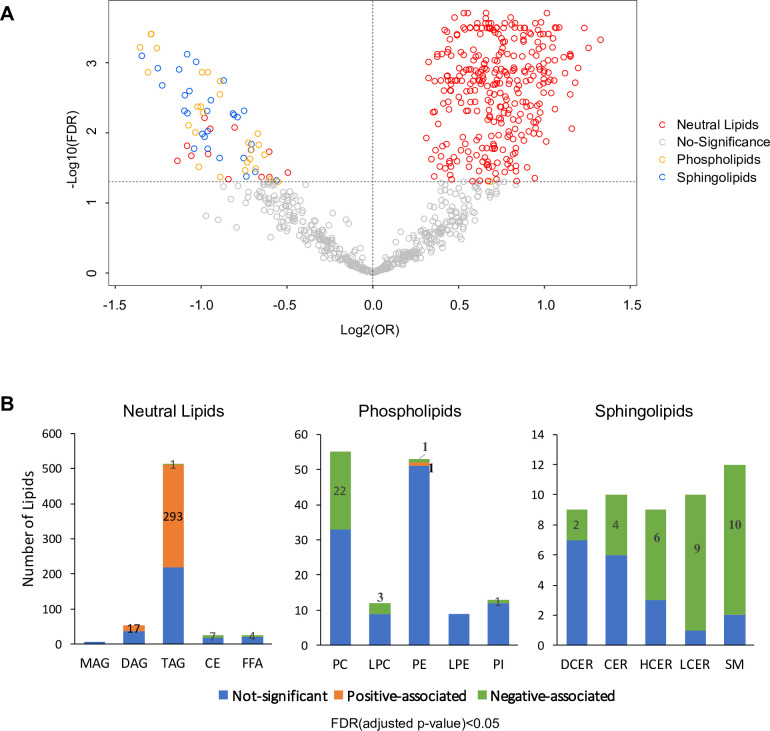
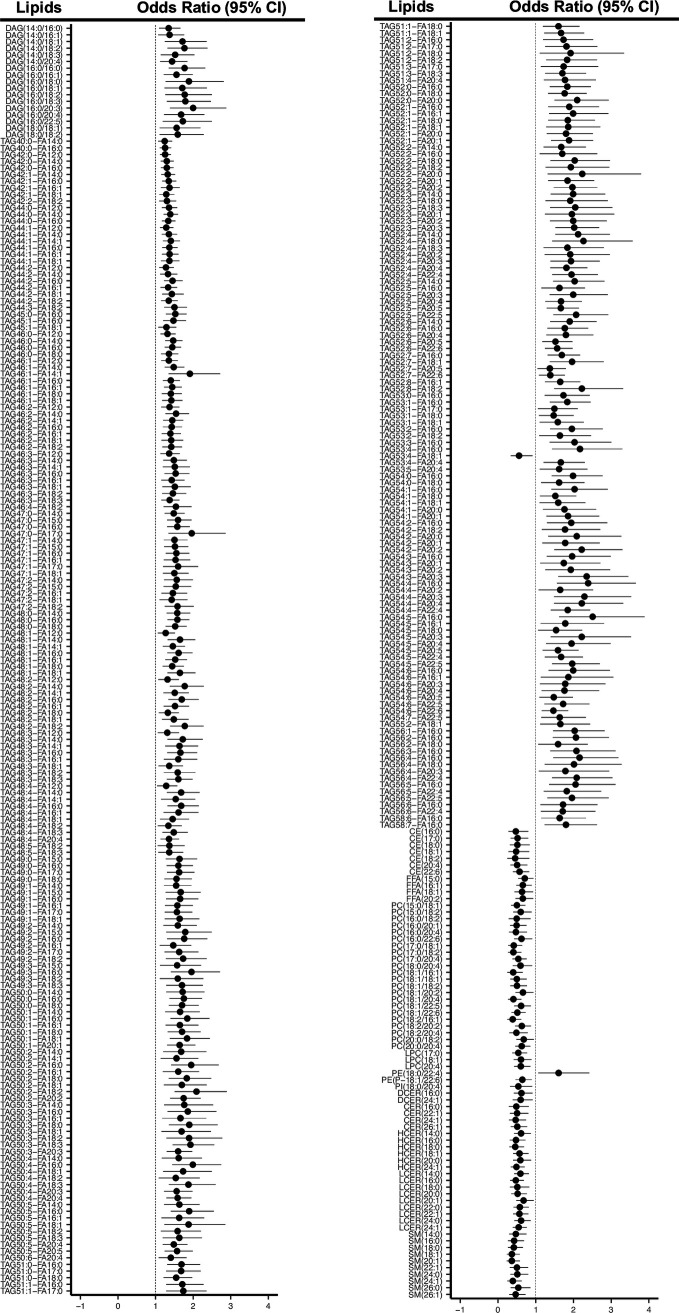
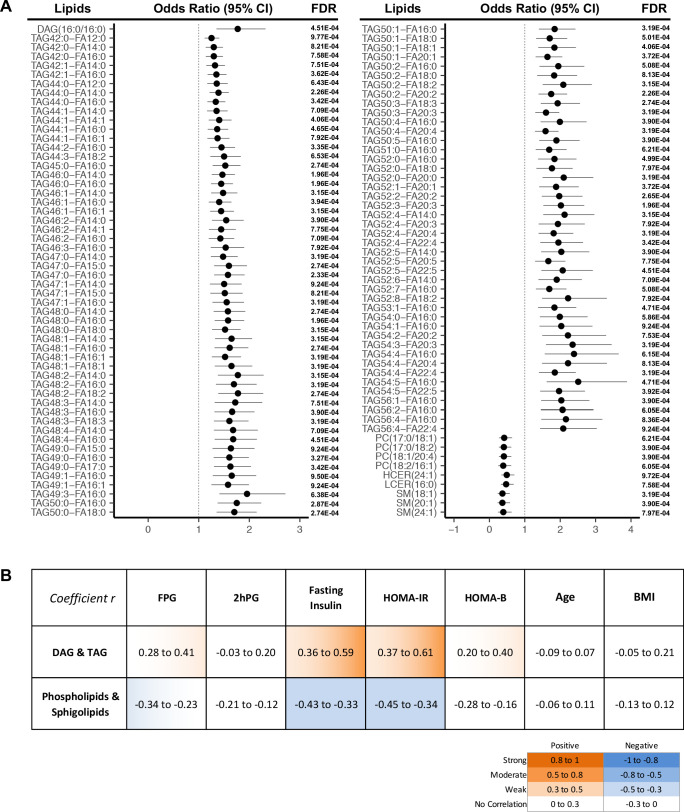
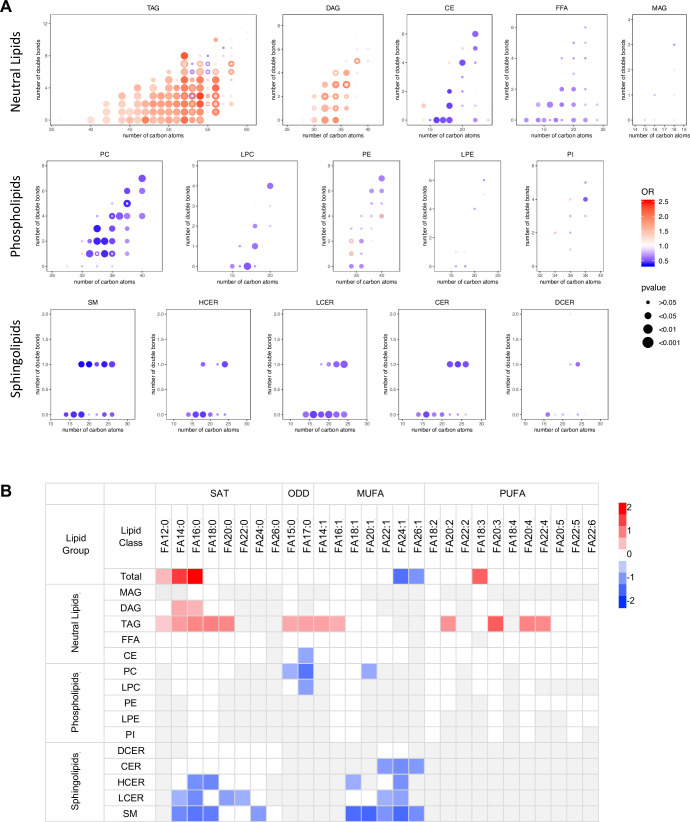
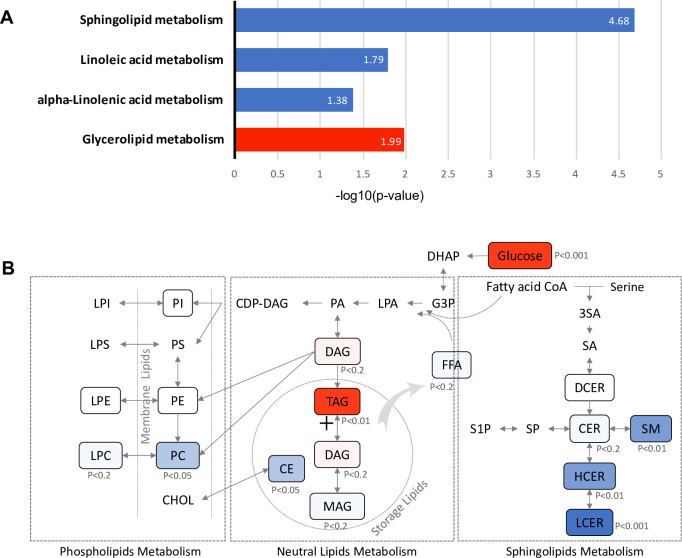
Approximately, 35% of women with Gestational Diabetes (GDM) progress to Type 2 Diabetes (T2D) within 10 years. However, links between GDM and T2D are not well understood. We used a well-characterised GDM prospective cohort of 1035 women following up to 8 years postpartum. Lipidomics profiling covering >1000 lipids was performed on fasting plasma samples from participants 6-9 week postpartum (171 incident T2D vs. 179 controls). We discovered 311 lipids positively and 70 lipids negatively associated with T2D risk. The upregulation of glycerolipid metabolism involving triacylglycerol and diacylglycerol biosynthesis suggested activated lipid storage before diabetes onset. In contrast, decreased sphingomyelines, hexosylceramide and lactosylceramide indicated impaired sphingolipid metabolism. Additionally, a lipid signature was identified to effectively predict future diabetes risk. These findings demonstrate an underlying dyslipidemia during the early postpartum in those GDM women who progress to T2D and suggest endogenous lipogenesis may be a driving force for future diabetes onset.
大约有 35%的妊娠糖尿病(GDM)女性在 10 年内会进展为 2 型糖尿病(T2D)。然而,GDM 和 T2D 之间的联系尚未得到很好的理解。我们使用了一个经过良好特征描述的 GDM 前瞻性队列,对 1035 名女性进行了随访,随访时间长达产后 8 年。在产后 6-9 周对参与者的空腹血浆样本进行了脂质组学分析,涵盖了>1000 种脂质。我们发现 311 种脂质与 T2D 风险呈正相关,70 种脂质与 T2D 风险呈负相关。甘油磷脂代谢的上调涉及甘油三酯和二酰基甘油的生物合成,这表明在糖尿病发病前就已经激活了脂质储存。相反,鞘磷脂、神经酰胺和半乳糖脑苷脂的减少表明鞘脂代谢受损。此外,还确定了一个脂质特征,可以有效地预测未来的糖尿病风险。这些发现表明,在那些进展为 T2D 的 GDM 女性中,产后早期存在潜在的血脂异常,并表明内源性脂肪生成可能是未来糖尿病发病的驱动因素。