Department of Molecular Cell Biology, Weizmann Institute of Science, Rehovot 76100, Israel.
Department of Immunology, Weizmann Institute of Science, Rehovot 76100, Israel.
Immunity. 2020 May 19;52(5):872-884.e5. doi: 10.1016/j.immuni.2020.04.022.
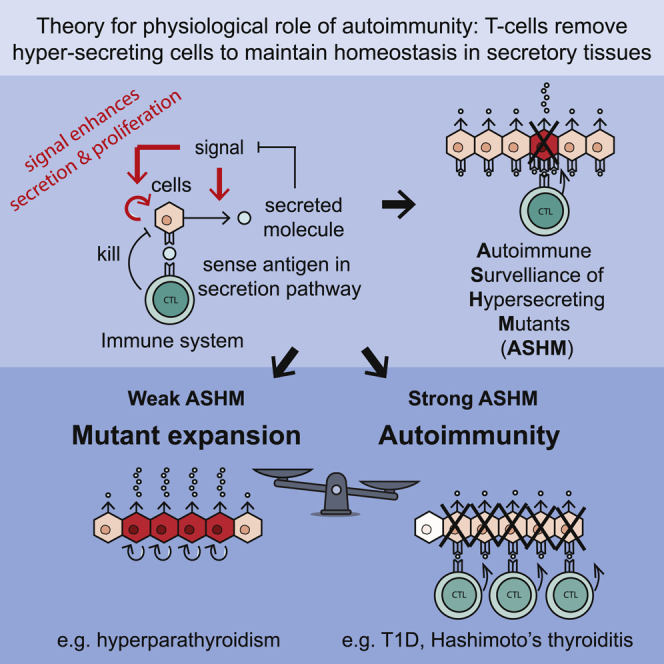
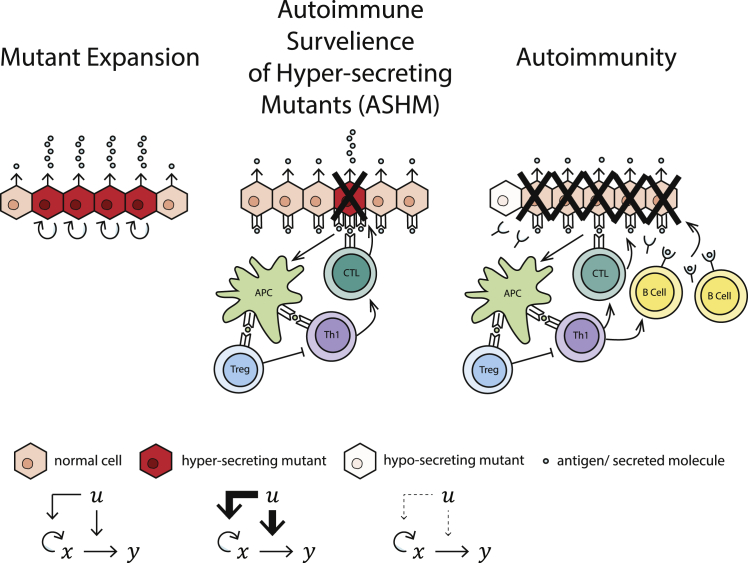
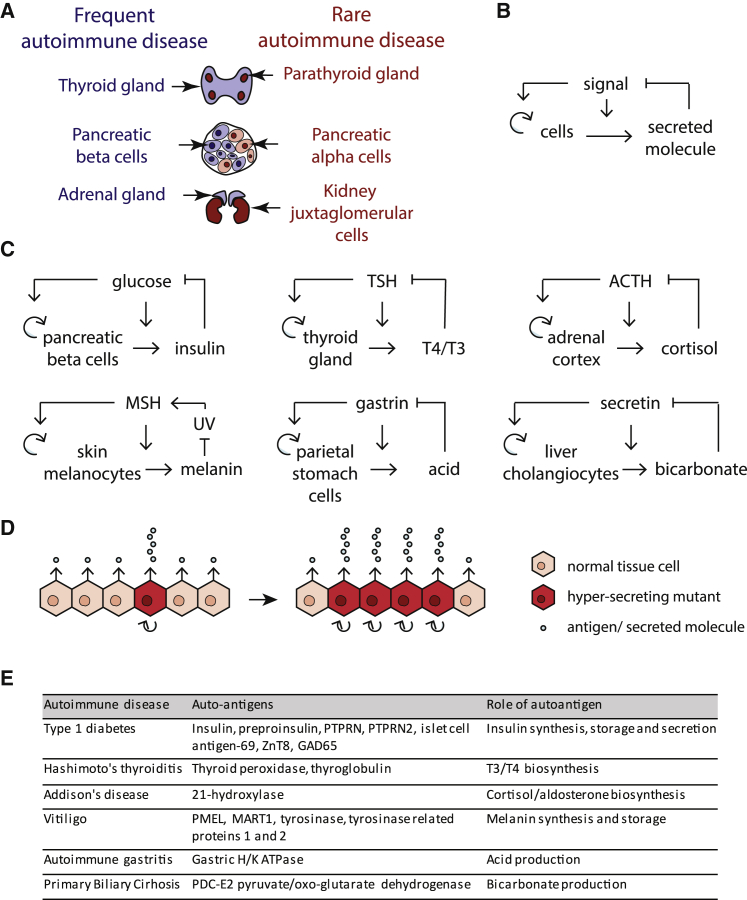
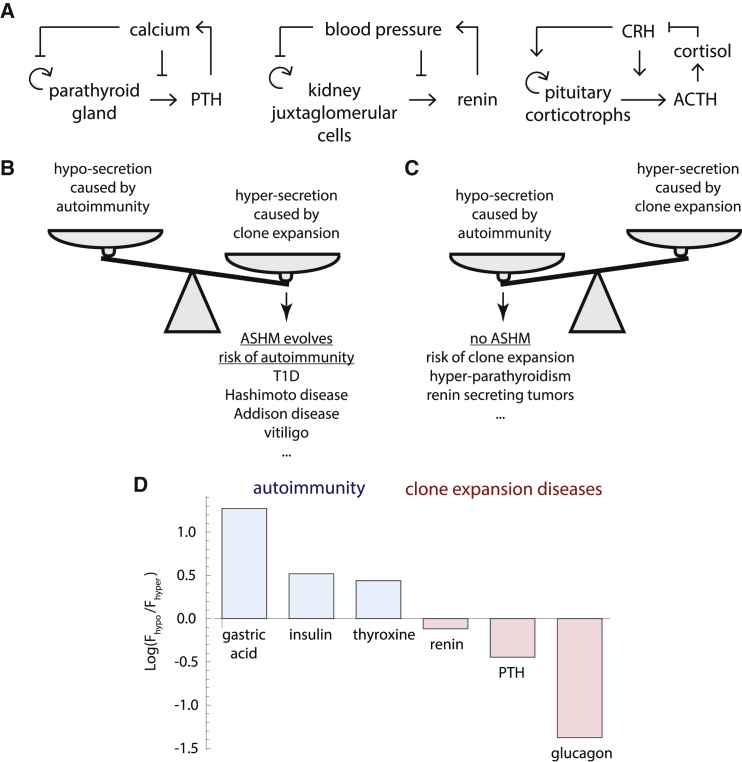
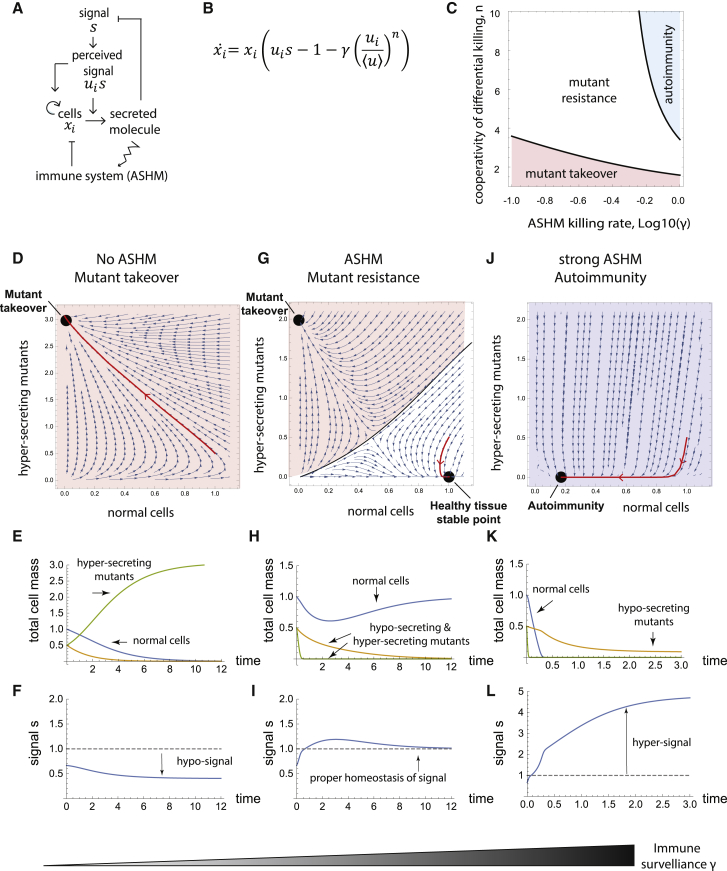
Some endocrine organs are frequent targets of autoimmune attack. Here, we addressed the origin of autoimmune disease from the viewpoint of feedback control. Endocrine tissues maintain mass through feedback loops that balance cell proliferation and removal according to hormone-driven regulatory signals. We hypothesized the existence of a dedicated mechanism that detects and removes mutant cells that missense the signal and therefore hyperproliferate and hypersecrete with potential to disrupt organismal homeostasis. In this mechanism, hypersecreting cells are preferentially eliminated by autoreactive T cells at the cost of a fragility to autoimmune disease. The "autoimmune surveillance of hypersecreting mutants" (ASHM) hypothesis predicts the presence of autoreactive T cells in healthy individuals and the nature of self-antigens as peptides from hormone secretion pathway. It explains why some tissues get prevalent autoimmune disease, whereas others do not and instead show prevalent mutant-expansion disease (e.g., hyperparathyroidism). The ASHM hypothesis is testable, and we discuss experimental follow-up.
一些内分泌器官是自身免疫攻击的常见靶标。在这里,我们从反馈控制的角度探讨了自身免疫性疾病的起源。内分泌组织通过根据激素驱动的调节信号平衡细胞增殖和清除的反馈回路来维持质量。我们假设存在一种专门的机制,可以检测和清除错义信号的突变细胞,这些细胞因此过度增殖和过度分泌,有可能破坏机体的内稳态。在这种机制中,过度分泌的细胞优先被自身反应性 T 细胞消除,代价是自身免疫疾病的脆弱性。“过度分泌突变体的自身免疫监视”(ASHM)假说预测健康个体中存在自身反应性 T 细胞,以及自身抗原的性质是来自激素分泌途径的肽。它解释了为什么一些组织会发生流行的自身免疫性疾病,而另一些组织则不会,而是表现为流行的突变扩展疾病(例如,甲状旁腺功能亢进症)。ASHM 假说具有可检验性,我们讨论了后续的实验。