Chew Sharon W T, Shah Ankur H, Zheng Mengjia, Chang Hao, Wiraja Christian, Steele Terry W J, Xu Chenjie
School of Chemical and Biomedical Engineering Nanyang Technological University Singapore.
NTU Institute for Health Technologies, Interdisciplinary Graduate School Nanyang Technological University Singapore.
Bioeng Transl Med. 2020 Feb 29;5(2):e10157. doi: 10.1002/btm2.10157. eCollection 2020 May.
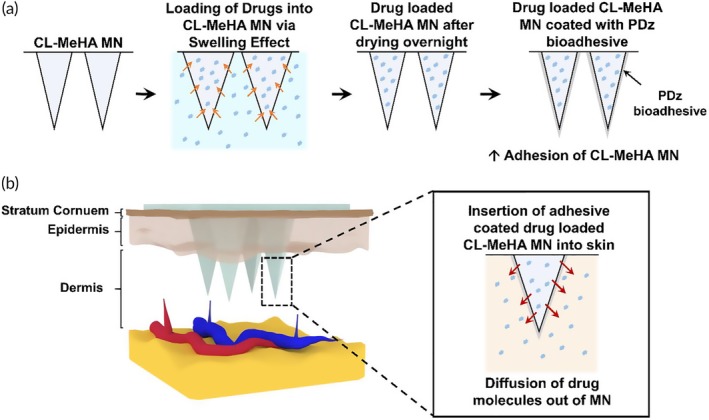
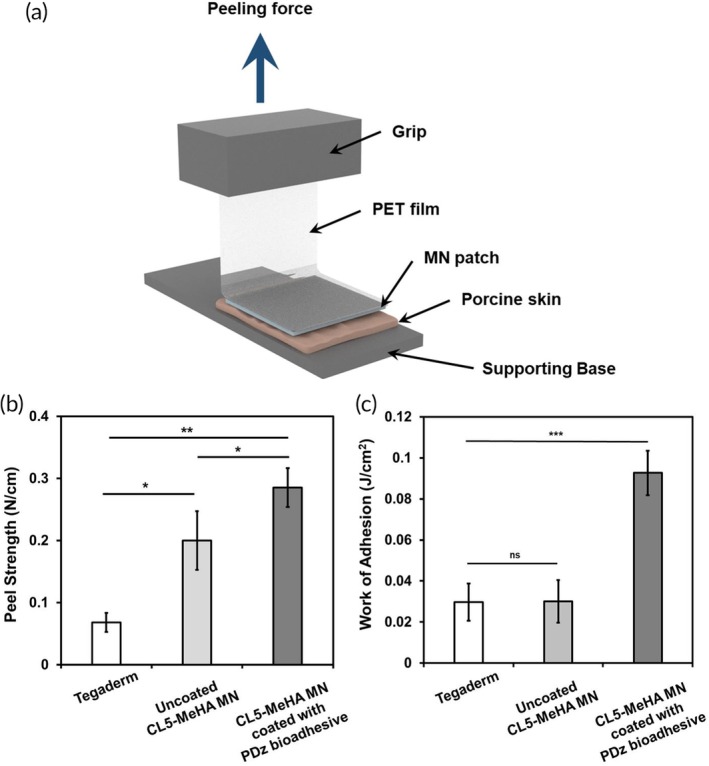
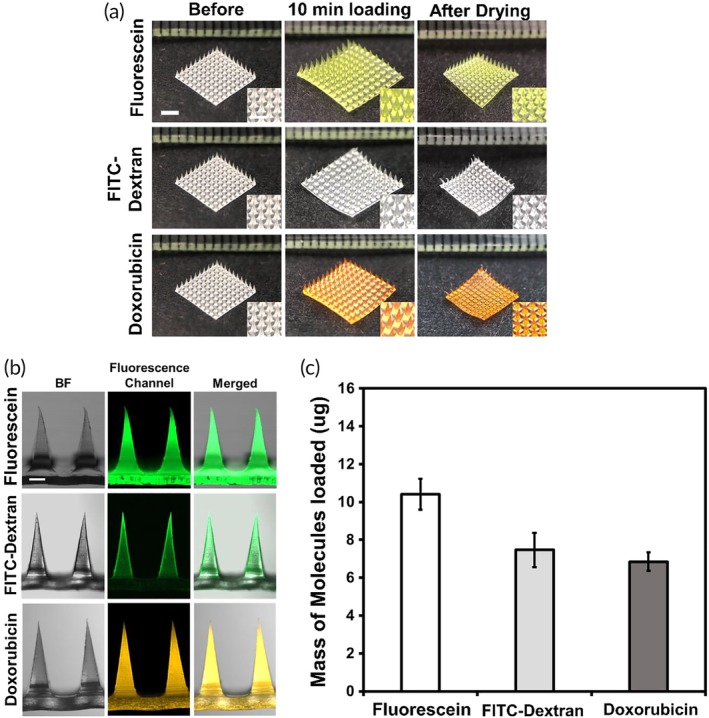
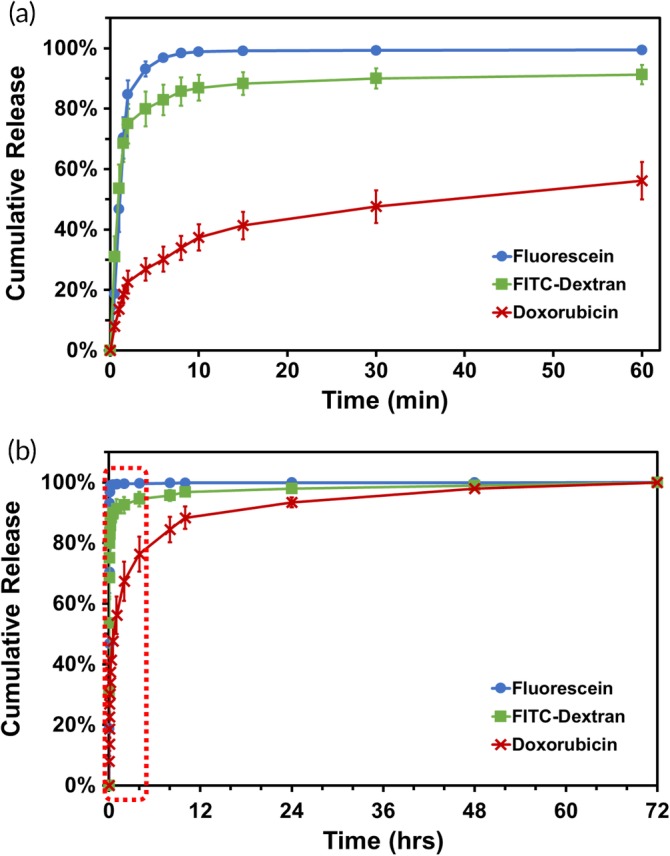
Microneedles (MNs) offer a rapid method of transdermal drug delivery through penetration of the stratum corneum. However, commercial translation has been limited by fabrication techniques unique to each drug. Herein, a broadly applicable platform is explored by drug-loading via swelling effect of a hydrogel MN patch. A range of small molecule hydrophilic, hydrophobic, and biomacromolecule therapeutics demonstrate successful loading and burst release from hydrogel MNs fabricated from methacrylated hyaluronic acid (MeHA). The post-fabrication drug loading process allows MeHA MN patches with drug loadings of 10 μg cm. Additional post-fabrication processes are explored with dendrimer bioadhesives that increase work of adhesion, ensuring stable fixation on skin, and allow for additional drug loading strategies.
微针通过穿透角质层提供了一种快速的经皮给药方法。然而,商业转化受到每种药物独特制造技术的限制。在此,通过水凝胶微针贴片的溶胀效应进行药物加载,探索了一种广泛适用的平台。一系列小分子亲水性、疏水性和生物大分子治疗药物证明了从甲基丙烯酸化透明质酸(MeHA)制成的水凝胶微针中成功加载和突释。制造后药物加载过程允许药物负载量为10μg/cm²的MeHA微针贴片。还探索了使用树枝状聚合物生物粘合剂的额外制造后工艺,该生物粘合剂增加了粘附功,确保在皮肤上的稳定固定,并允许采用额外的药物加载策略。