Laval University Research Centre on Community-Based Primary Health Care, Quebec, QC, Canada.
Quebec Centre for Excellence on Aging, Québec, QC, Canada.
J Med Internet Res. 2020 Aug 19;22(8):e17406. doi: 10.2196/17406.
Mild cognitive impairment (MCI) is often considered a transitional state between normal and pathologic (eg, dementia) cognitive aging. Although its prognosis varies largely, the diagnosis carries the risk of causing uncertainty and overtreatment of older adults with MCI who may never progress to dementia. Decision aids help people become better informed and more involved in decision making by providing evidence-based information about options and possible outcomes and by assisting them in clarifying their personal values in relation to the decision to be made.
This study aimed to incorporate features that best support values clarification and adjust the level of detail of a web-based decision aid for individuals with MCI.
We conducted a rapid review to identify options to maintain or improve cognitive functions in individuals with MCI. The evidence was structured into a novel web-based decision aid designed in collaboration with digital specialists and graphic designers. Qualitative and user-centered evaluations were used to draw on users' knowledge, clarify values, and inform potential adoption in routine clinical practice. We invited clinicians, older adults with MCI, and their caregivers to evaluate the decision aid in 6 consecutive rounds, with new participants in each round. Quantitative data were collected using the Values Clarity and Informed subscales of the Decisional Conflict Scale, the System Usability Scale, the Ottawa Acceptability questionnaire, and a 5-point satisfaction rating scale. We verified their comprehension using a teach-back method and recorded usability issues. We recorded the audio and computer screen during the session. An inductive thematic qualitative analysis approach was used to identify and describe the issues that arose. After each round, an expert panel met to prioritize and find solutions to mitigate the issues. An integrated analysis was conducted to confirm our choices.
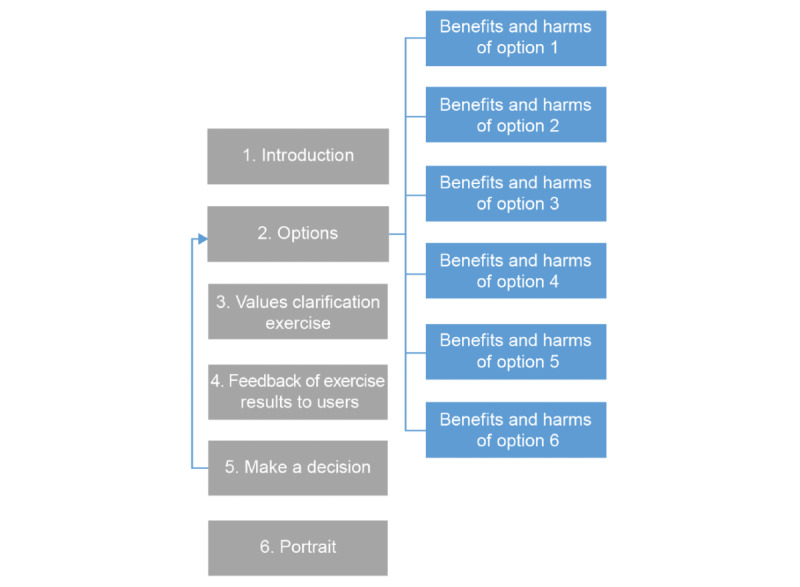
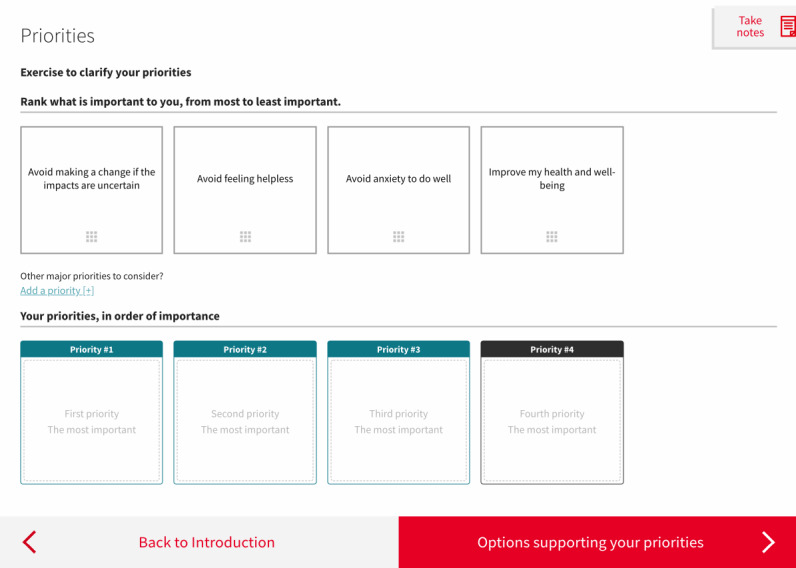
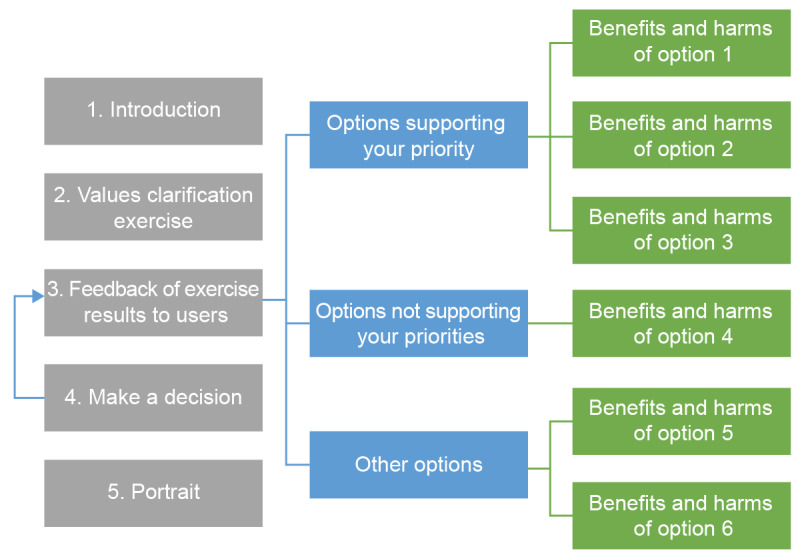
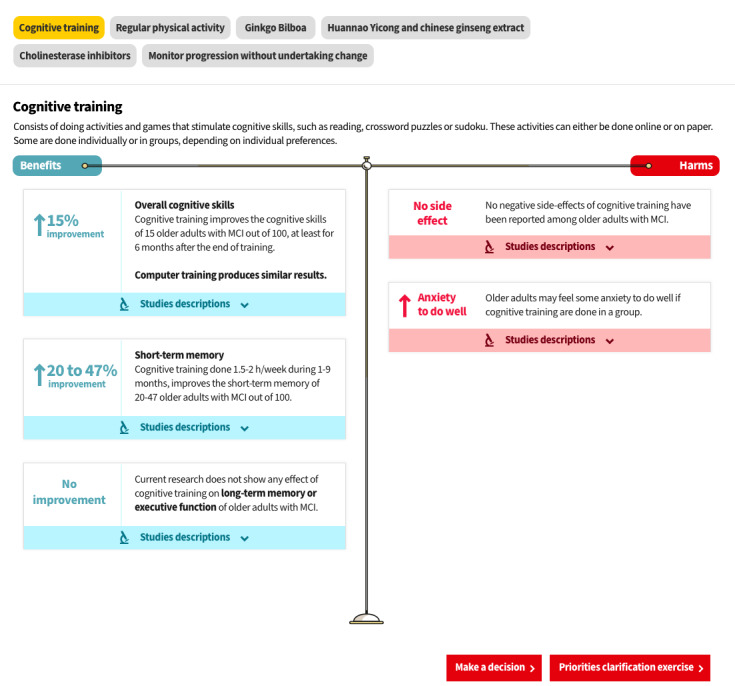
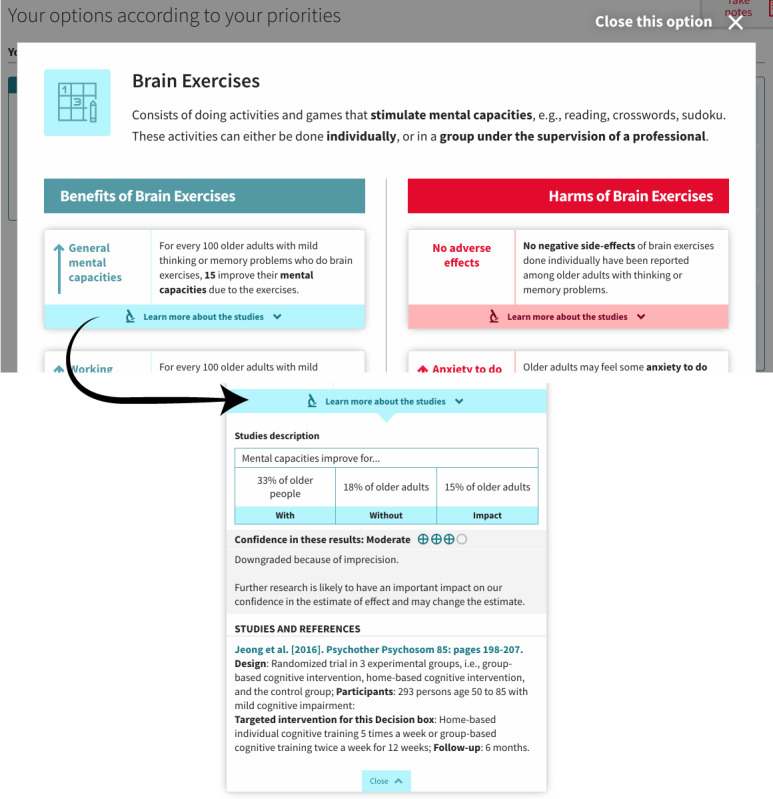
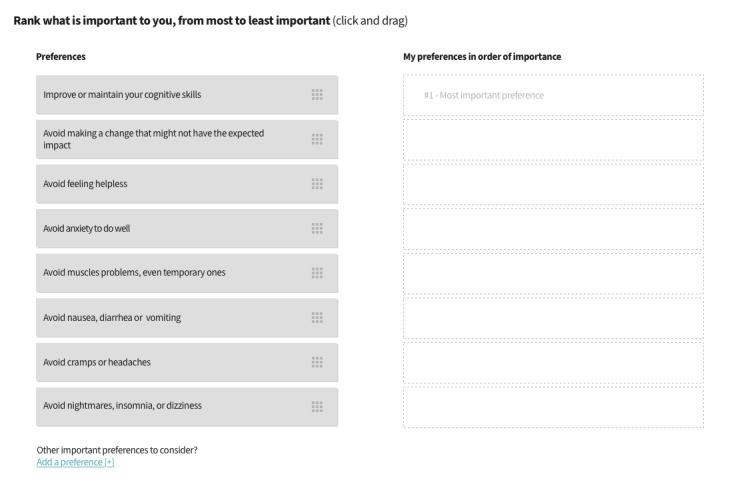
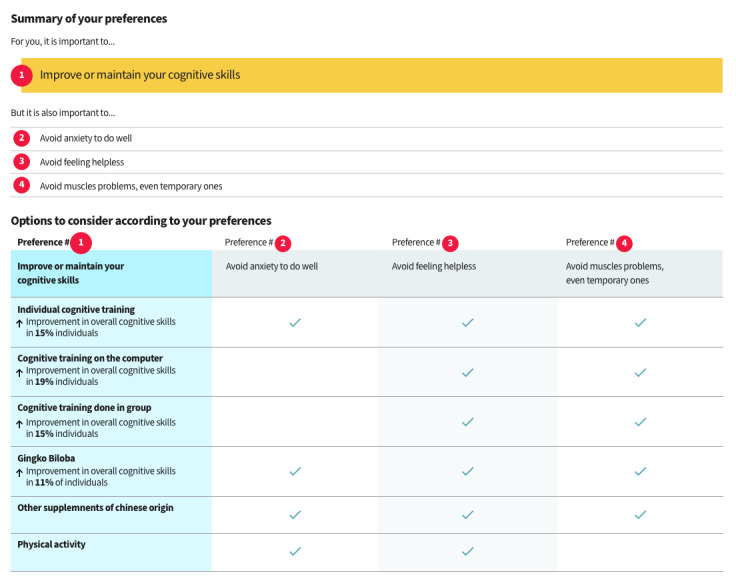
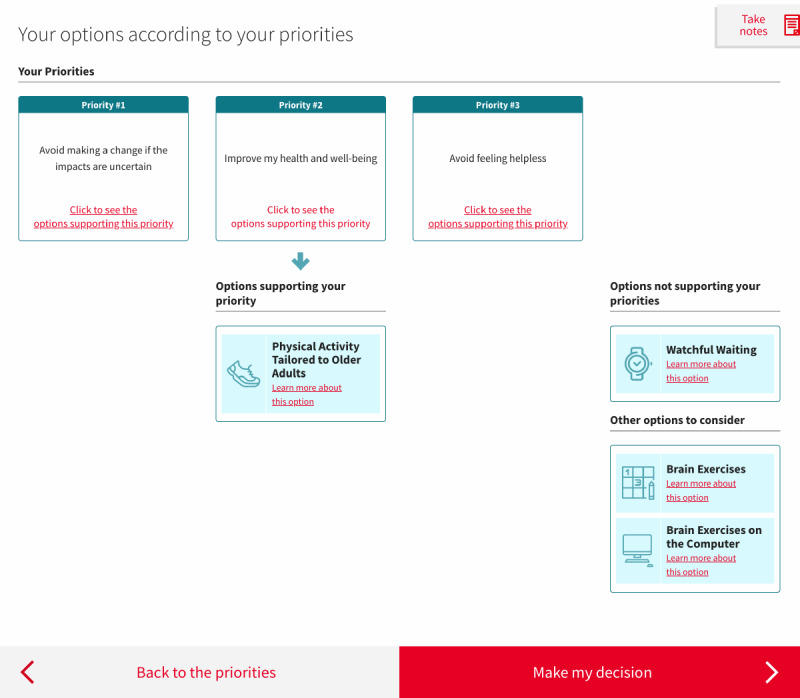
A total of 7 clinicians (social workers, nurses, family physicians, psychologists) and 12 older (≥60 years) community-dwelling individuals with MCI, half of them women, with education levels going from none to university diploma, were recruited and completed testing. The thematic analysis revealed 3 major issues. First, the user should be guided through the decision-making process by tailoring the presentation of options to users' priorities using the values clarification exercise. Second, its content should be simple, but not simplistic, notably by using information layering, plain language, and pictograms. Third, the interface should be intuitive and user friendly, utilize pop-up windows and information tips, avoid drop-down menus, and limit the need to scroll down. The quantitative assessments corroborated the qualitative findings.
This project resulted in a promising web-based decision aid that can support decision making for MCI intervention, based on the personal values and preferences of the users. Further ongoing research will allow its implementation to be tested in clinical settings.
轻度认知障碍(MCI)通常被认为是正常和病理性(如痴呆)认知老化之间的过渡状态。尽管其预后差异很大,但该诊断存在导致不确定性和过度治疗 MCI 老年人的风险,这些老年人可能永远不会发展为痴呆症。决策辅助工具通过提供有关选项和可能结果的基于证据的信息,并帮助他们澄清与要做出的决策相关的个人价值观,使人们能够更好地了解情况并更积极地参与决策。
本研究旨在纳入最能支持价值观澄清的功能,并调整针对 MCI 个体的基于网络的决策辅助工具的详细程度。
我们进行了快速审查,以确定维持或改善 MCI 个体认知功能的选项。证据被构建到一个新的基于网络的决策辅助工具中,该工具是与数字专家和平面设计师合作设计的。定性和以用户为中心的评估用于利用用户的知识、澄清价值观,并为常规临床实践中的潜在采用提供信息。我们邀请了临床医生、MCI 老年人及其护理人员在 6 个连续轮次中评估决策辅助工具,每个轮次都有新的参与者。使用决策冲突量表的价值观澄清和知情亚量表、系统可用性量表、渥太华可接受性问卷以及 5 分满意度评分量表收集定量数据。我们使用回授法验证了他们的理解,并记录了可用性问题。我们在会议期间记录了音频和计算机屏幕。使用归纳主题定性分析方法来识别和描述出现的问题。在每一轮之后,一个专家小组开会确定并找到解决问题的方法。进行了综合分析以确认我们的选择。
共招募了 7 名临床医生(社会工作者、护士、家庭医生、心理学家)和 12 名年龄在 60 岁及以上的社区居住的 MCI 老年人,其中一半为女性,教育程度从无到大学文凭不等,他们都完成了测试。主题分析揭示了 3 个主要问题。首先,应该通过使用价值观澄清练习根据用户的优先级来定制选项的呈现方式,引导用户完成决策过程。其次,其内容应该简单,但不简单化,特别是通过使用信息分层、通俗易懂的语言和象形图。第三,界面应该直观且用户友好,利用弹出窗口和信息提示,避免使用下拉菜单,并限制向下滚动的需要。定量评估证实了定性发现。
该项目产生了一种有前途的基于网络的决策辅助工具,它可以根据用户的个人价值观和偏好来支持 MCI 干预的决策。正在进行的进一步研究将允许在临床环境中测试其实施。