Department of Gynecology and Obstetrics, Kiel School of Gynaecological Endoscopy, University Hospitals Schleswig-Holstein, Campus Kiel, 24105, Kiel, Germany.
Institute of Anatomy, Center of Clinical Anatomy, Christian-Albrechts-University Kiel, Kiel, Germany.
Surg Endosc. 2021 Mar;35(3):1385-1394. doi: 10.1007/s00464-020-07523-6. Epub 2020 May 22.
Education of clinical anatomy and training of surgical skills are essential prerequisites for any surgical intervention in patients. Here, we evaluated a structured training program for advanced gynecologic laparoscopy based on human body donors and its impact on clinical practice.
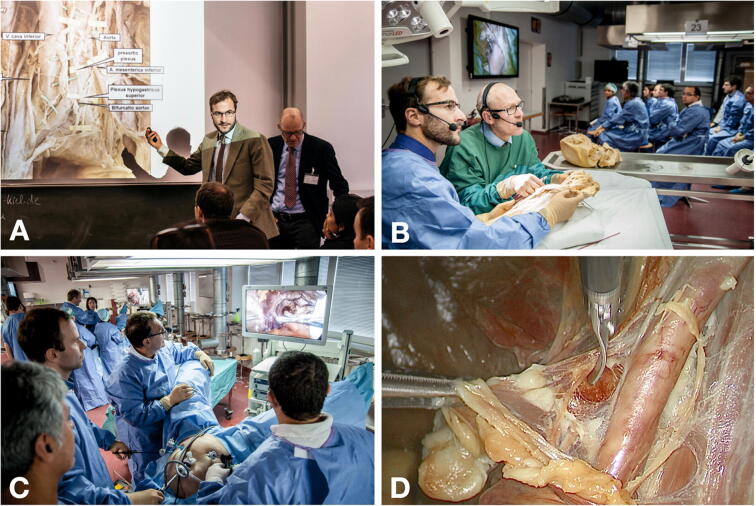
The three-step training course included: (1) anatomical and surgical lectures, (2) demonstration and hands-on study of pre-dissected anatomical specimens, and (3) surgical training of a broad spectrum of gynecological laparoscopic procedures on human body donors embalmed by ethanol-glycerin-lysoformin. Two standardized questionnaires (after the course and 6 months later) evaluated the effectiveness of each of the training modules and the benefits to surgical practice.
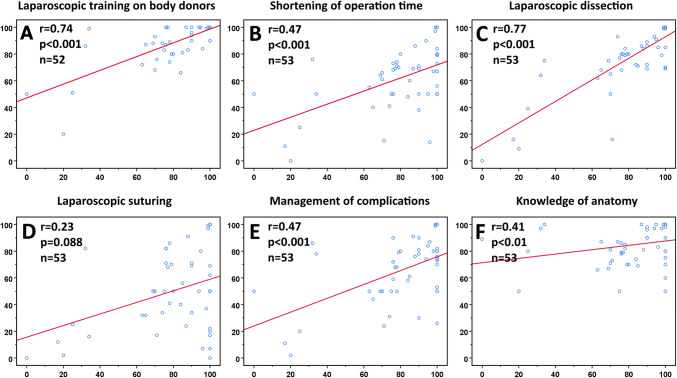
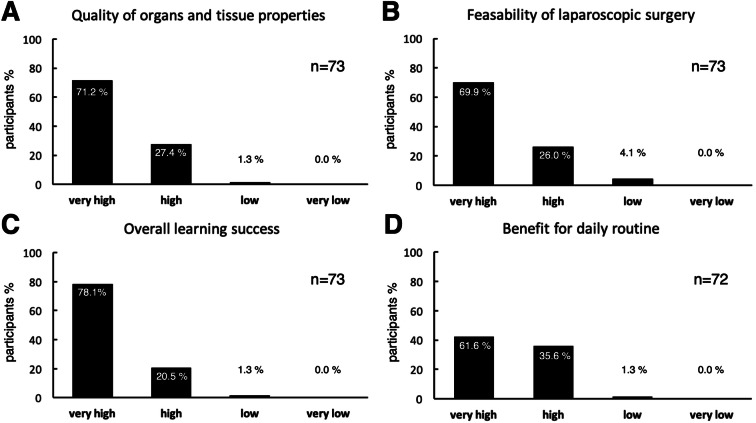
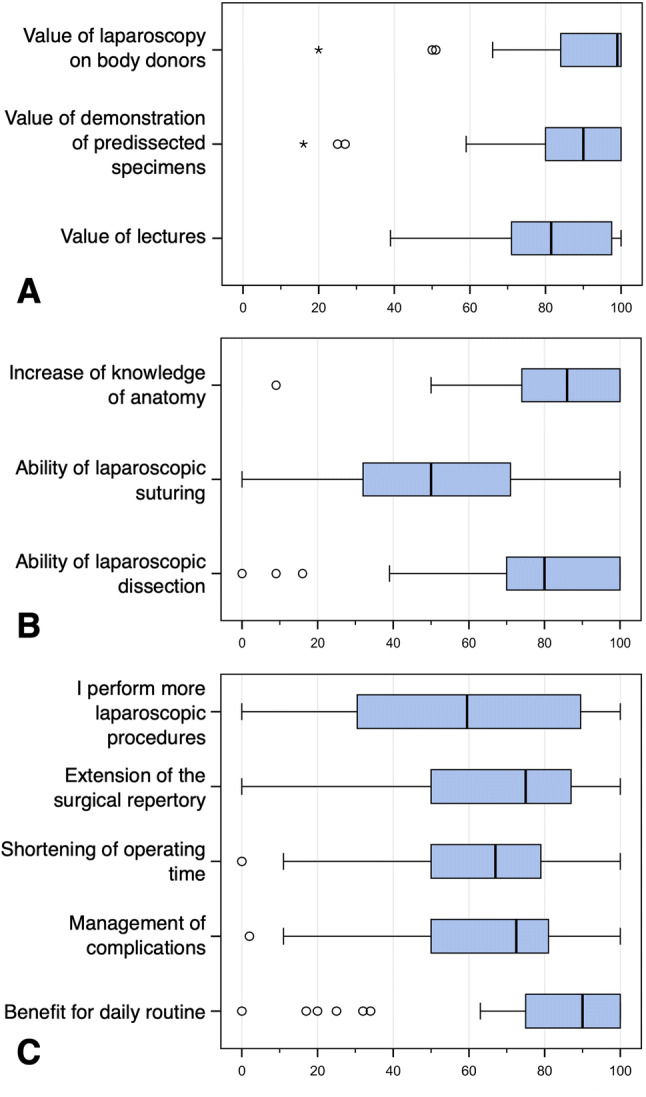
Eighty participants took part in 6 training courses using a total number of 24 body donors (3 trainees/body donor). Based on a 91.3% (73/80) response rate, participants rated high or very high the tissue and organ properties of the body donors (n = 72, 98.6%), the technical feasibility to perform laparoscopic surgery (n = 70, 95.9%), and the overall learning success (n = 72, 98.6%). Based on a 67.5% (54/80) response rate at 6 months, participants rated the benefit of the course to their daily routine as very high (mean 80.94 ± 24.61%, n = 53), and this correlated strongly with the use of body donors (r = 0.74) and the ability to train laparoscopic dissections (r = 0.77).
This study demonstrates the technical feasibility and didactic effectiveness of laparoscopic training courses in a professional and true-to-life setting by using ethanol-glycerol-lysoformin embalmed body donors. This cost-efficient fixation method offers the option to integrate advanced surgical training courses into structured postgraduate educational curricula to meet both the technical demands of minimal invasive surgery and the ethical concerns regarding patients´ safety.
临床解剖学教育和手术技能培训是任何患者外科干预的必要前提。在这里,我们评估了基于人体供体的高级妇科腹腔镜培训的结构化培训计划及其对临床实践的影响。
三步培训课程包括:(1)解剖学和手术讲座,(2)预解剖解剖标本的演示和实践学习,(3)在经过乙醇-甘油-溶菌酶固定的人体供体上进行广泛的妇科腹腔镜手术的外科培训。两个标准化问卷(课程结束后和 6 个月后)评估了每个培训模块的有效性以及对手术实践的益处。
80 名参与者参加了 6 次使用总共 24 个人体供体的培训课程(每个人体供体 3 名学员)。基于 91.3%(73/80)的应答率,参与者高度或非常高度评价了人体供体的组织和器官特性(n=72,98.6%)、进行腹腔镜手术的技术可行性(n=70,95.9%)和整体学习效果(n=72,98.6%)。基于 6 个月时 67.5%(54/80)的应答率,参与者高度评价了课程对他们日常工作的益处(平均值 80.94±24.61%,n=53),这与人体供体的使用密切相关(r=0.74)和训练腹腔镜解剖的能力(r=0.77)。
本研究使用乙醇-甘油-溶菌酶固定的人体供体证明了在专业和逼真环境中进行腹腔镜培训课程的技术可行性和教学效果。这种具有成本效益的固定方法为将高级手术培训课程纳入结构化研究生教育课程提供了选择,以满足微创手术的技术需求和患者安全的伦理问题。