UTHealth School of Public Health in Austin, Austin, TX, USA.
Prevention Research Center, Brown School, Washington University in St. Louis, St. Louis, USA.
J Community Health. 2021 Feb;46(1):86-97. doi: 10.1007/s10900-020-00847-3.
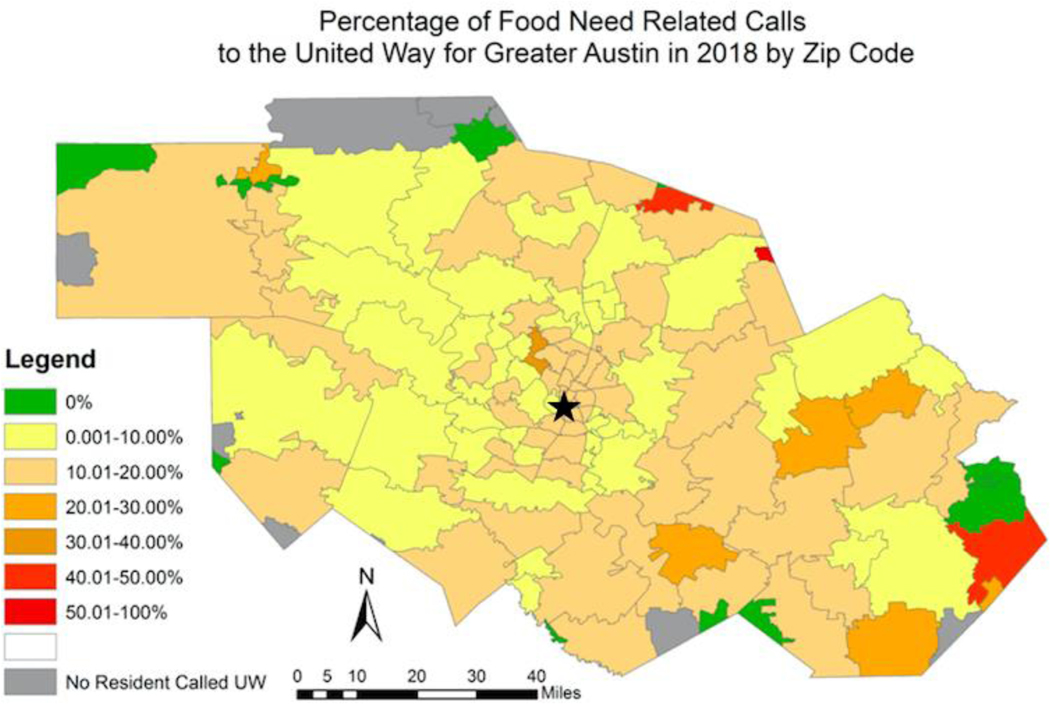
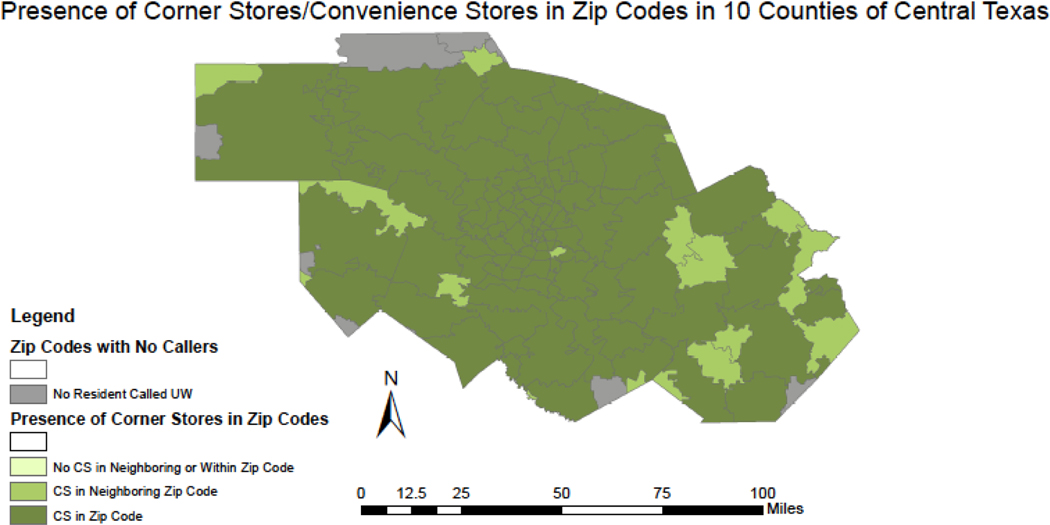
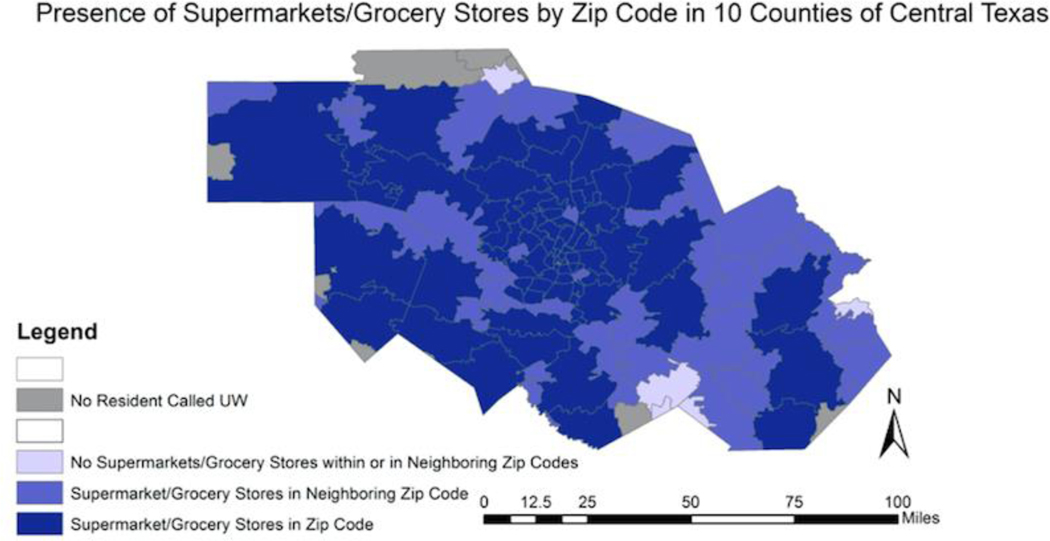
Food insecurity is a public health issue that affects 12% of Americans. Individuals living in food insecure households are more likely to suffer from conditions such as undernutrition, obesity and chronic diseases. Food insecurity has been linked to limited geographic access to food; however, past studies have used limited measures of access which do not fully capture the nuances of community context. The purpose of this study was to explore the association between food insecurity and geographic food access by level of urbanicity. 2-1-1 calls made in 2018 in Central Texas were classified as food needs versus non-food needs. Supermarket and convenience stores were mapped using ArcGIS. Geographic food access was operationalized as the presence of supermarkets and convenience stores: within the zip code; only in neighboring zip codes; and not located within or in neighboring zip codes. Descriptive statistics and binomial logistic regression were used to examine associations between geographic access and 2-1-1 food calls, stratified by level of urbanicity. 11% of the 2-1-1 calls made in 2018 (N = 55,405) were regarding food needs. Results showed that peri-urban and rural callers living in zip codes that only had supermarkets in neighboring zip codes had greater odds of calling about food needs compared to those that had supermarkets within the zip code. These findings indicate that geographic food access is associated with food insecurity, but this relationship varies by urbanicity. Thus, the development of food insecurity mitigation programs in peri-urban and rural areas is needed.
食物不安全是一个影响 12%美国人的公共健康问题。生活在食物不安全家庭中的个体更有可能遭受营养不良、肥胖和慢性疾病等情况。食物不安全与获取食物的地理限制有关;然而,过去的研究使用了有限的获取措施,这些措施并没有完全捕捉到社区环境的细微差别。本研究的目的是探讨食物不安全与城市程度的地理食物获取之间的关联。2018 年在德克萨斯州中部进行的 2-1-1 电话呼叫被分为食物需求和非食物需求。使用 ArcGIS 对超市和便利店进行了映射。地理食物获取被定义为超市和便利店的存在:在邮政编码内;仅在相邻的邮政编码内;不在或不在相邻的邮政编码内。使用描述性统计和二项逻辑回归检查了地理获取与 2-1-1 食物呼叫之间的关联,按城市程度进行分层。2018 年 2-1-1 电话呼叫中,有 11%(N=55405)是关于食物需求的。结果表明,与邮政编码内有超市的人相比,城市边缘和农村地区的拨打者,居住在只有相邻邮政编码内有超市的邮政编码中,他们拨打有关食物需求的电话的可能性更大。这些发现表明,地理食物获取与食物不安全有关,但这种关系因城市程度而异。因此,需要在城市边缘和农村地区制定食物不安全缓解计划。