Laboratory of Small Ruminant Genetics, Breeding and Reproduction, College of Animal Science and Technology, Huazhong Agricultural University, Wuhan, 430070, People's Republic of China.
Key Laboratory of Agricultural Animal Genetics, Breeding and Reproduction, Ministry of Education, Wuhan, 430070, People's Republic of China.
BMC Genomics. 2020 May 25;21(1):372. doi: 10.1186/s12864-020-6767-x.
The microscopic process of postnatal testicular development in early-puberty animals is poorly understood. Therefore, in this study, 21 male Yiling goats with average ages of 0, 30, 60, 90, 120, 150 and 180 days old (each age group comprised three goats) were used to study the changes in organs, tissues and transcriptomes during postnatal testicle development to obtain a broad and deep insight into the dynamic process of testicular transition from growth to spermatogenesis in early-puberty animals.
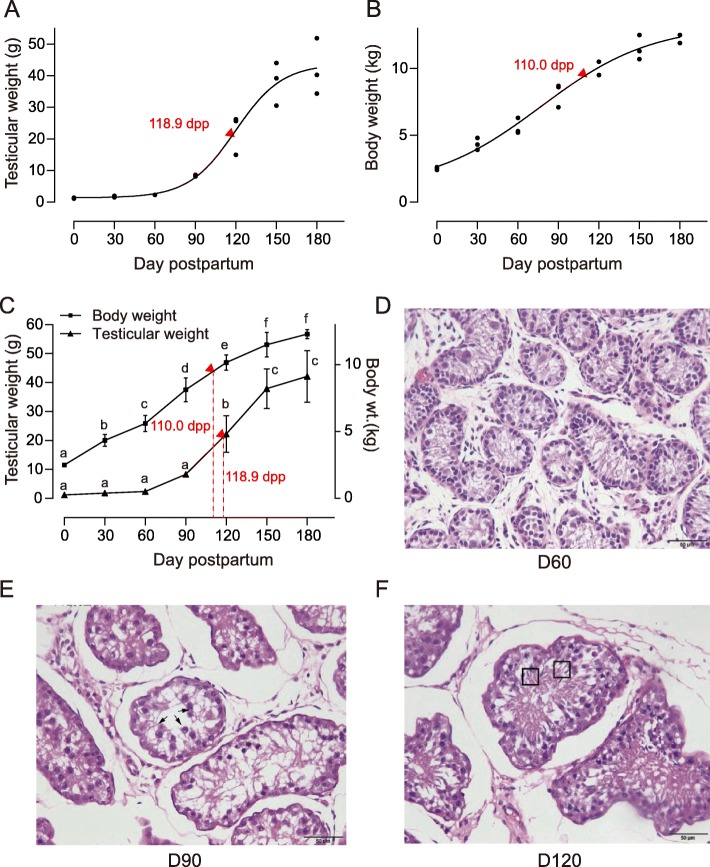
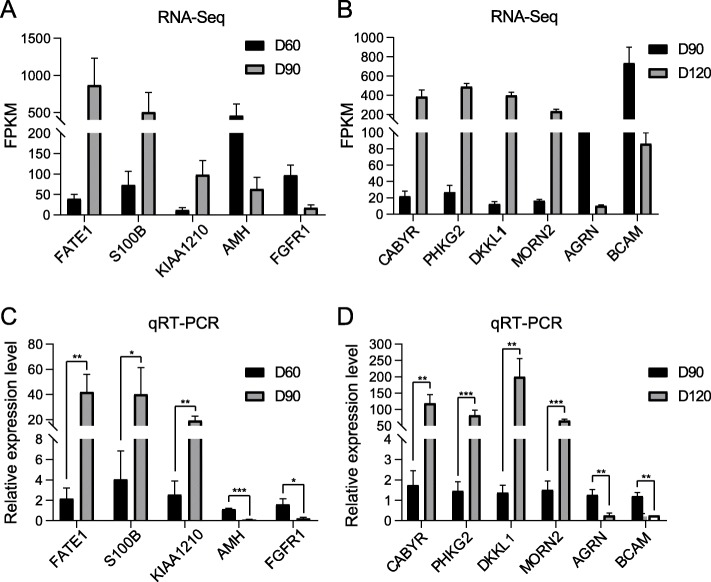
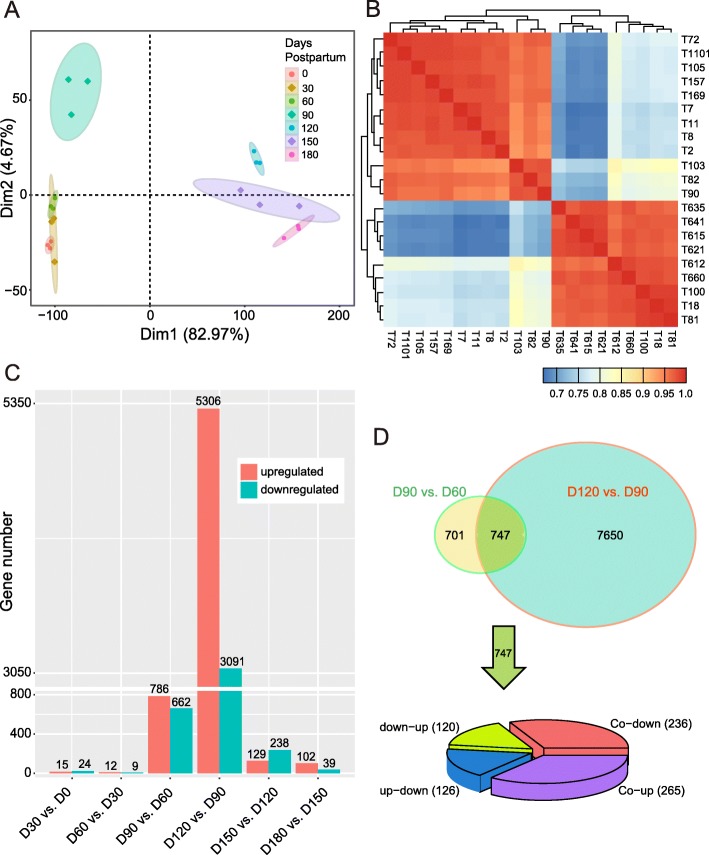
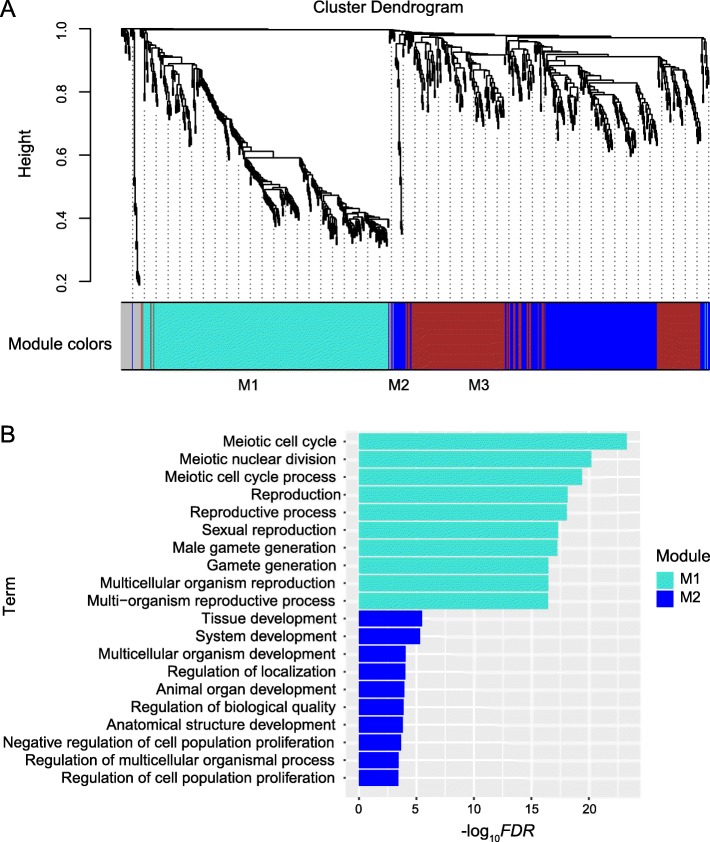
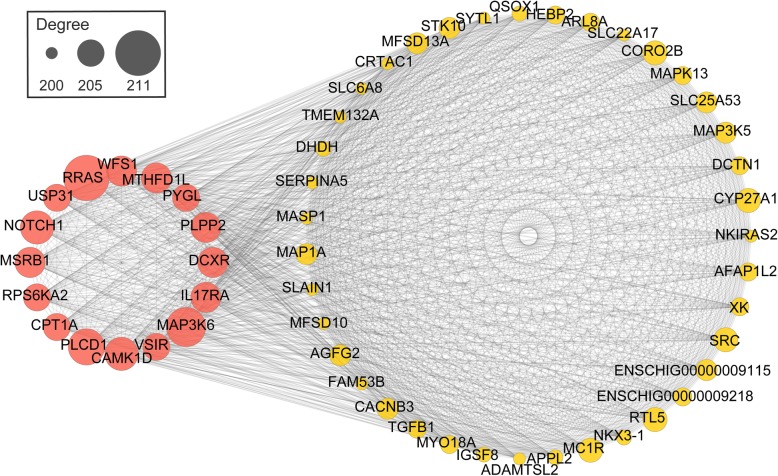
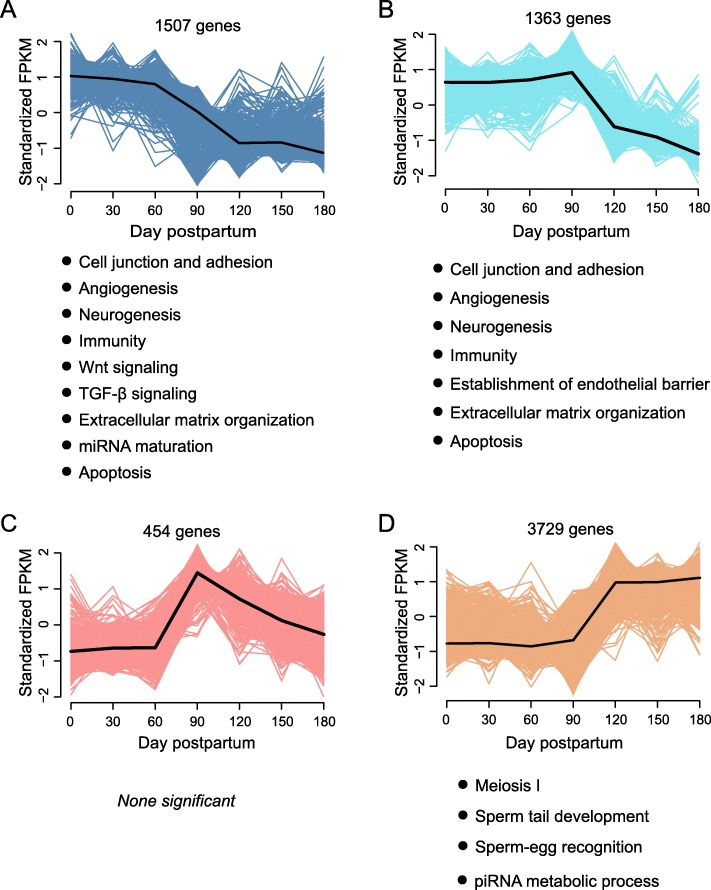
The inflection point of testicular weight was at 119 days postpartum (dpp), and the testicular weight increased rapidly from 119 dpp to 150 dpp. Spermatozoa were observed in the testis at 90 dpp by using haematoxylin-eosin staining. We found from the transcriptome analysis of testes that the testicular development of Yiling goat from birth to 180 dpp experienced three stages, namely, growth, transition and spermatogenesis stages. The goats in the testicular growth stage (0-60 dpp) showed a high expression of growth-related genes in neurogenesis, angiogenesis and cell junction, and a low expression of spermatogenesis-related genes. The goats aged 60-120 dpp were in the transitional stage which had a gradually decreased growth-related gene transcription levels and increased spermatogenesis-related gene transcription levels. The goats aged 120-180 dpp were in the spermatogenesis stage. At this stage, highly expressed spermatogenesis-related genes, downregulated testicular growth- and immune-related genes and a shift in the focus of testicular development into spermatogenesis were observed. Additionally, we found several novel hub genes, which may play key roles in spermatogenesis, androgen synthesis and secretion, angiogenesis, cell junction and neurogenesis. Moreover, the results of this study were compared with previous studies on goat or other species, and some gene expression patterns shared in early-puberty mammals were discovered.
The postnatal development of the testis undergoes a process of transition from organ growth to spermatogenesis. During this process, spermatogenesis-related genes are upregulated, whereas neurogenesis-, angiogenesis-, cell junction-, muscle- and immune-related genes are downregulated. In conclusion, the multipathway synergy promotes testicular transition from growth to spermatogenesis in early-puberty goats and may be a common rule shared by mammals.
人们对早期青春期动物睾丸产后发育的微观过程知之甚少。因此,在这项研究中,我们使用 21 只平均年龄为 0、30、60、90、120、150 和 180 天(每个年龄组包含 3 只山羊)的雄性夷陵山羊,研究睾丸在产后发育过程中器官、组织和转录组的变化,以期深入了解早期青春期动物睾丸从生长到精子发生的动态转变过程。
睾丸重量的拐点出现在产后 119 天(dpp),睾丸重量从 119 dpp 到 150 dpp 迅速增加。通过苏木精-伊红染色,我们在 90 dpp 时观察到睾丸中的精子。通过对夷陵山羊睾丸的转录组分析,我们发现从出生到 180 dpp,夷陵山羊的睾丸发育经历了三个阶段,即生长、过渡和精子发生阶段。在睾丸生长阶段(0-60 dpp),神经发生、血管生成和细胞连接中与生长相关的基因表达水平较高,而与精子发生相关的基因表达水平较低。60-120 dpp 龄山羊处于过渡阶段,生长相关基因转录水平逐渐降低,而与精子发生相关的基因转录水平逐渐升高。120-180 dpp 龄山羊处于精子发生阶段。在这个阶段,与精子发生相关的基因表达水平较高,睾丸生长和免疫相关基因的表达水平下调,睾丸发育的重点转向精子发生。此外,我们还发现了几个新的枢纽基因,它们可能在精子发生、雄激素合成和分泌、血管生成、细胞连接和神经发生中发挥关键作用。此外,本研究的结果与之前关于山羊或其他物种的研究进行了比较,发现了一些在早期青春期哺乳动物中共同表达的基因表达模式。
睾丸的产后发育经历了从器官生长到精子发生的转变过程。在此过程中,与精子发生相关的基因上调,而神经发生、血管生成、细胞连接、肌肉和免疫相关基因下调。总之,多途径协同作用促进了早期青春期山羊睾丸从生长到精子发生的转变,这可能是哺乳动物的一个共同规律。