Federal University of Pará, Belém 66075-110, Brazil.
Sensors (Basel). 2020 May 21;20(10):2920. doi: 10.3390/s20102920.
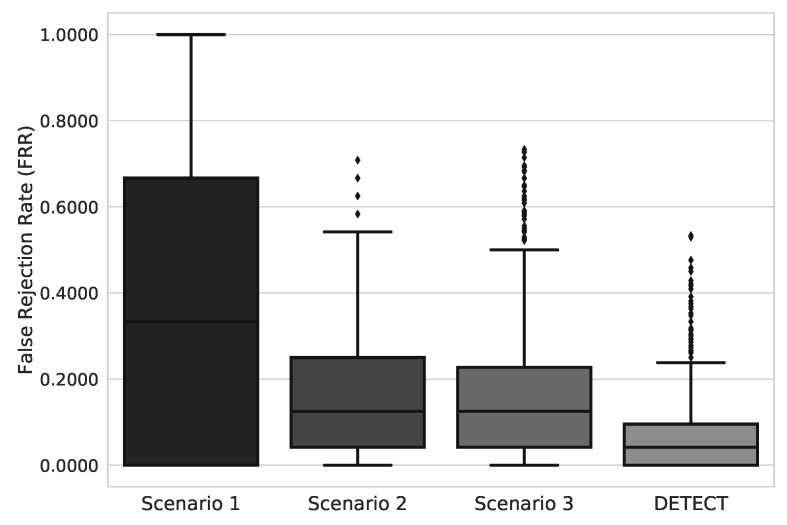
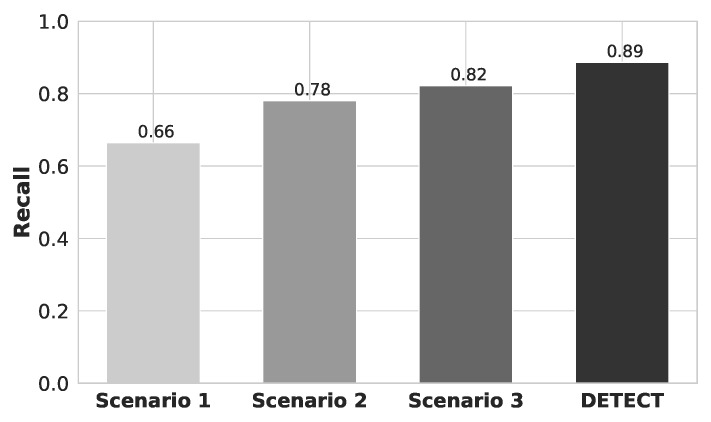
The rapid spread of wearable technologies has motivated the collection of a variety of signals, such as pulse rate, electrocardiogram (ECG), electroencephalogram (EEG), and others. As those devices are used to do so many tasks and store a significant amount of personal data, the concern of how our data can be exposed starts to gain attention as the wearable devices can become an attack vector or a security breach. In this context, biometric also has expanded its use to meet new security requirements of authentication demanded by online applications, and it has been used in identification systems by a large number of people. Existing works on ECG for user authentication do not consider a population size close to a real application. Finding real data that has a big number of people ECG's data is a challenge. This work investigates a set of steps that can improve the results when working with a higher number of target classes in a biometric identification scenario. These steps, such as increasing the number of examples, removing outliers, and including a few additional features, are proven to increase the performance in a large data set. We propose a data improvement model for ECG biometric identification (user identification based on electrocardiogram-DETECT), which improves the performance of the biometric system considering a greater number of subjects, which is closer to a security system in the real world. The DETECT model increases precision from 78% to 92% within 1500 subjects, and from 90% to 95% within 100 subjects. Moreover, good False Rejection Rate (i.e., 0.064003) and False Acceptance Rate (i.e., 0.000033) were demonstrated. We designed our proposed method over PhysioNet Computing in Cardiology 2018 database.
可穿戴技术的快速普及促使人们收集各种信号,如心率、心电图 (ECG)、脑电图 (EEG) 等。由于这些设备被用于执行多种任务并存储大量个人数据,因此人们开始关注我们的数据如何被暴露,因为可穿戴设备可能成为攻击媒介或安全漏洞。在这种情况下,生物识别技术也扩展了其用途,以满足在线应用程序对身份验证的新安全要求,并已被大量人员用于识别系统。现有的 ECG 用户身份验证工作并没有考虑接近实际应用的人群规模。找到具有大量人群 ECG 数据的真实数据是一项挑战。这项工作研究了一套步骤,可以在生物识别识别场景中处理更多目标类时提高结果。这些步骤,如增加示例数量、去除异常值以及包含一些额外的特征,已被证明可以在大数据集中提高性能。我们提出了一种用于 ECG 生物识别识别的 (基于心电图的用户识别-DETECT) 数据改进模型,该模型考虑了更多的受试者,更接近现实世界中的安全系统,从而提高了生物识别系统的性能。DETECT 模型在 1500 个受试者内将精度从 78%提高到 92%,在 100 个受试者内将精度从 90%提高到 95%。此外,还展示了良好的假拒绝率(即 0.064003)和假接受率(即 0.000033)。我们在 PhysioNet Computing in Cardiology 2018 数据库上设计了我们的建议方法。