Nie Chao, Sun Yuzhe, Zhen Hefu, Guo Mei, Ye Jingyu, Liu Zhili, Yang Yan, Zhang Xiuqing
BGI Education Center, University of Chinese Academy of Sciences, Shenzhen, China.
BGI-Shenzhen, Shenzhen, China.
Front Neurosci. 2020 May 7;14:438. doi: 10.3389/fnins.2020.00438. eCollection 2020.
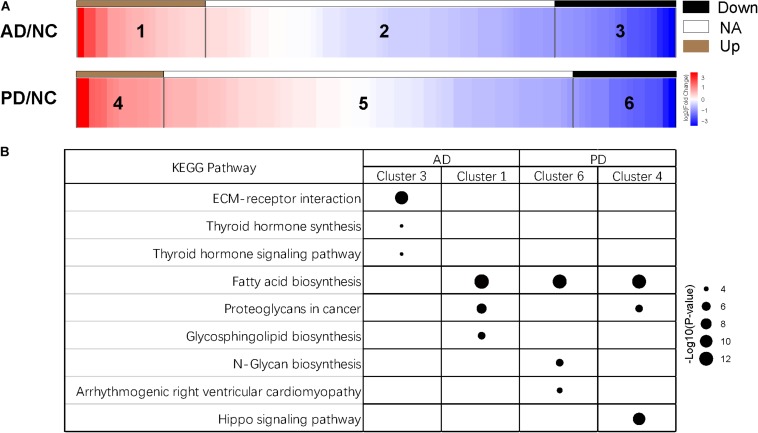
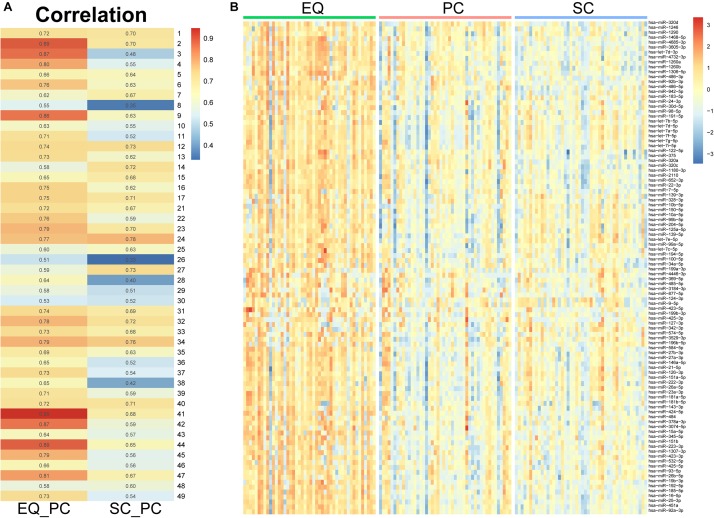
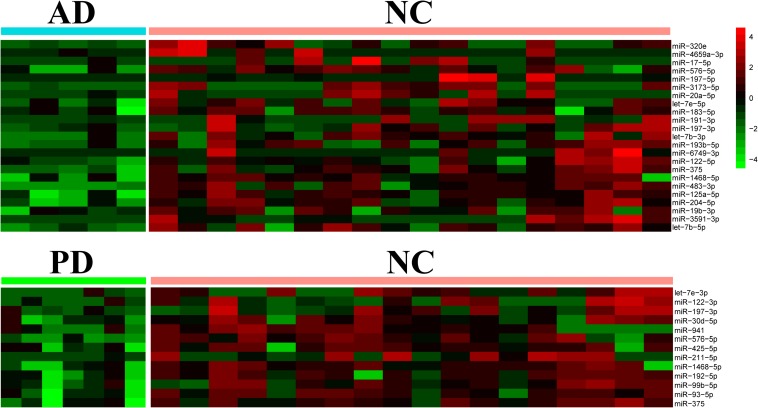
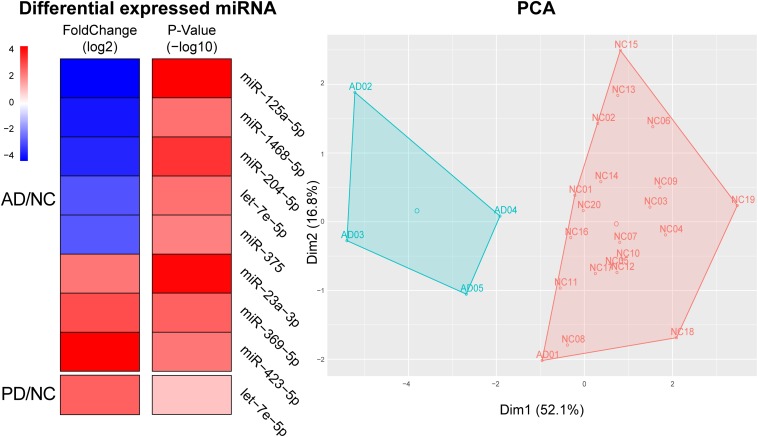
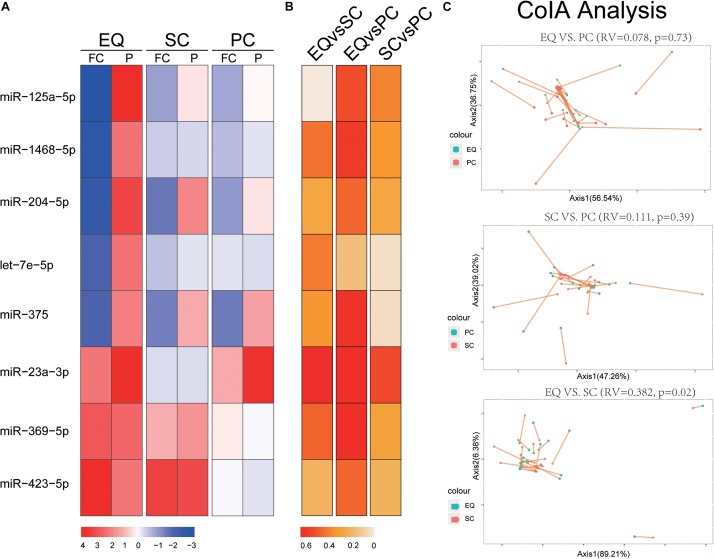
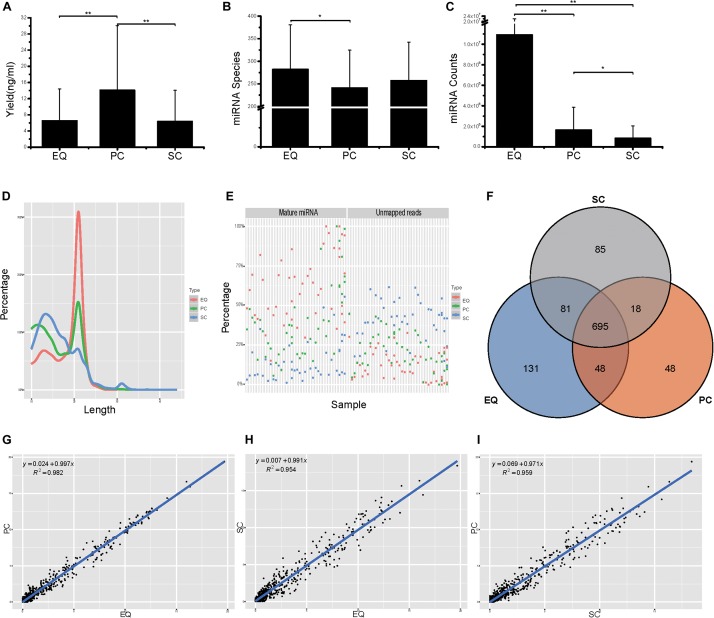
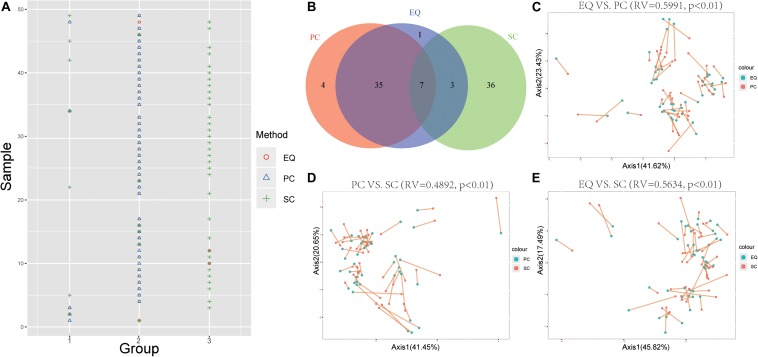
Neurodegenerative diseases encompass a wide variety of pathological conditions caused by a loss of neurons in the central nervous system (CNS) and are severely debilitating. Exosome contains bio-signatures of great diagnostic and therapeutic value. There is proof that exosomal proteins can be biomarkers for Alzheimer's disease (AD) and Parkinson's disease (PD). MicroRNAs in exosome has potential to be an important source of biomarkers for neurodegenerative diseases. Here, we report exosomal microRNA performance of human plasma in neurodegenerative diseases by small RNA sequencing. A wide range of altered exo-miRNA expression levels were detected in both AD and PD patients. Down-regulated miRNAs in AD samples were enriched in ECM-receptor interaction pathway and both up-/down-regulated miRNAs in PD samples were enriched in fatty acid biosynthesis pathway. Compared to the control, 8 miRNAs were found to be significantly elevated/declined in AD and PD samples, of which 4 miRNAs were newly identified. Additionally, two exosome isolating methods were compared and the reproducibility of plasma exo-miRNA expression was confirmed, suggesting the feasibility of large-scale clinical application of this method. This study revealed exo-miRNA expression levels in neurodegenerative diseases, proposed new biomarkers and their potential functional pathway for AD and PD, confirmed the reproductivity of exo-miRNA profiles by using a different exosome isolating method, and compared the results with plasma miRNA expression. Therefore, this study also provides a precedent for identifying exosomal biomarkers of neurodegenerative diseases in plasma by high-throughput sequencing and it could extend the therapeutic repertoire of exosomal biomarkers.
神经退行性疾病包括由中枢神经系统(CNS)中神经元丧失引起的多种病理状况,并且严重使人衰弱。外泌体含有具有重大诊断和治疗价值的生物标志物。有证据表明,外泌体蛋白可以作为阿尔茨海默病(AD)和帕金森病(PD)的生物标志物。外泌体中的微小RNA有潜力成为神经退行性疾病生物标志物的重要来源。在此,我们通过小RNA测序报告了人类血浆外泌体微小RNA在神经退行性疾病中的表现。在AD和PD患者中均检测到广泛改变的外泌体微小RNA表达水平。AD样本中下调的微小RNA在细胞外基质-受体相互作用途径中富集,而PD样本中上调和下调的微小RNA均在脂肪酸生物合成途径中富集。与对照组相比,在AD和PD样本中发现8种微小RNA显著升高/下降,其中4种微小RNA是新鉴定的。此外,比较了两种外泌体分离方法,并确认了血浆外泌体微小RNA表达的可重复性,表明该方法大规模临床应用的可行性。本研究揭示了神经退行性疾病中外泌体微小RNA的表达水平,提出了AD和PD的新生物标志物及其潜在功能途径,通过使用不同的外泌体分离方法确认了外泌体微小RNA谱的可重复性,并将结果与血浆微小RNA表达进行了比较。因此,本研究也为通过高通量测序鉴定血浆中神经退行性疾病的外泌体生物标志物提供了先例,并且它可以扩展外泌体生物标志物的治疗方法。