Cardiac Arrhythmia Service Massachusetts General Hospital Boston MA.
Department of Chemical Engineering Northeastern University Boston MA.
J Am Heart Assoc. 2020 Jun 2;9(11):e014199. doi: 10.1161/JAHA.119.014199. Epub 2020 May 27.
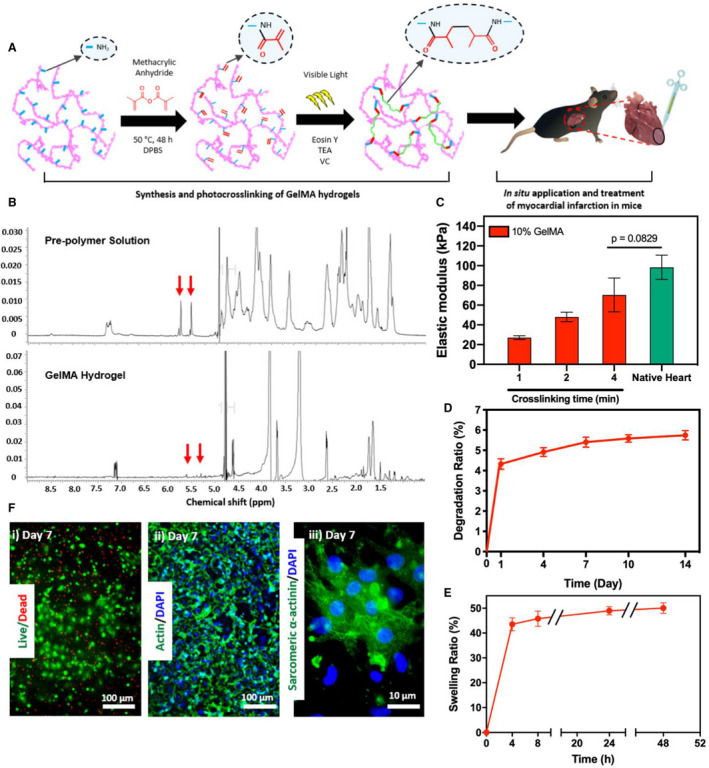
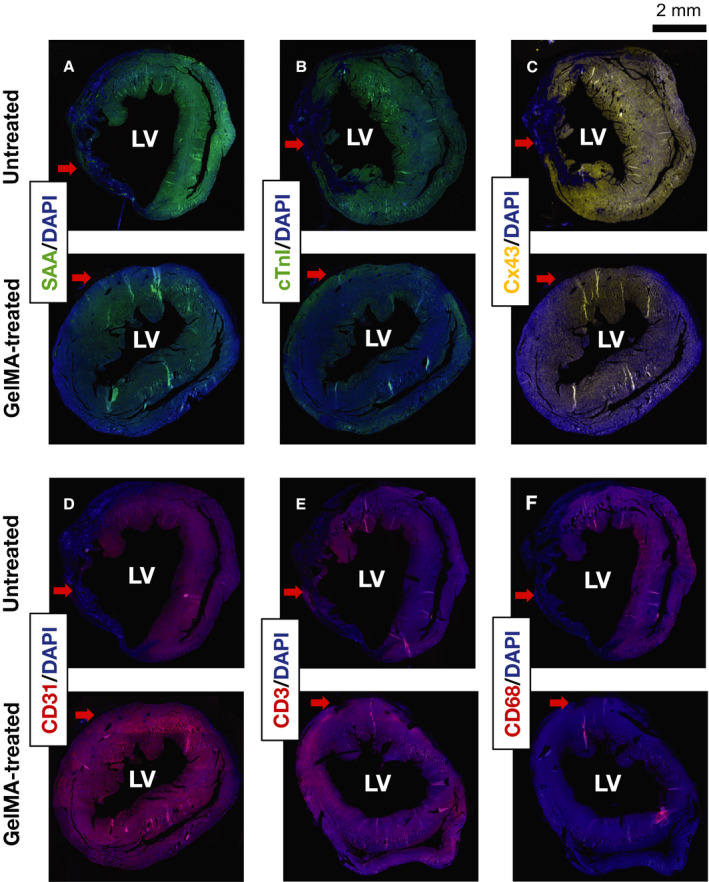
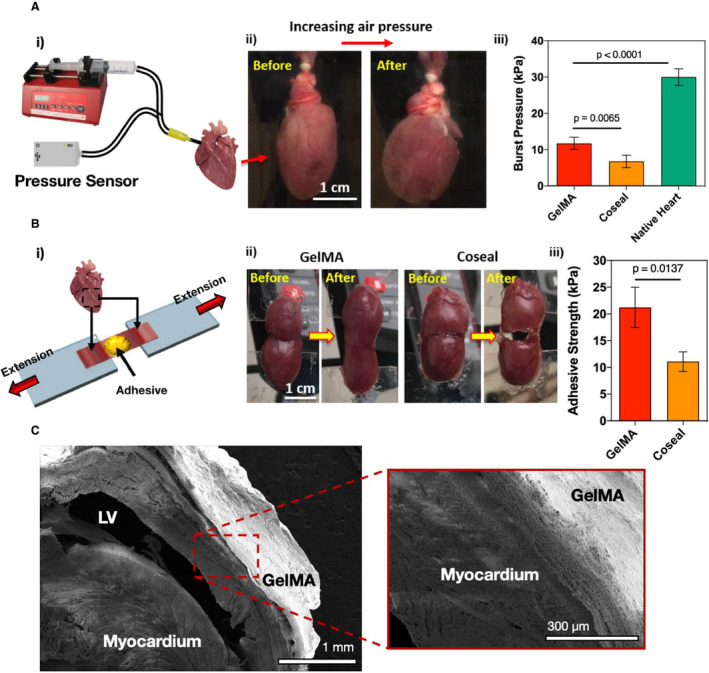
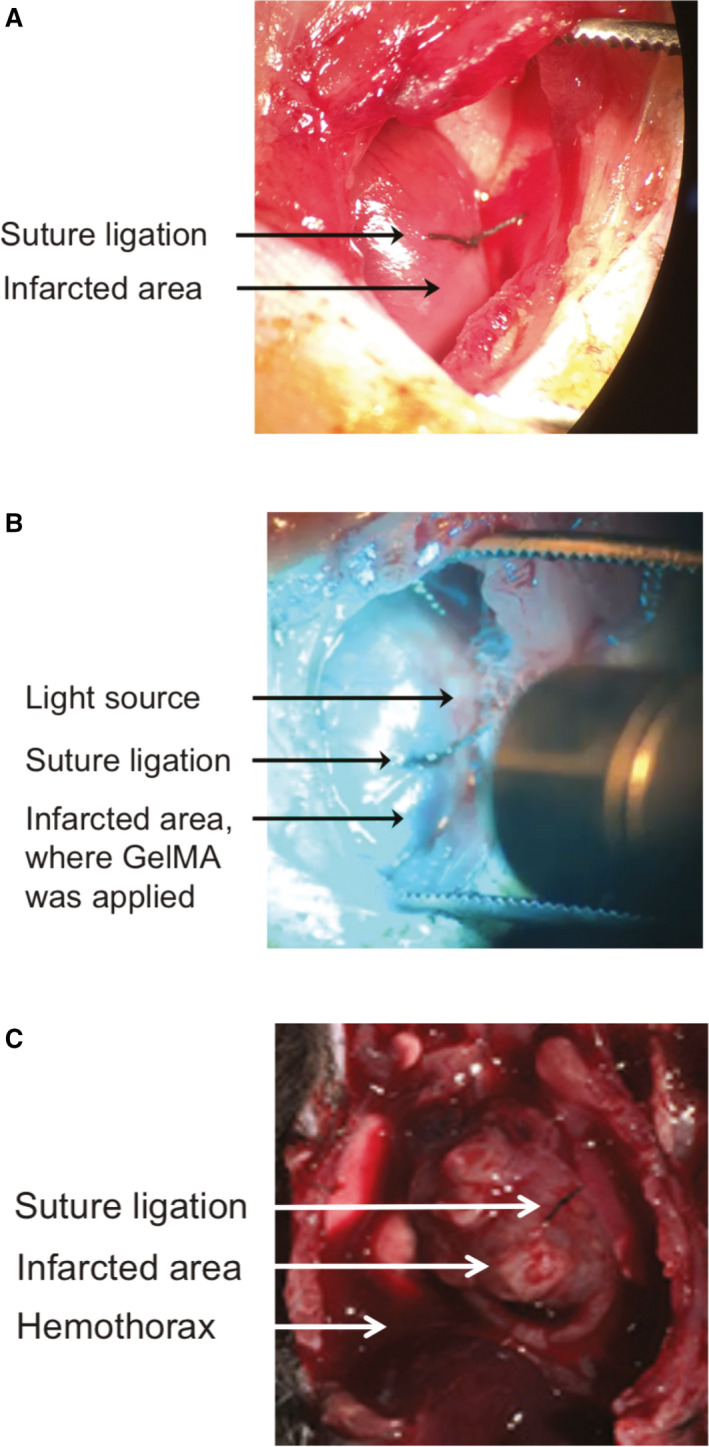
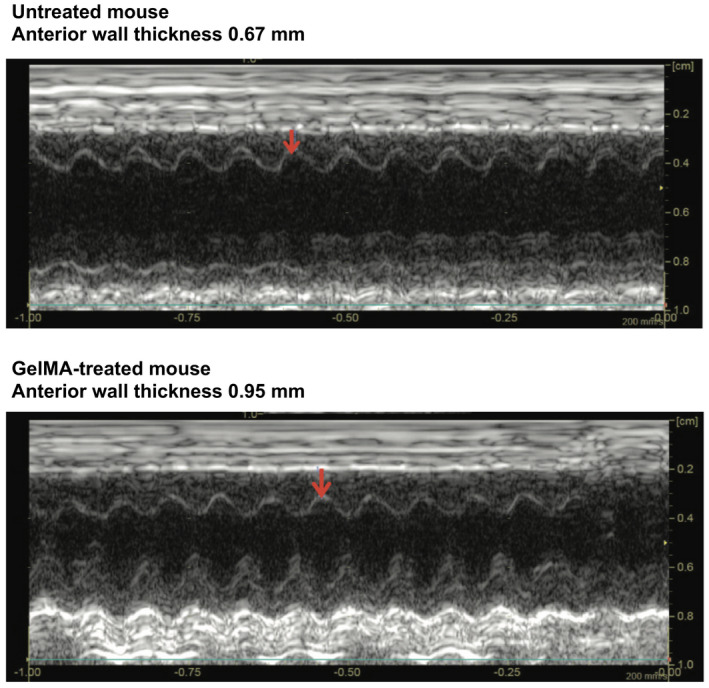
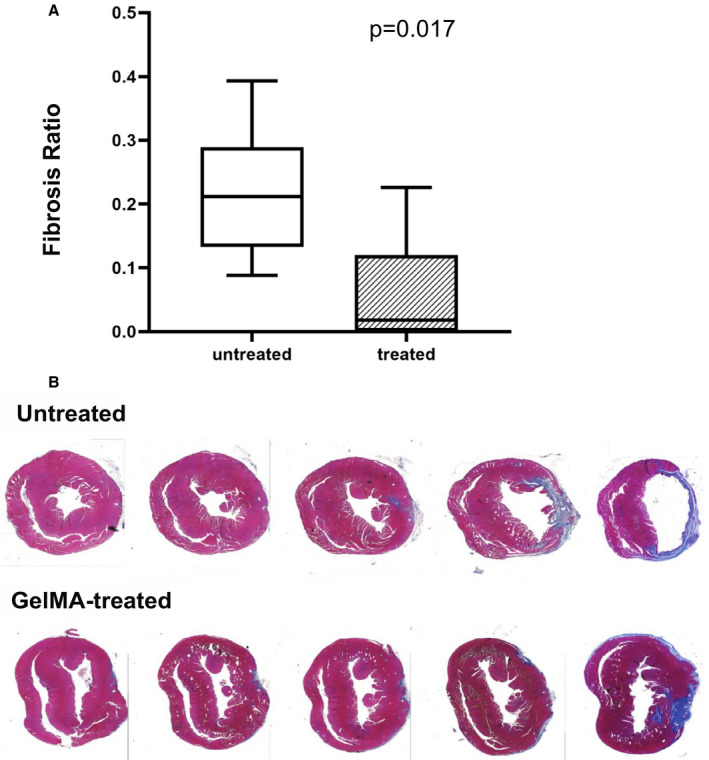
Background Delivery of hydrogels to the heart is a promising strategy for mitigating the detrimental impact of myocardial infarction (MI). Challenges associated with the in vivo delivery of currently available hydrogels have limited clinical translation of this technology. Gelatin methacryloyl (GelMA) bioadhesive hydrogel could address many of the limitations of available hydrogels. The goal of this proof-of-concept study was to evaluate the cardioprotective potential of GelMA in a mouse model of MI. Methods and Results The physical properties of GelMA bioadhesive hydrogel were optimized in vitro. Impact of GelMA bioadhesive hydrogel on post-MI recovery was then assessed in vivo. In 20 mice, GelMA bioadhesive hydrogel was applied to the epicardial surface of the heart at the time of experimental MI. An additional 20 mice underwent MI but received no GelMA bioadhesive hydrogel. Survival rates were compared for GelMA-treated and untreated mice. Left ventricular function was assessed 3 weeks after experimental MI with transthoracic echocardiography. Left ventricular scar burden was measured with postmortem morphometric analysis. Survival rates at 3 weeks post-MI were 89% for GelMA-treated mice and 50% for untreated mice (=0.011). Left ventricular contractile function was better in GelMA-treated than untreated mice (fractional shortening 37% versus 26%, <0.001). Average scar burden in GelMA-treated mice was lower than in untreated mice (6% versus 22%, =0.017). Conclusions Epicardial GelMA bioadhesive application at the time of experimental MI was performed safely and was associated with significantly improved post-MI survival compared with control animals. In addition, GelMA treatment was associated with significantly better preservation of left ventricular function and reduced scar burden.
将水凝胶递送到心脏是减轻心肌梗死(MI)不良影响的一种有前途的策略。目前可用于体内递送的水凝胶所面临的挑战限制了该技术的临床转化。明胶甲基丙烯酰(GelMA)生物黏附水凝胶可以解决现有水凝胶的许多局限性。本概念验证研究的目的是在 MI 小鼠模型中评估 GelMA 的心脏保护潜力。
体外优化 GelMA 生物黏附水凝胶的物理性质。然后在体内评估 GelMA 生物黏附水凝胶对 MI 后恢复的影响。在 20 只小鼠中,在实验性 MI 时将 GelMA 生物黏附水凝胶应用于心外膜表面。另外 20 只小鼠发生 MI,但未接受 GelMA 生物黏附水凝胶。比较 GelMA 处理和未处理小鼠的存活率。在实验性 MI 后 3 周通过经胸超声心动图评估左心室功能。通过死后形态计量学分析测量左心室瘢痕负担。MI 后 3 周时,GelMA 处理组小鼠的存活率为 89%,未处理组小鼠为 50%(=0.011)。GelMA 处理组小鼠的左心室收缩功能优于未处理组小鼠(缩短分数 37%对 26%,<0.001)。GelMA 处理组小鼠的平均瘢痕负担低于未处理组小鼠(6%对 22%,=0.017)。
在实验性 MI 时于心外膜应用 GelMA 生物黏附物是安全的,与对照动物相比,明显提高了 MI 后的存活率。此外,GelMA 治疗与左心室功能的显著改善和瘢痕负担的减少相关。