Oves Mohammad, Rauf Mohd Ahmar, Ansari Mohammad Omaish, Aslam Parwaz Khan Aftab, A Qari Huda, Alajmi Mohamed F, Sau Samaresh, Iyer Arun K
Center of Excellence in Environmental Studies, King Abdul Aziz University, Jeddah 21589, Saudi Arabia.
Department of Biological Science, Faculty of Science, King Abdulaziz University, Jeddah 21589, Saudi Arabia.
Nanomaterials (Basel). 2020 May 25;10(5):1004. doi: 10.3390/nano10051004.
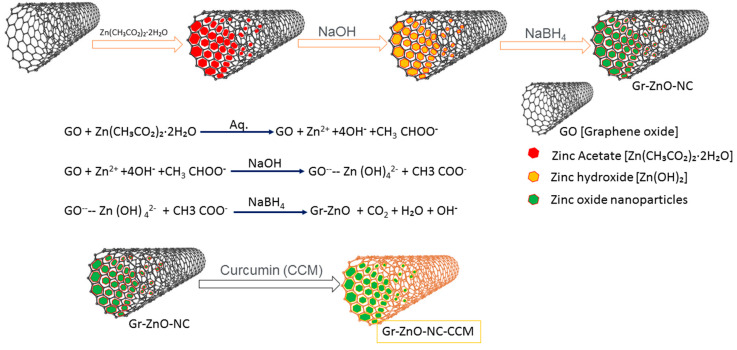
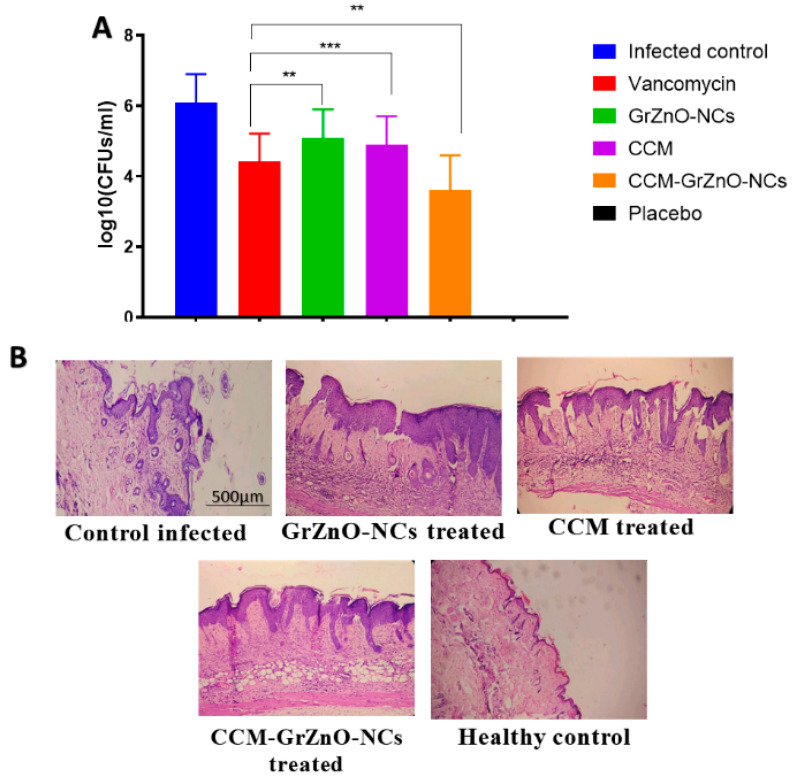
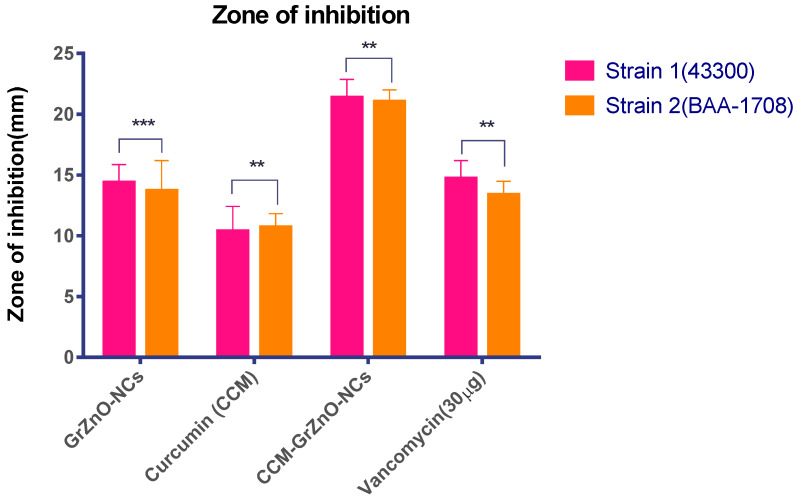
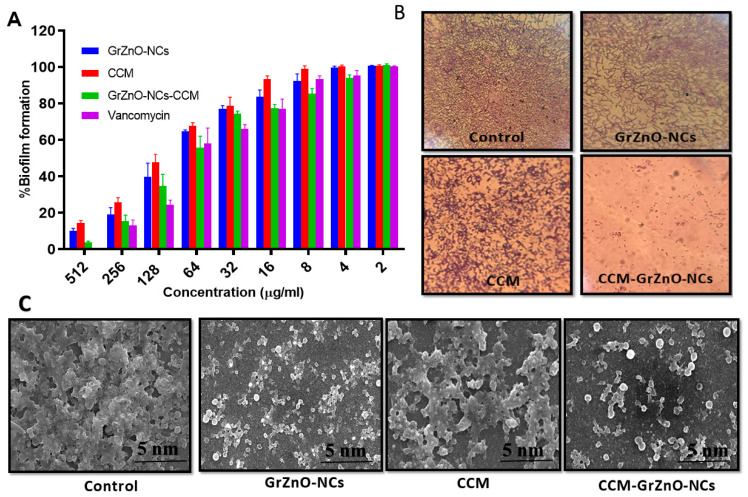
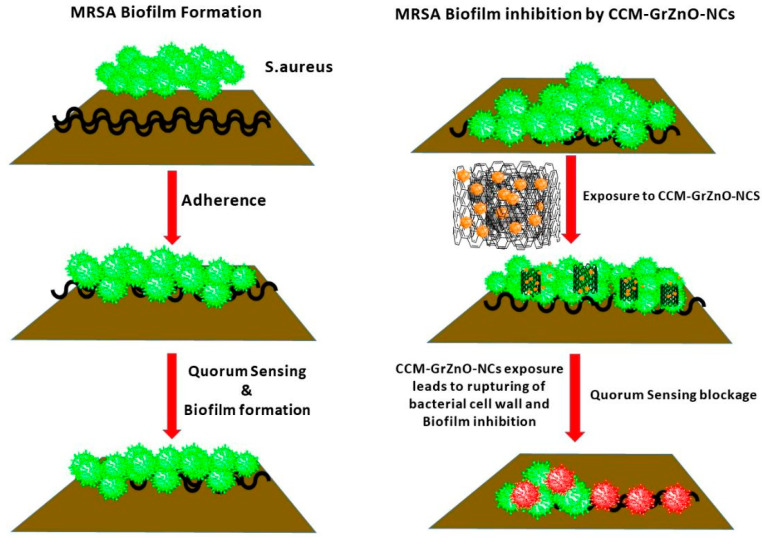
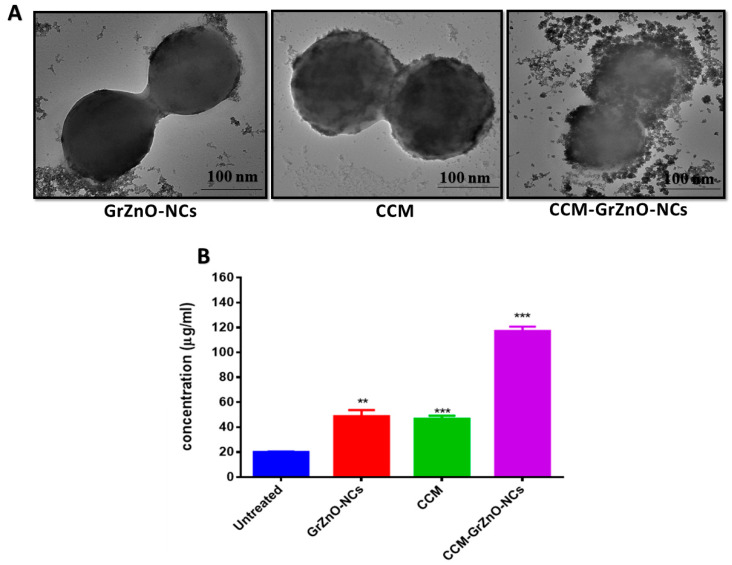
Sometimes, life-threatening infections are initiated by the biofilm formation facilitated at the infection site by the drug-resistant bacteria . The aggregation of the same type of bacteria leads to biofilm formation on the delicate tissue, dental plaque, and skin. In the present investigation, a Graphene (Gr)-based nano-formulation containing Curcumin (C.C.M.) and Zinc oxide nanoparticles (ZnO-NPs) showed a wide range of anti-microbial activity against Methicillin-resistant Staphylococcus aureus (MRSA) biofilm and demonstrated the anti-microbial mechanism of action. The anti-microbial effect of GrZnO nanocomposites, i.e., GrZnO-NCs, suggests that the integrated graphene-based nanocomposites effectively suppressed both sensitive as well as MRSA ATCC 43300 and BAA-1708 isolates. The inhibitory effect of GrZnO-NCs improved >5-fold when combined with C.C.M., and demonstrated a M.I.C. of 31.25 µg/mL contrasting with the GrZnO-NCs or C.C.M. alone having M.I.C. value of 125 µg/mL each. The combination treatment of GrZnO-NCs or C.C.M. inhibited the M.R.S.A. topical dermatitis infection in a mice model with a significant decrease in the CFU count to ~64%. Interestingly, the combination of C.C.M. and GrZnO-NCs damaged the bacterial cell wall structure, resulting in cytoplasm spillage, thereby diminishing their metabolism. Thus, owing to the ease of synthesis and highly efficient anti-microbial properties, the present graphene-based curcumin nano-formulations can cater to a new treatment methodology against M.R.S.A.
有时,耐药细菌在感染部位促进生物膜形成,从而引发危及生命的感染。同一类型细菌的聚集会导致在脆弱组织、牙菌斑和皮肤上形成生物膜。在本研究中,一种含有姜黄素(C.C.M.)和氧化锌纳米颗粒(ZnO-NPs)的石墨烯(Gr)基纳米制剂对耐甲氧西林金黄色葡萄球菌(MRSA)生物膜表现出广泛的抗菌活性,并证明了其抗菌作用机制。GrZnO纳米复合材料(即GrZnO-NCs)的抗菌效果表明,这种基于石墨烯的复合纳米材料能有效抑制敏感菌以及MRSA ATCC 43300和BAA-1708菌株。与单独的GrZnO-NCs或C.C.M.相比,GrZnO-NCs与C.C.M.联合使用时抑菌效果提高了5倍以上,其最低抑菌浓度(M.I.C.)为31.25μg/mL,而单独的GrZnO-NCs或C.C.M.的M.I.C.值均为125μg/mL。GrZnO-NCs或C.C.M.的联合治疗在小鼠模型中抑制了MRSA局部皮肤感染,菌落形成单位(CFU)计数显著降低至约64%。有趣的是,C.C.M.和GrZnO-NCs的组合破坏了细菌细胞壁结构,导致细胞质泄漏,从而削弱了它们的代谢。因此,由于合成简便且具有高效抗菌性能,目前这种基于石墨烯的姜黄素纳米制剂可满足针对MRSA的新型治疗方法的需求。