Clinical Division of Fish Medicine, University of Veterinary Medicine, Vienna 1210, Austria.
Central Institute of Fisheries Education, Rohtak Centre, Haryana 124411, India.
Int J Mol Sci. 2020 May 26;21(11):3755. doi: 10.3390/ijms21113755.
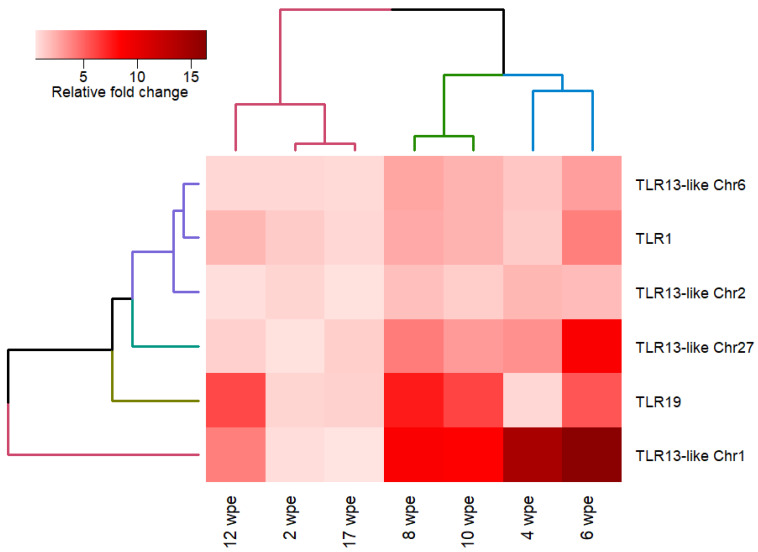
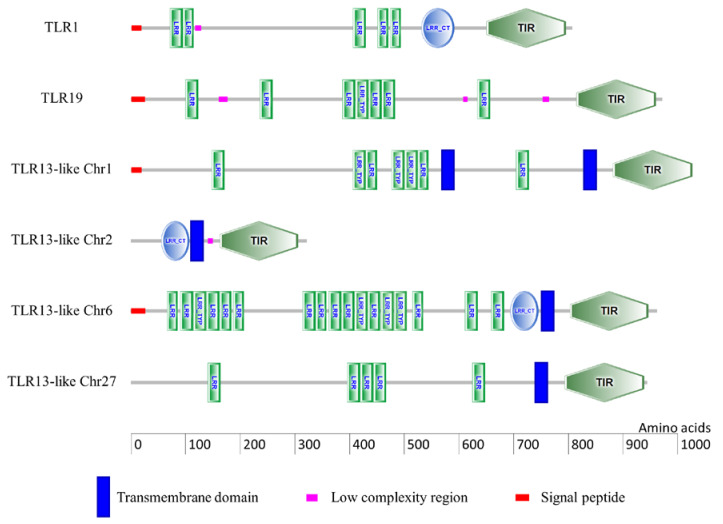
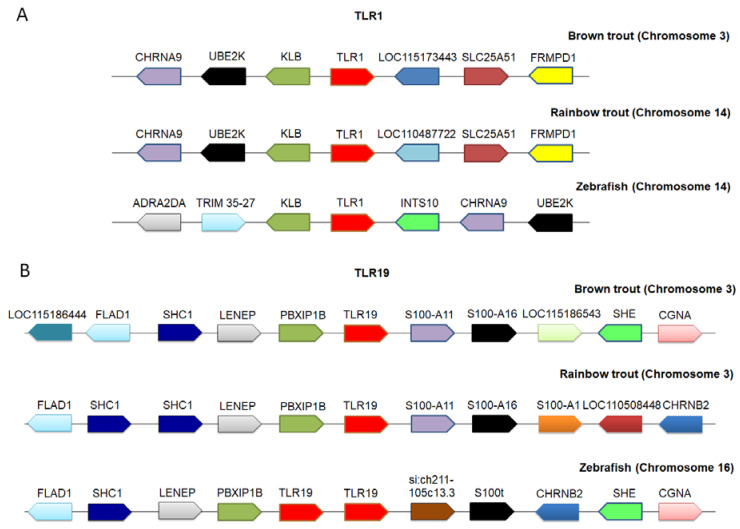
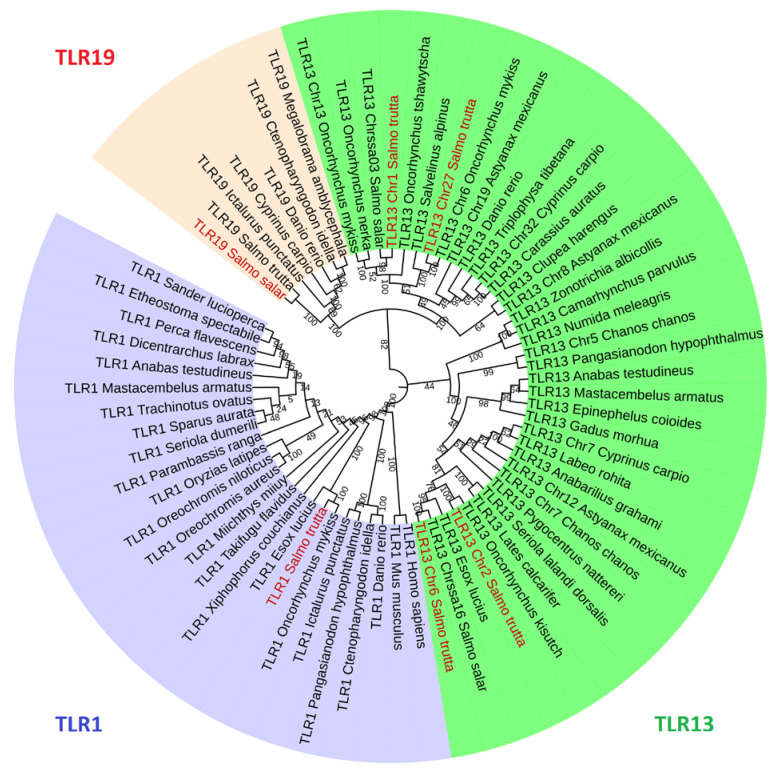
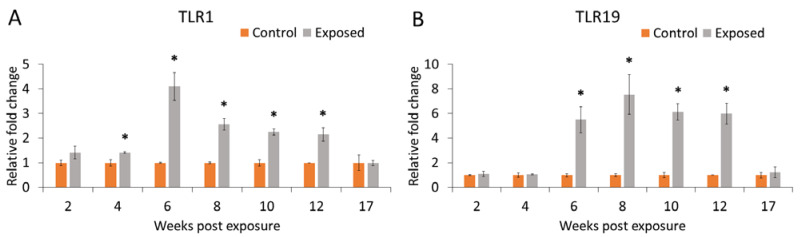
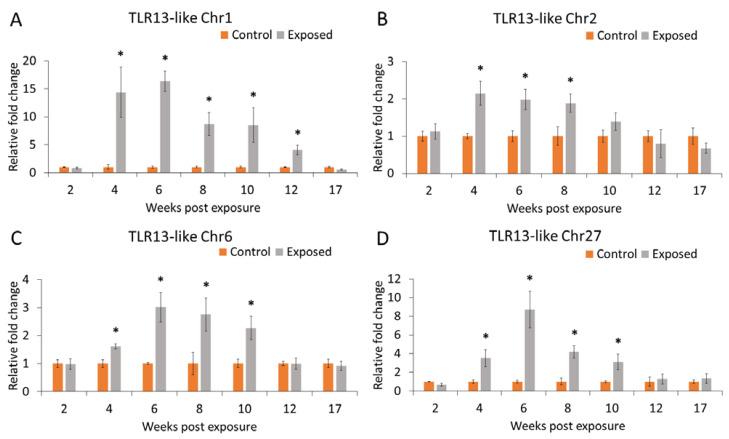
Proliferative kidney disease is an emerging disease among salmonids in Europe and North America caused by the myxozoan parasite The decline of endemic brown trout () in the Alpine streams of Europe is fostered by infection. Toll-like receptors (TLRs) are a family of pattern recognition receptors that acts as sentinels of the immune system against the invading pathogens. However, little is known about the TLRs' response in salmonids against the myxozoan infection. In the present study, we identified and evaluated TLR1, TLR19, and TLR13-like genes of brown trout using data-mining and phylogenetic analysis. The expression pattern of TLRs was examined in the posterior kidney of brown trout infected with at various time points. Typical Toll/interleukin-1 receptor protein domain was found in all tested TLRs. However, TLR13-like chr2 had a short amino acid sequence with no LRR domain. Phylogenetic analysis illustrated that TLR orthologs are conserved across vertebrates. Similarly, a conserved synteny gene block arrangement was observed in the case of TLR1 and TLR19 across fish species. Interestingly, all tested TLRs showed their maximal relative expression from 6 to 10 weeks post-exposure to the parasite. Our results suggest that these TLRs may play an important role in the innate defense mechanism of brown trout against the invading .
增生性肾病是一种在欧洲和北美的鲑鱼中出现的新兴疾病,由粘孢子虫寄生虫引起。感染 促进了欧洲阿尔卑斯溪流中地方性褐鳟的减少。Toll 样受体 (TLR) 是一组模式识别受体,作为免疫系统对抗入侵病原体的哨兵。然而,对于鲑鱼对粘孢子虫感染的 TLR 反应知之甚少。在本研究中,我们使用数据挖掘和系统发育分析鉴定和评估了褐鳟的 TLR1、TLR19 和 TLR13 样基因。在感染 后,在不同时间点检查了 TLRs 在褐鳟后肾中的表达模式。在所有测试的 TLR 中都发现了典型的 Toll/白细胞介素-1 受体蛋白结构域。然而,TLR13 样 chr2 具有短的氨基酸序列,没有 LRR 结构域。系统发育分析表明,TLR 直系同源物在整个脊椎动物中是保守的。同样,在 TLR1 和 TLR19 方面,在鱼类物种中观察到保守的基因同线性基因块排列。有趣的是,所有测试的 TLRs 在暴露于寄生虫后 6 至 10 周时表现出最大的相对表达。我们的结果表明,这些 TLRs 可能在褐鳟抵抗入侵的 的先天防御机制中发挥重要作用。