Department of Microbiology and Molecular Genetics, University of California, Davis, Davis, California, United States of America.
Department of Molecular and Cellular Biology, University of California, Davis, Davis, California, United States of America.
PLoS Genet. 2020 May 29;16(5):e1008816. doi: 10.1371/journal.pgen.1008816. eCollection 2020 May.
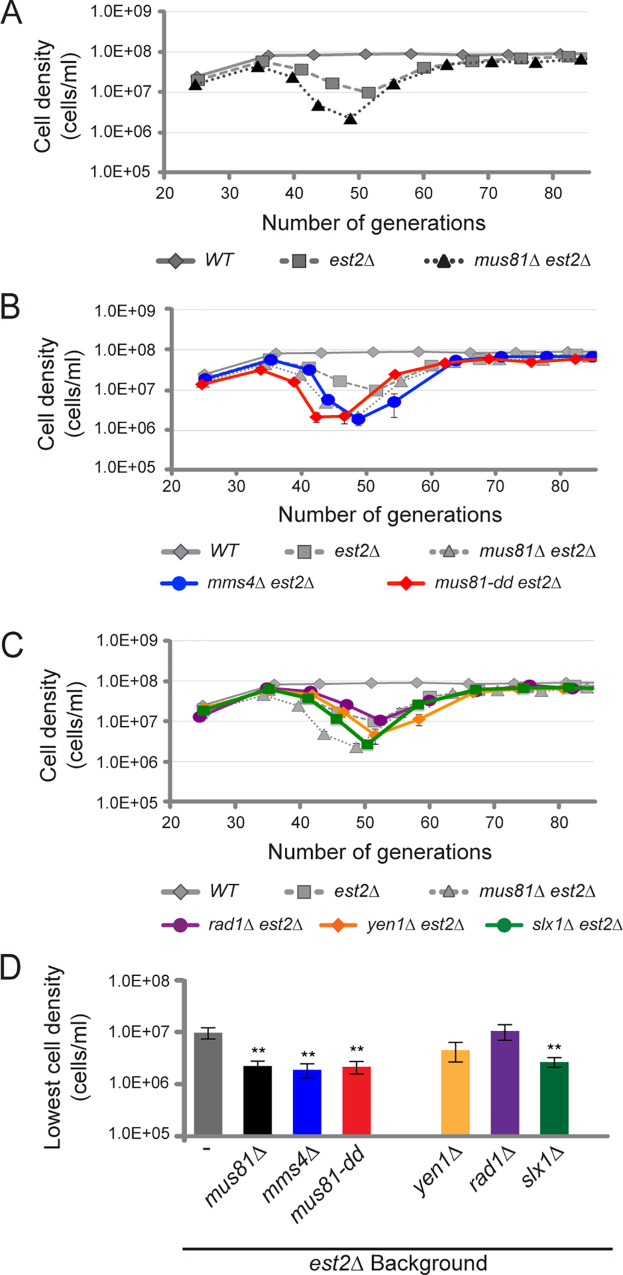
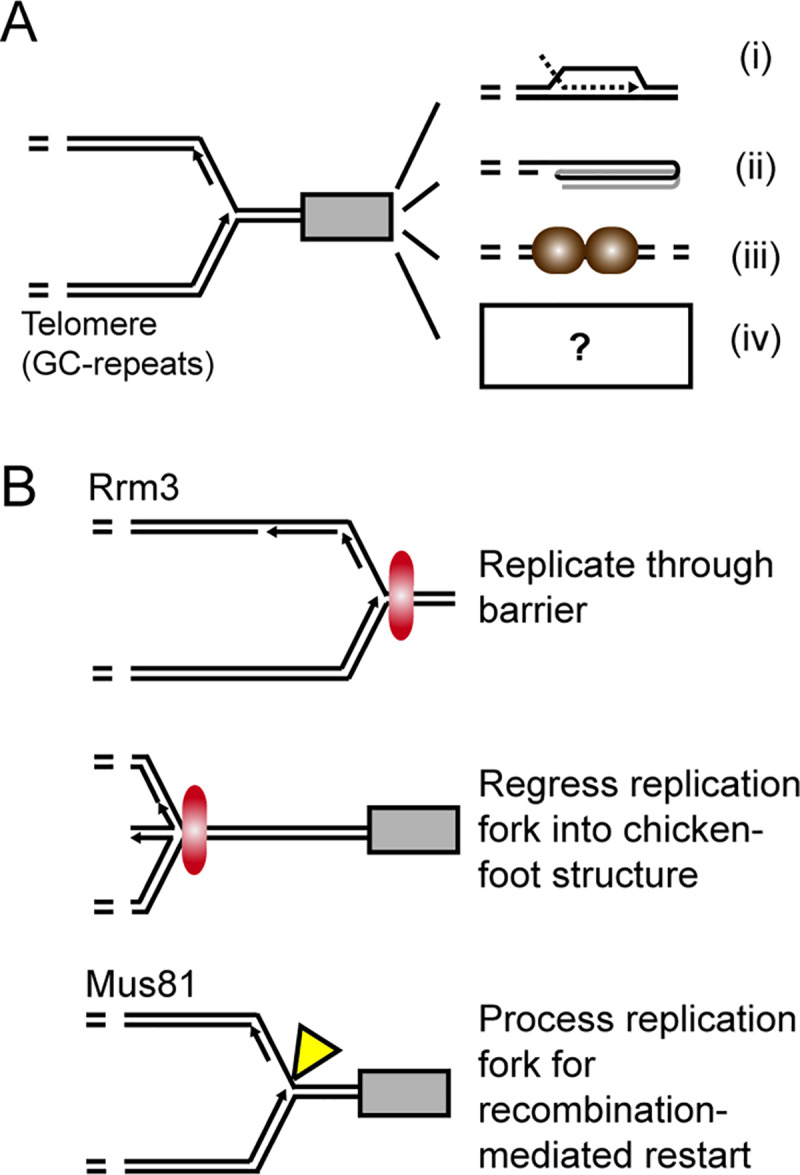
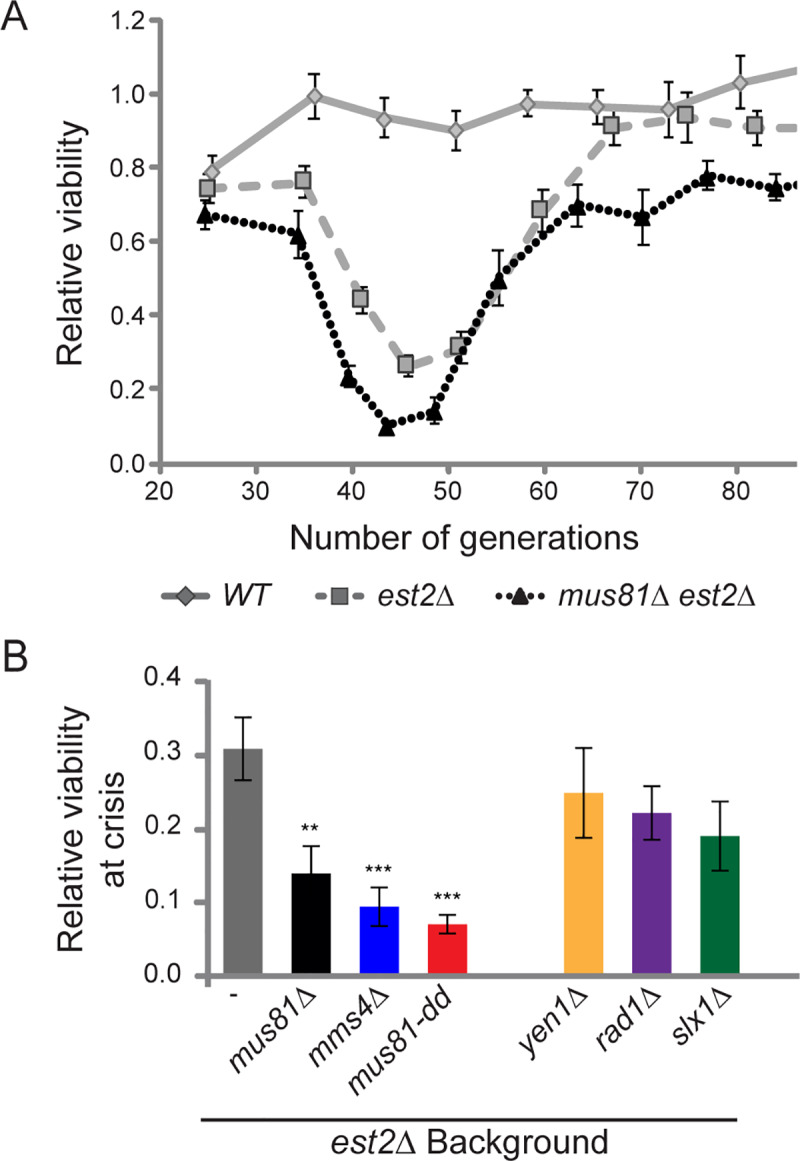
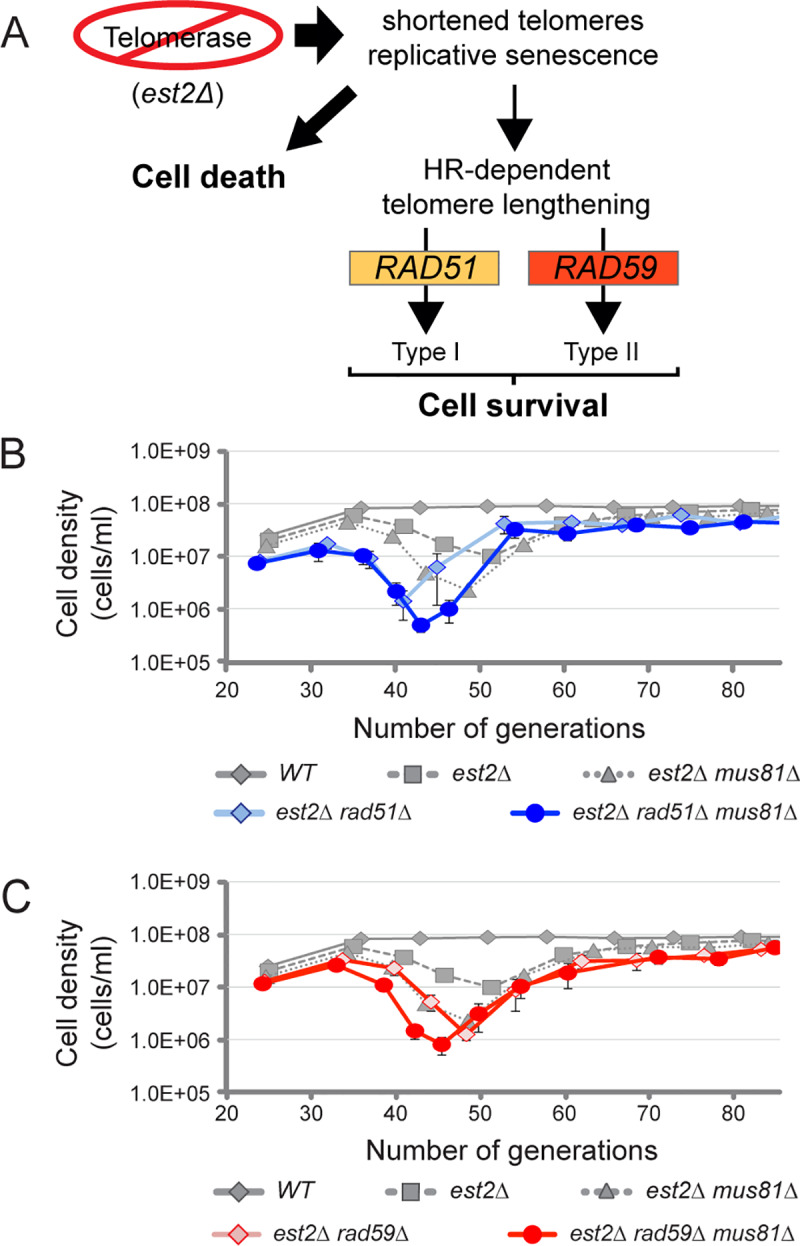
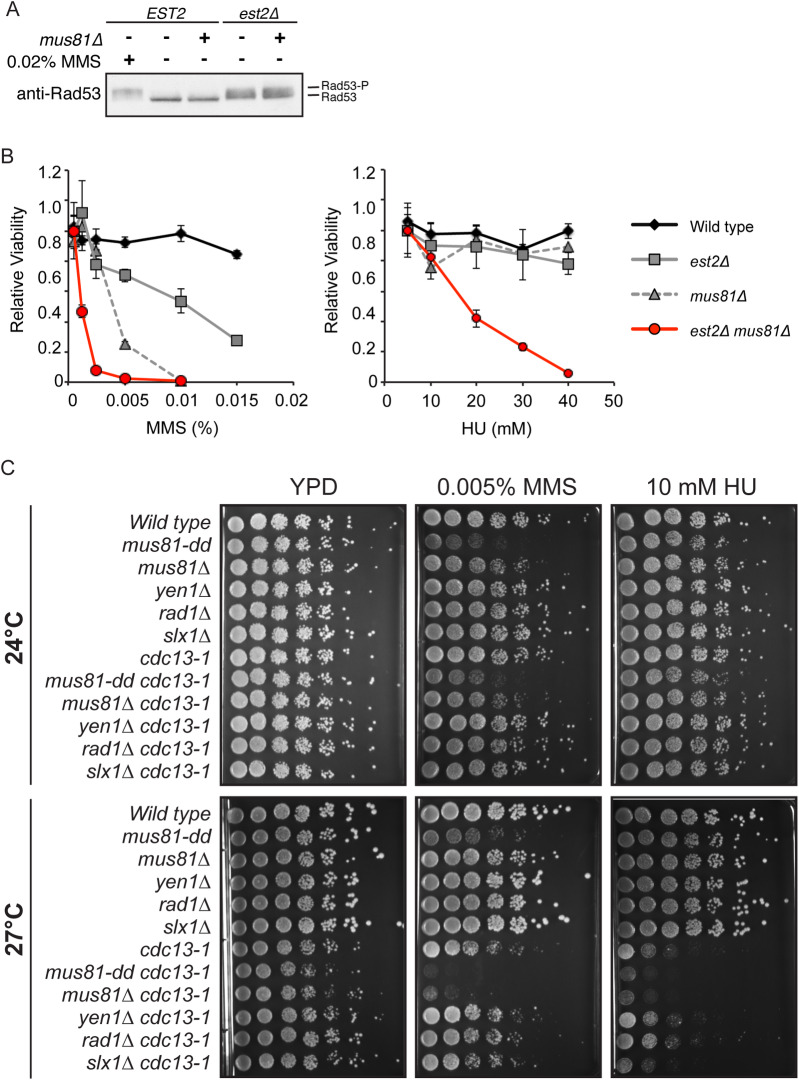
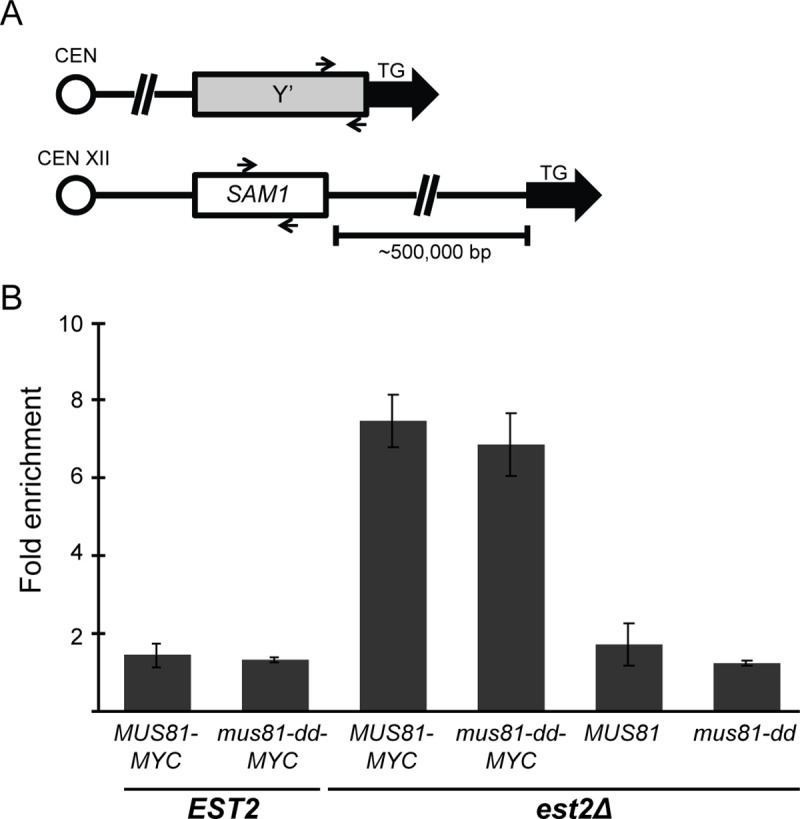
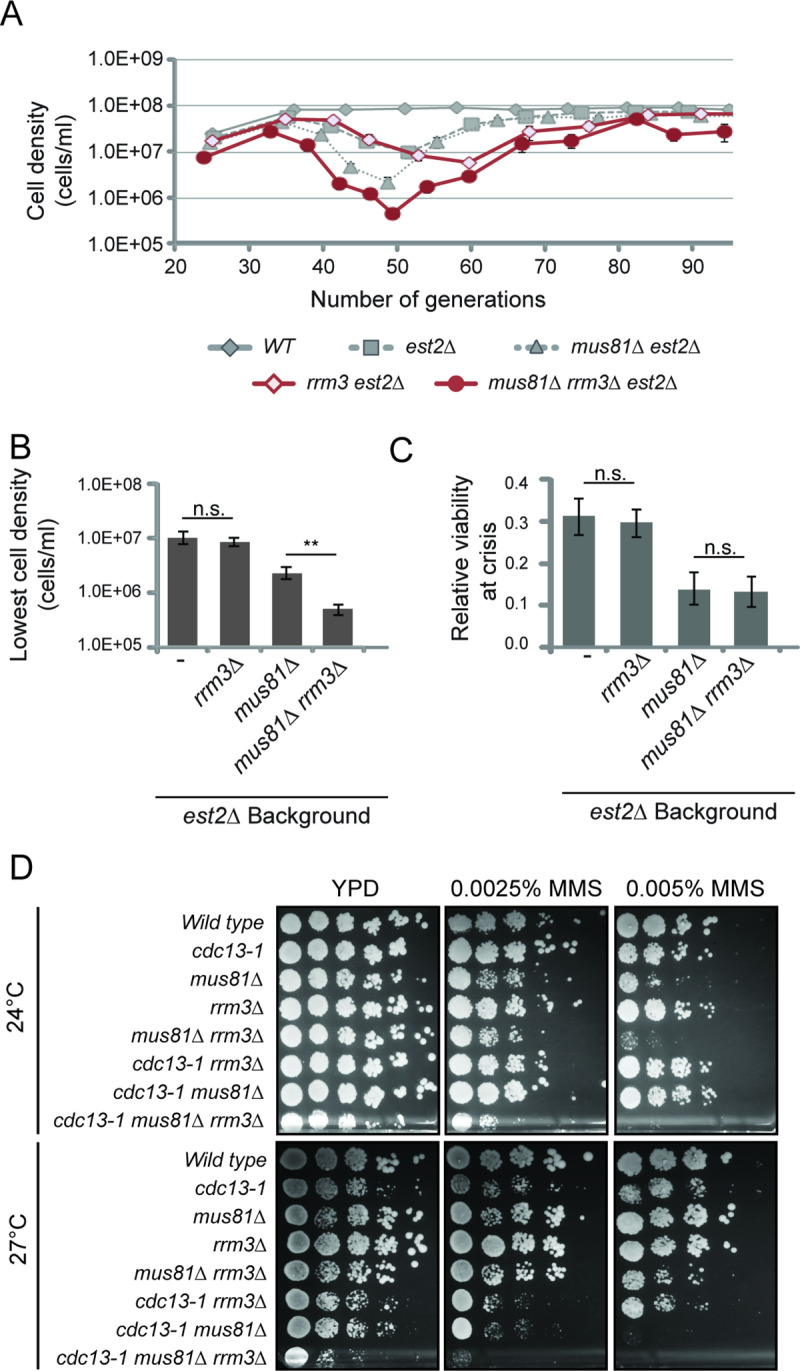
Alternative lengthening of telomeres (ALT) in human cells is a conserved process that is often activated in telomerase-deficient human cancers. This process exploits components of the recombination machinery to extend telomere ends, thus allowing for increased proliferative potential. Human MUS81 (Mus81 in Saccharomyces cerevisiae) is the catalytic subunit of structure-selective endonucleases involved in recombination and has been implicated in the ALT mechanism. However, it is unclear whether MUS81 activity at the telomere is specific to ALT cells or if it is required for more general aspects of telomere stability. In this study, we use S. cerevisiae to evaluate the contribution of the conserved Mus81-Mms4 endonuclease in telomerase-deficient yeast cells that maintain their telomeres by mechanisms akin to human ALT. Similar to human cells, we find that yeast Mus81 readily localizes to telomeres and its activity is important for viability after initial loss of telomerase. Interestingly, our analysis reveals that yeast Mus81 is not required for the survival of cells undergoing recombination-mediated telomere lengthening, i.e. for ALT itself. Rather we infer from genetic analysis that Mus81-Mms4 facilitates telomere replication during times of telomere instability. Furthermore, combining mus81 mutants with mutants of a yeast telomere replication factor, Rrm3, reveals that the two proteins function in parallel to promote normal growth during times of telomere stress. Combined with previous reports, our data can be interpreted in a consistent model in which both yeast and human MUS81-dependent nucleases participate in the recovery of stalled replication forks within telomeric DNA. Furthermore, this process becomes crucial under conditions of additional replication stress, such as telomere replication in telomerase-deficient cells.
端粒的替代性延长(ALT)是人类细胞中的一种保守过程,通常在端粒酶缺陷的人类癌症中被激活。该过程利用重组机制的组件来延长端粒末端,从而允许增加增殖潜力。人类 MUS81(酿酒酵母中的 Mus81)是参与重组的结构选择性内切酶的催化亚基,并与 ALT 机制有关。然而,尚不清楚 MUS81 在端粒处的活性是否特定于 ALT 细胞,或者它是否是端粒稳定性的更普遍方面所必需的。在这项研究中,我们使用酿酒酵母来评估保守的 Mus81-Mms4 内切酶在通过类似于人类 ALT 的机制维持端粒的端粒酶缺陷酵母细胞中的贡献。与人类细胞相似,我们发现酵母 Mus81 很容易定位于端粒,并且其活性对于初始丧失端粒酶后细胞的存活很重要。有趣的是,我们的分析表明酵母 Mus81 不是经历重组介导的端粒延长的细胞(即 ALT 本身)存活所必需的。相反,我们从遗传分析推断 Mus81-Mms4 有助于在端粒不稳定时进行端粒复制。此外,将 mus81 突变体与酵母端粒复制因子 rrm3 的突变体结合使用,表明这两种蛋白质在端粒应激时平行起作用以促进正常生长。结合以前的报告,我们的数据可以用一致的模型来解释,在该模型中,酵母和人类的 MUS81 依赖性核酸酶都参与恢复端粒 DNA 内停滞的复制叉。此外,在其他复制应激条件下,例如端粒酶缺陷细胞中的端粒复制,该过程变得至关重要。