Department of Pathology, School of Medical Sciences, UNSW Sydney, Australia.
Department of Parasitology, Faculty of Medicine, University of Colombo, Sri Lanka.
Clin Microbiol Infect. 2020 Aug;26(8):979-987. doi: 10.1016/j.cmi.2020.05.016. Epub 2020 May 26.
Repurposing hydroxychloroquine (HCQ) and chloroquine (CQ) as antiviral agents is a re-emerging topic with the advent of new viral epidemics.
To summarize evidence from human clinical studies for using HCQ or CQ as antiviral agents for any viral infection.
PubMed, EMBASE, Scopus, Web of Science for published studies without time or language restrictions; Cochrane Clinical Trial Registry and Chinese Clinical Trials Registry for trials registered after 2015; MedRxiv for preprints within the last 12 months.
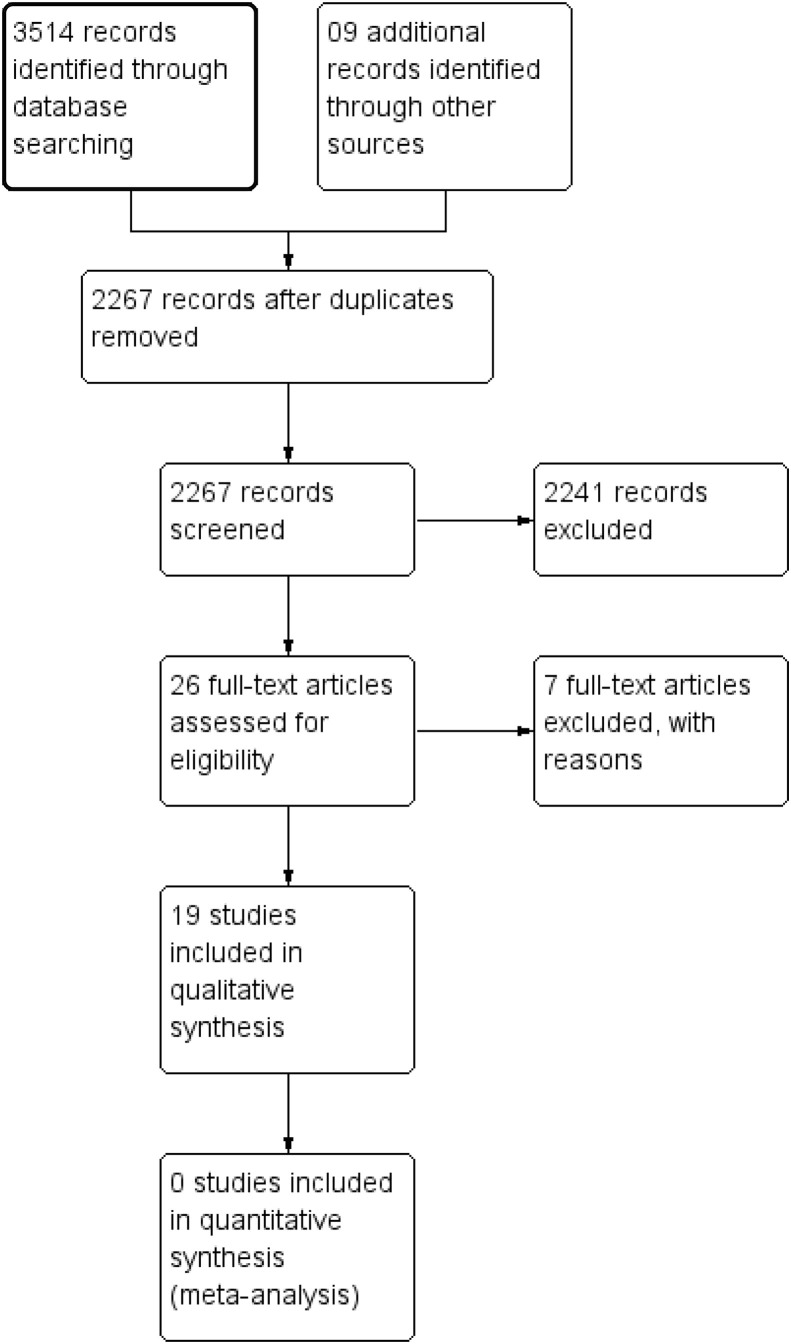
Study eligibility criteria were interventional and prospective observational studies (with or without a control group). Participants were adults and children with a confirmed viral infection. Interventions included the use of CQ or HCQ as antiviral agent in one or more groups of the study. Two authors independently screened abstracts, and all authors agreed on eligible studies. A meta-analysis was planned if studies were available which were similar in terms of participants, intervention, comparator and outcomes. Nineteen studies (including two preprints) were eligible (HIV 8, HCV 2, dengue 2, chikungunya 1, COVID-19 6). Nine and ten studies assessed CQ and HCQ respectively. Benefits of either drug for viral load suppression in HIV are inconsistent. CQ is ineffective in curing dengue (high-certainty evidence) and may have little or no benefit in curing chikungunya (low-certainty evidence). The evidence for COVID-19 infection is rapidly evolving but at this stage we are unsure whether either CQ or HCQ has any benefit in clearing viraemia (very-low-certainty evidence).
Using HCQ or CQ for HIV/HCV infections is now clinically irrelevant as other effective antivirals are available for viral load suppression (HIV) and cure (HCV). There is no benefit of CQ in dengue, and the same conclusion is likely for chikungunya. More evidence is needed to confirm whether either HCQ or CQ is beneficial in COVID-19 infection.
随着新的病毒性传染病的出现,将羟氯喹 (HCQ) 和氯喹 (CQ) 重新用作抗病毒药物是一个重新出现的话题。
总结人类临床研究中使用 HCQ 或 CQ 作为任何病毒感染的抗病毒药物的证据。
PubMed、EMBASE、Scopus、Web of Science 用于检索无时间或语言限制的已发表研究;Cochrane 临床试验注册中心和中国临床试验注册中心用于检索 2015 年后注册的试验;MedRxiv 用于检索过去 12 个月内的预印本。
研究入选标准为干预性和前瞻性观察性研究(有或无对照组)。参与者为成人和儿童,患有确诊的病毒性感染。干预措施包括在研究的一个或多个组中使用 CQ 或 HCQ 作为抗病毒药物。两名作者独立筛选摘要,所有作者均同意合格的研究。如果有类似的参与者、干预、比较和结局的研究,则计划进行荟萃分析。有 19 项研究(包括 2 项预印本)符合条件(HIV8 项、HCV2 项、登革热 2 项、基孔肯雅热 1 项、COVID-196 项)。分别有 9 项和 10 项研究评估了 CQ 和 HCQ。这两种药物对 HIV 病毒载量抑制的益处不一致。CQ 对登革热无效(高确定性证据),对基孔肯雅热可能几乎没有益处或益处有限(低确定性证据)。COVID-19 感染的证据正在迅速发展,但在现阶段,我们不确定 CQ 或 HCQ 是否对清除病毒血症有任何益处(极低确定性证据)。
由于其他有效的抗病毒药物可用于抑制病毒载量(HIV)和治愈(HCV),因此目前将 HCQ 或 CQ 用于 HIV/HCV 感染已无临床意义。CQ 对登革热没有益处,对基孔肯雅热也可能如此。需要更多的证据来确认 HCQ 或 CQ 是否对 COVID-19 感染有益。