Department for Psychotherapy and Biopsychosocial Health, Danube University Krems, 3500 Krems, Austria.
Austrian Federal Association for Psychotherapy, 1030 Vienna, Austria.
Int J Environ Res Public Health. 2020 May 27;17(11):3815. doi: 10.3390/ijerph17113815.
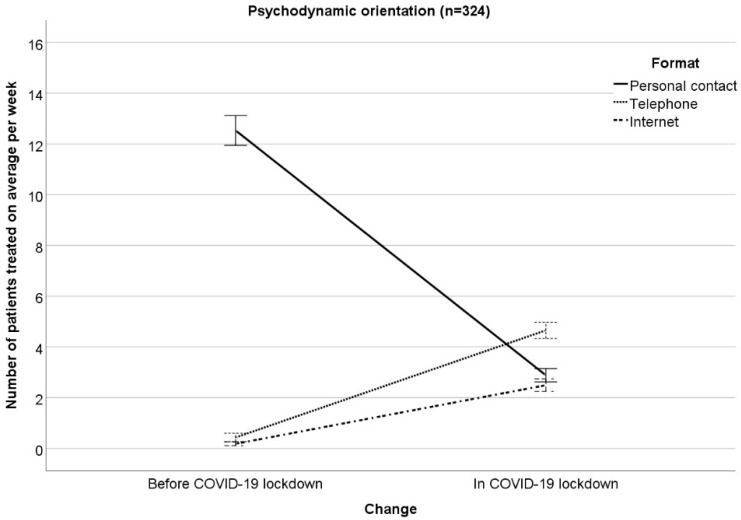
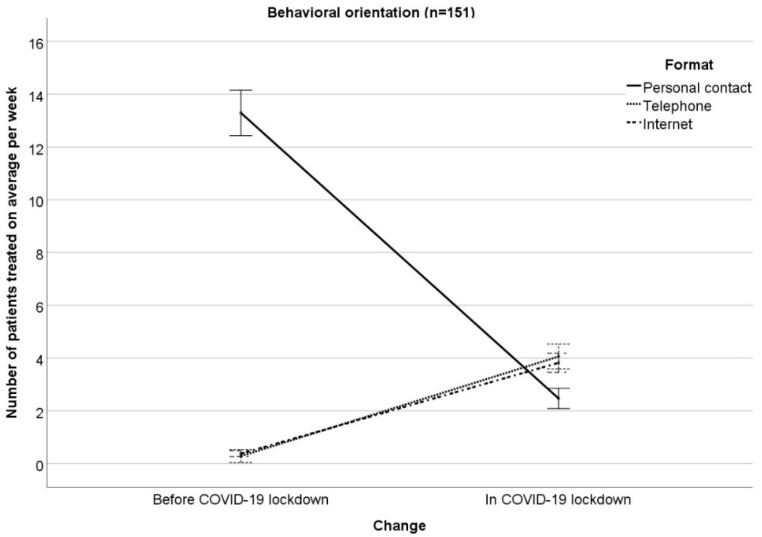
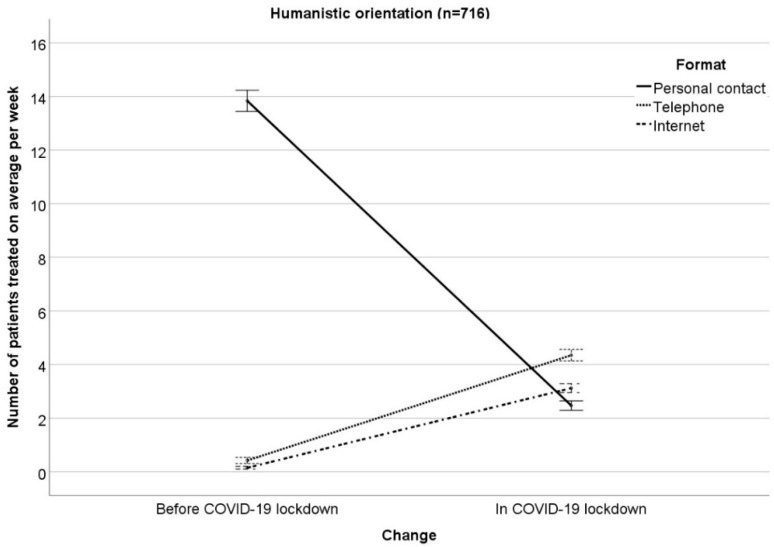
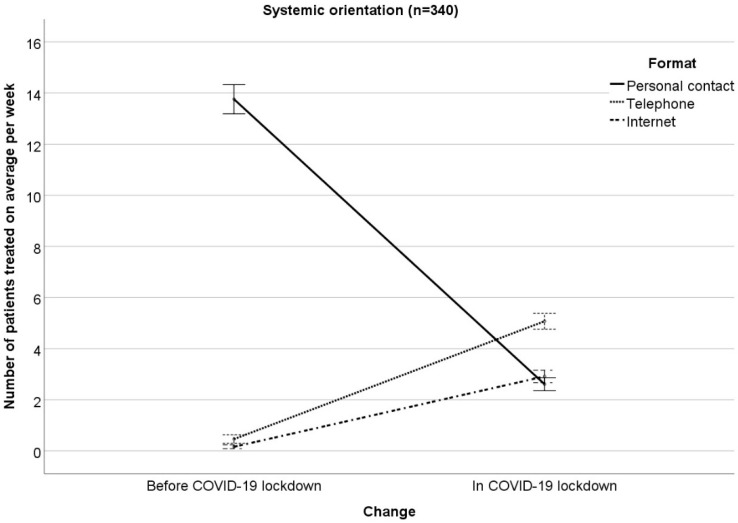
Reducing personal contacts is a central measure against the spreading of the novel coronavirus disease (COVID-19). This troubles mental health, but also mental health care as treatments usually take place in personal contact and switching to remote treatments might be necessary in times of COVID-19. The present study investigated the question how the provision of psychotherapy changed in the early weeks of the COVID-19 lockdown in Austria and whether there were differences between the four therapeutic orientations eligible in Austria (psychodynamic, humanistic, systemic, behavioral). Psychotherapists ( = 1547) completed an online survey. They entered their number of patients treated on average per week (in personal contact, via telephone, via Internet) in the early weeks of the COVID-19 lockdown in Austria as well as (retrospectively) in the months before. The number of patients treated on average per week in personal contact decreased (on average 81%; < 0.001), whereas the number of patients treated on average per week via telephone and via Internet increased (on average 979% and 1561%; both < 0.001). Yet, the decrease of psychotherapies through personal contact was not compensated for by increases of remote psychotherapies ( < 0.001). No differences between the four therapeutic orientations emerged. Results imply an undersupply of psychotherapy in the COVID-19 lockdown and that further changes are necessary to cover the increased need for timely psychotherapy in times of COVID-19.
减少人际接触是预防新型冠状病毒病(COVID-19)传播的核心措施。这不仅对心理健康造成困扰,也对精神卫生保健造成影响,因为治疗通常需要面对面进行,在 COVID-19 大流行期间可能需要转为远程治疗。本研究调查了 COVID-19 封锁早期奥地利心理治疗服务提供方式的变化情况,以及在奥地利可用的四种治疗方向(心理动力学、人本主义、系统、行为)之间是否存在差异。心理治疗师(=1547 人)完成了一项在线调查。他们在奥地利 COVID-19 封锁的早期阶段,以及(回顾性地)在之前的几个月中,平均每周(面对面、通过电话、通过互联网)治疗的患者数量。面对面治疗的患者平均每周数量减少(平均减少 81%;<0.001),而通过电话和互联网治疗的患者平均每周数量增加(平均增加 979%和 1561%;均<0.001)。然而,通过个人接触减少的心理治疗并没有被远程心理治疗的增加所弥补(<0.001)。四种治疗方向之间没有出现差异。结果表明,COVID-19 封锁期间心理治疗服务的供应不足,需要进一步改变,以满足 COVID-19 时期及时进行心理治疗的需求。