Biotechnology Program, Department of Mathematics and Natural Sciences, School of Data and Sciences, Brac University, Dhaka, Bangladesh.
Department of Genetic Engineering and Biotechnology, School of Life Sciences, Shahjalal University of Science and Technology, Sylhet, Bangladesh.
Mol Biol Rep. 2021 Apr;48(4):3863-3869. doi: 10.1007/s11033-021-06358-1. Epub 2021 Apr 23.
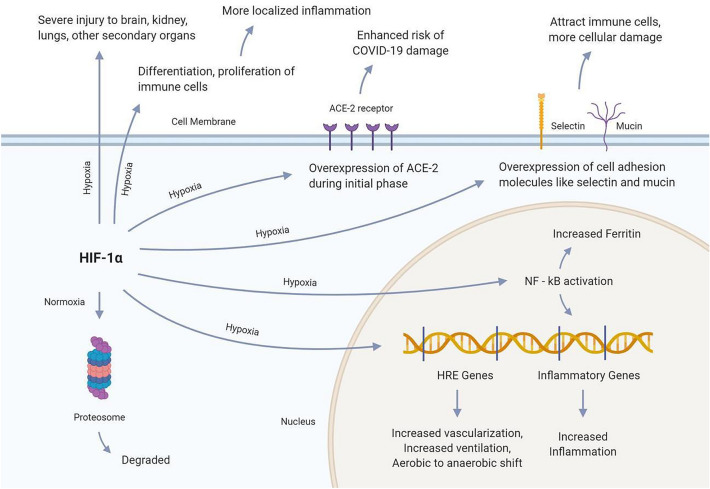
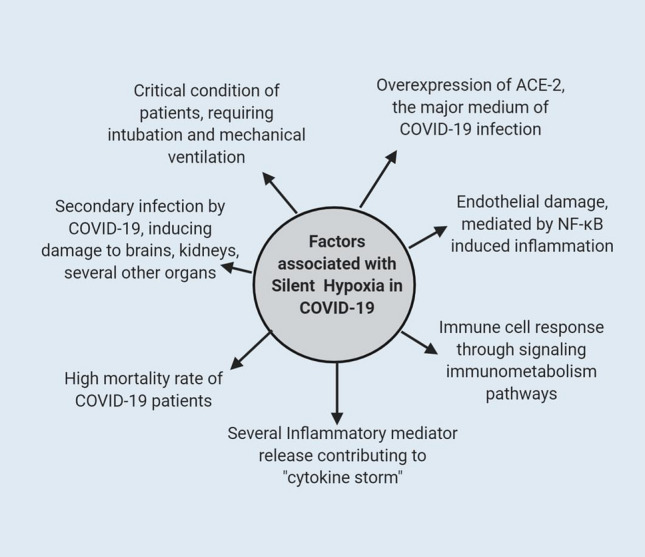
The novel coronavirus disease 2019 (COVID-19) has become a severe health issue, especially to the patients who develop silent hypoxia condition after SARS-CoV-2 infection. Due to the lack of dyspnoea and extremely low oxygen saturation level, these patients are at exceptionally higher risk. Although the prevalence of silent hypoxia in COVID-19 patients has been evident in several cases, the underlying pathomechanism behind this condition is still unclear. Silent hypoxia in SARS-CoV-2 infected patients can be diagnosed with the help of a pulse oximeter, blood gas levels, and a 6-min walking test. While the clinicians and researchers figure out the exact reason for this phenomenon, the patients must be under strict day-to-day monitoring. In this article, we aim to provide comprehensive insights into the underlying symptoms, mechanism, and possible factors behind the occurrence of silent hypoxia among COVID-19 patients.
新型冠状病毒病 2019(COVID-19)已成为严重的健康问题,尤其是对于那些在 SARS-CoV-2 感染后出现无症状低氧血症的患者。由于这些患者没有呼吸困难且血氧饱和度极低,因此他们面临极高的风险。尽管 COVID-19 患者出现无症状低氧血症的情况已经在多个病例中得到证实,但这种情况背后的潜在病理机制仍不清楚。SARS-CoV-2 感染患者的无症状低氧血症可以通过脉搏血氧仪、血气水平和 6 分钟步行试验来诊断。在临床医生和研究人员找出这种现象的确切原因的同时,患者必须接受严格的日常监测。在本文中,我们旨在提供对 COVID-19 患者无症状低氧血症发生的潜在症状、机制和可能因素的全面了解。