Department of Pharmacology and Toxicology, Radboud University Medical Center, Radboud Institute for Molecular Life Sciences (RIMLS), Nijmegen, The Netherlands.
Division of Molecular Toxicology, Department of Chemistry and Pharmaceutical Sciences, VU University Amsterdam, Amsterdam, The Netherlands.
Arch Toxicol. 2020 Sep;94(9):3027-3032. doi: 10.1007/s00204-020-02793-4. Epub 2020 May 29.
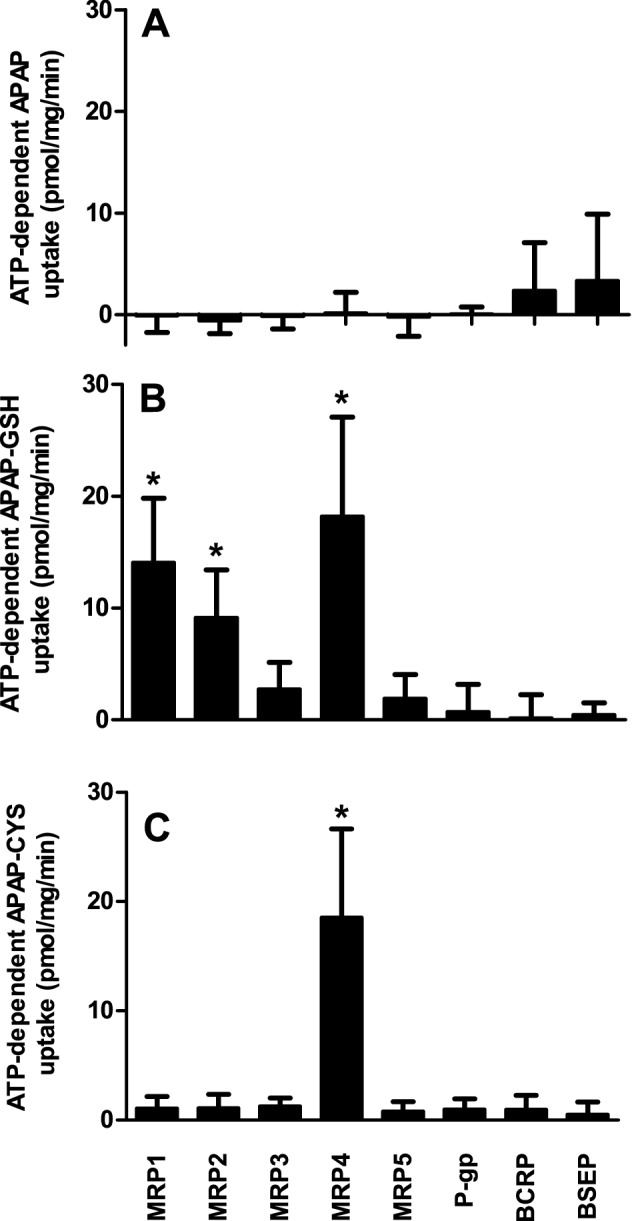
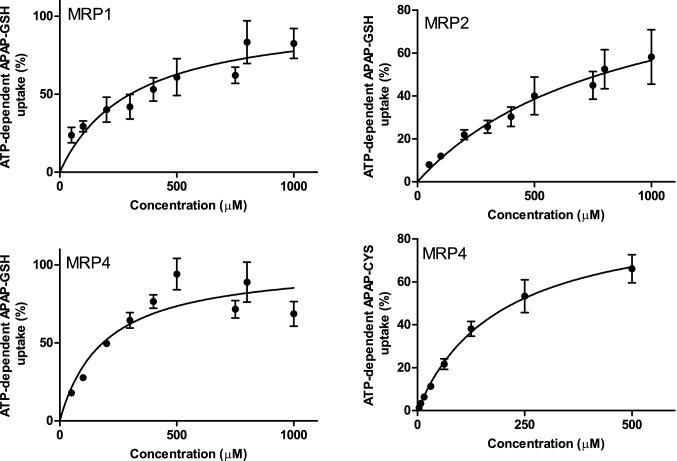
Paracetamol (acetaminophen, APAP) overdose is a leading cause of acute drug-induced liver failure. APAP hepatotoxicity is mediated by the reactive metabolite N-acetyl-p-benzoquinone imine (NAPQI). NAPQI is inactivated by conjugation with glutathione (GSH) to APAP-GSH, which is further converted into its cysteine derivative APAP-CYS. Before necrosis of hepatocytes occurs, APAP-CYS is measurable in plasma of the affected patient and it has been proposed as an early biomarker of acetaminophen toxicity. APAP-GSH and APAP-CYS can be extruded by hepatocytes, but the transporters involved are unknown. In this study we examined whether ATP-binding cassette (ABC) transporters play a role in the cellular efflux of APAP, APAP-GSH, and APAP-CYS. The ABC transport proteins P-gp/ABCB1, BSEP/ABCB11, BCRP/ABCG2, and MRP/ABCC1-5 were overexpressed in HEK293 cells and membrane vesicles were produced. Whereas P-gp, BSEP, MRP3, MRP5, and BCRP did not transport any of the compounds, uptake of APAP-GSH was found for MRP1, MRP2 and MRP4. APAP-CYS appeared to be a substrate of MRP4 and none of the ABC proteins transported APAP. The results suggest that the NAPQI metabolite APAP-CYS can be excreted into plasma by MRP4, where it could be a useful biomarker for APAP exposure and toxicity. Characterization of the cellular efflux of APAP-CYS is important for its development as a biomarker, because plasma concentrations might be influenced by drug-transporter interactions and upregulation of MRP4.
对乙酰氨基酚(醋氨酚,APAP)过量是急性药物性肝衰竭的主要原因。APAP 肝毒性是由活性代谢物 N-乙酰-p-苯醌亚胺(NAPQI)介导的。NAPQI 与谷胱甘肽(GSH)结合失活,形成 APAP-GSH,然后进一步转化为半胱氨酸衍生物 APAP-CYS。在肝细胞坏死发生之前,受影响患者的血浆中可检测到 APAP-CYS,它已被提议作为乙酰氨基酚毒性的早期生物标志物。APAP-GSH 和 APAP-CYS 可被肝细胞排出,但涉及的转运蛋白尚不清楚。在这项研究中,我们研究了 ABC 转运蛋白是否在 APAP、APAP-GSH 和 APAP-CYS 的细胞外排中起作用。在 HEK293 细胞中过表达 ABC 转运蛋白 P-糖蛋白/ABCB1、BSEP/ABCB11、BCRP/ABCG2 和 MRP/ABCC1-5,并产生膜囊泡。尽管 P-糖蛋白、BSEP、MRP3、MRP5 和 BCRP 不转运任何化合物,但发现 MRP1、MRP2 和 MRP4 摄取 APAP-GSH。APAP-CYS 似乎是 MRP4 的底物,而没有一种 ABC 蛋白转运 APAP。结果表明,NAPQI 代谢物 APAP-CYS 可通过 MRP4 排泄到血浆中,这可能是 APAP 暴露和毒性的有用生物标志物。APAP-CYS 的细胞外排特征对于其作为生物标志物的发展非常重要,因为药物转运蛋白相互作用和 MRP4 的上调可能会影响血浆浓度。