Tianjin University of Traditional Chinese Medicine, Tianjin, China.
Tianjin State Key Laboratory of Modern Chinese Medicine, Tianjin Key Laboratory of Chinese Medicine Pharmacology, Tianjin, China.
CNS Neurosci Ther. 2020 Aug;26(8):783-790. doi: 10.1111/cns.13401. Epub 2020 May 29.
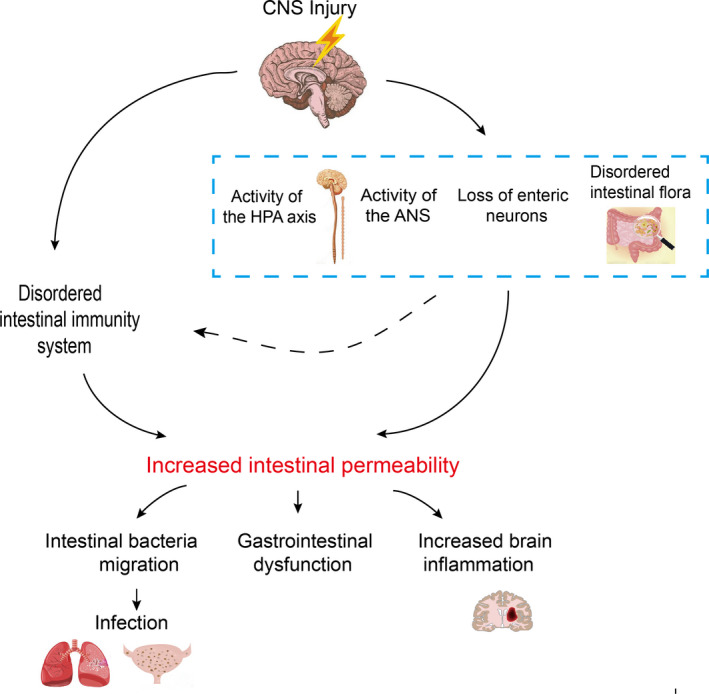
Central nervous system injuries may lead to the disorders of the hypothalamic-pituitary-adrenal axis, autonomic nervous system, and enteric nervous system. These effects then cause the changes in the intestinal microenvironment, such as a disordered intestinal immune system as well as alterations of intestinal bacteria. Ultimately, this leads to an increase in intestinal permeability. Inflammatory factors produced by the interactions between intestinal neurons and immune cells as well as the secretions and metabolites of intestinal flora can then migrate through the intestinal barrier, which will aggravate any peripheral inflammation and the central nervous system injury. The brain-gut-microbiota axis is a complex system that plays a crucial role in the occurrence and development of central nervous system diseases. It may also increase the consequences of preventative treatment. In this context, here we have summarized the factors that can lead to the increased intestinal permeability and some of the possible outcomes.
中枢神经系统损伤可导致下丘脑-垂体-肾上腺轴、自主神经系统和肠神经系统紊乱。这些影响会导致肠道微环境发生变化,如肠道免疫系统紊乱以及肠道细菌的改变。最终,这会导致肠道通透性增加。肠道神经元和免疫细胞之间的相互作用产生的炎症因子以及肠道菌群的分泌物和代谢物可以通过肠道屏障迁移,从而加重任何外周炎症和中枢神经系统损伤。脑-肠-微生物群轴是一个复杂的系统,在中枢神经系统疾病的发生和发展中起着关键作用。它也可能增加预防治疗的后果。在这种情况下,我们总结了导致肠道通透性增加的一些因素以及可能的结果。