Yin Lin, Shi Zifu, Liao Zixiang, Tang Ting, Xie Yuntian, Peng Shun
Cognition and Human Behavior Key Laboratory of Hunan Province, School of Educational Science, Hunan Normal University, Changsha, China.
School of Psychology, Central China Normal University, Wuhan, China.
Front Psychol. 2020 May 12;11:863. doi: 10.3389/fpsyg.2020.00863. eCollection 2020.
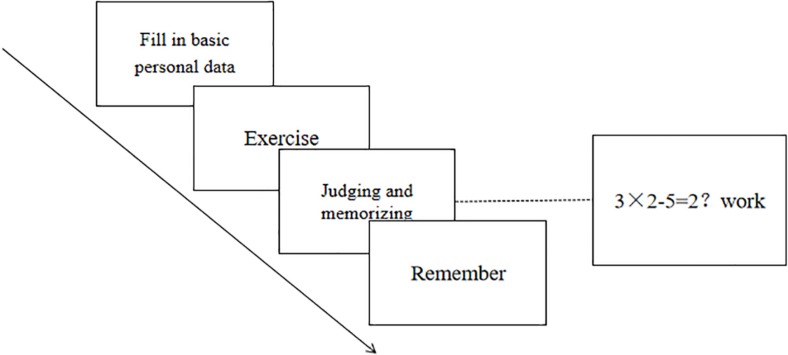
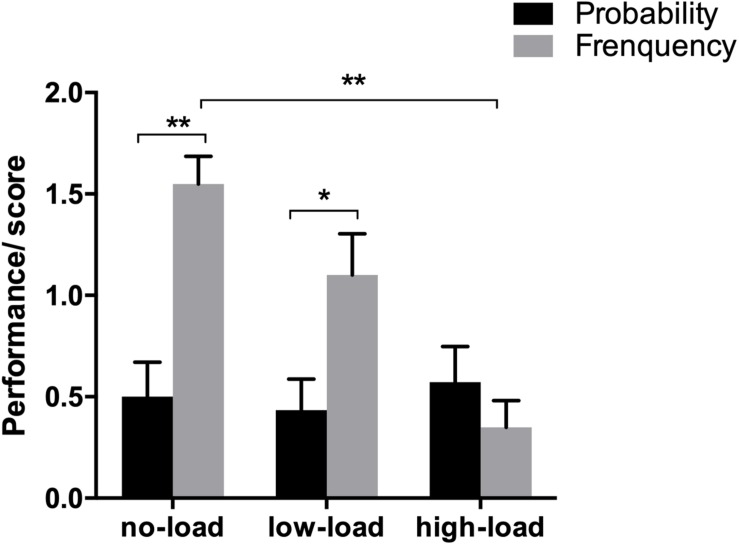
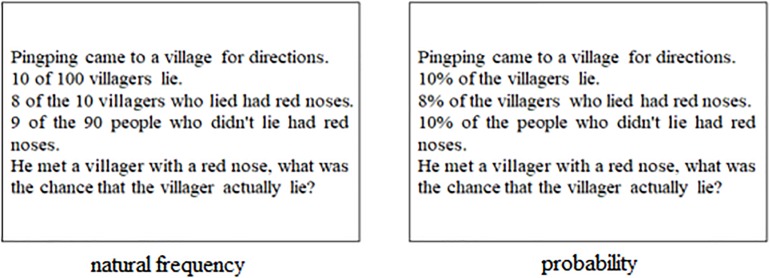
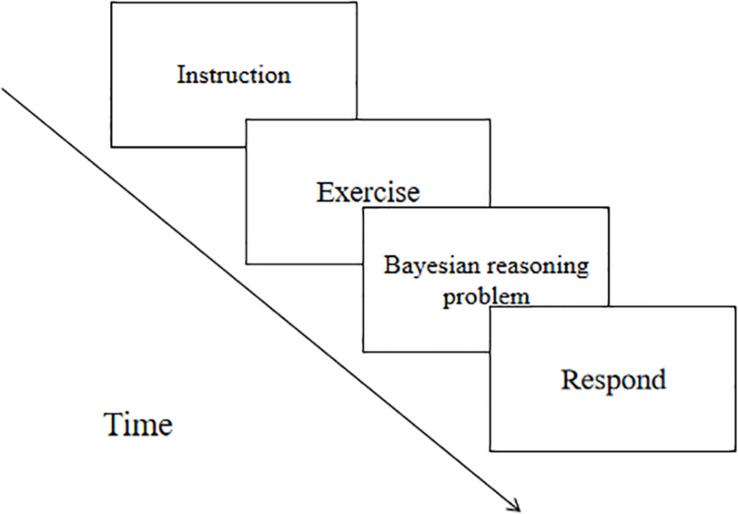
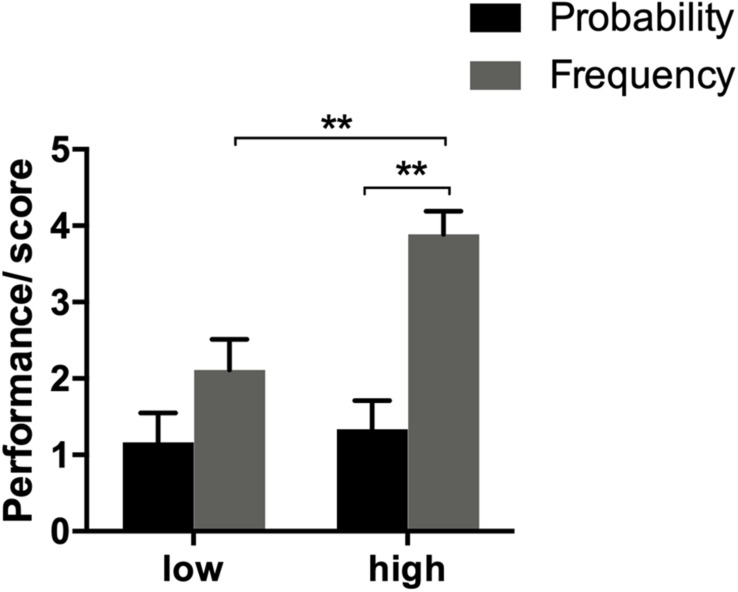
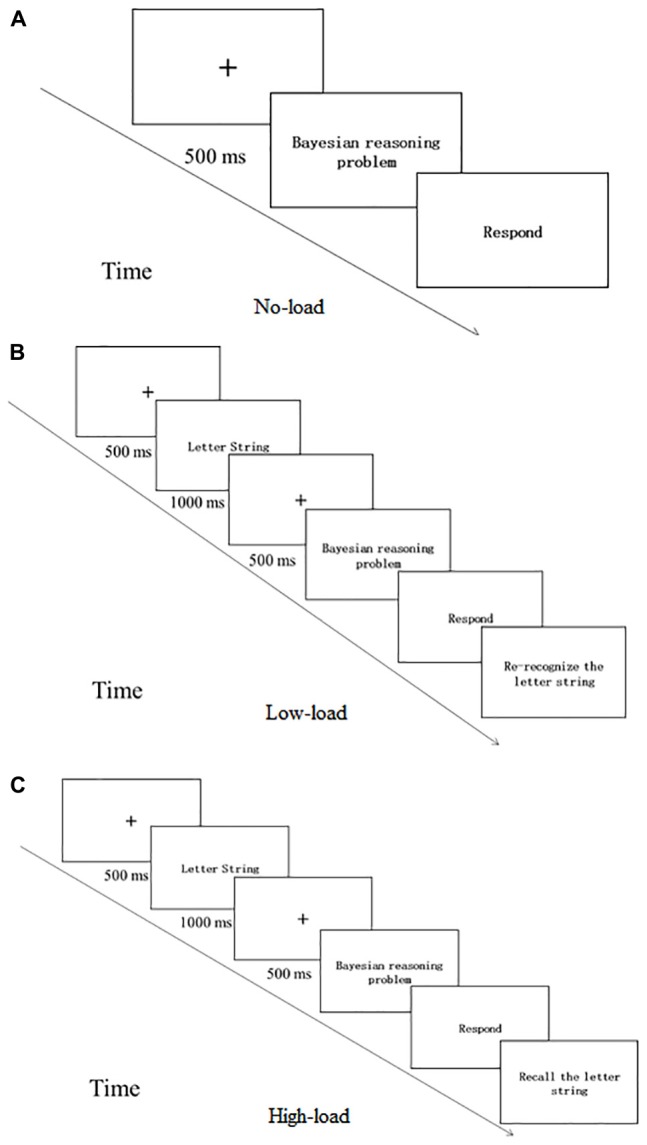
Bayesian reasoning is common and critical in everyday life while the performance on Bayesian reasoning is rather poor. Previous studies showed that people could enhance their performance by applying cognitive resources under the natural frequency format condition. Working memory is one of the crucial cognitive resources in the reasoning process. However, the role of working memory on Bayesian reasoning remains unclear. In our study, we verified the effect of working memory on Bayesian reasoning by evaluating the performance of participants with high and low working memory span (WMS); we also investigated if working memory as a kind of cognitive resource can affect Bayesian reasoning performance by manipulating the cognitive load in a dual-task paradigm among participants with no-, low-, and high-loads. We found the following: (1) The Bayesian reasoning performance of high WMS participants was significantly higher than that of low WMS participants. (2) Performance under natural frequency condition was noticeably higher than that in standard probability condition. (3) Interaction between working memory and probability format was significant, and the performance of participants with high-load in natural frequency condition was higher when compared to those of participants with no- and low-load. Therefore, we can conclude that: (1) Working memory resource is a major factor in Bayesian reasoning. The performance of Bayesian reasoning is influenced by working memory span and working memory load. (2) A Bayesian facilitation effect exists, and replacing the standard probability format with a natural frequency format can significantly improve Bayesian performance. (3) Bayesian facilitation occurs only in participants with sufficient working memory resources.
贝叶斯推理在日常生活中很常见且至关重要,然而人们在贝叶斯推理任务上的表现却相当差。以往研究表明,在自然频率格式条件下,人们通过运用认知资源可以提高推理表现。工作记忆是推理过程中关键的认知资源之一。然而,工作记忆在贝叶斯推理中的作用仍不明确。在我们的研究中,我们通过评估高工作记忆广度(WMS)和低工作记忆广度的参与者的表现,验证了工作记忆对贝叶斯推理的影响;我们还通过在无负荷、低负荷和高负荷的参与者中采用双任务范式操纵认知负荷,研究了作为一种认知资源的工作记忆是否会影响贝叶斯推理表现。我们发现如下结果:(1)高WMS参与者的贝叶斯推理表现显著高于低WMS参与者。(2)自然频率条件下的表现明显高于标准概率条件下的表现。(3)工作记忆与概率格式之间的交互作用显著,自然频率条件下高负荷参与者的表现高于无负荷和低负荷参与者。因此,我们可以得出以下结论:(1)工作记忆资源是贝叶斯推理的一个主要因素。贝叶斯推理表现受工作记忆广度和工作记忆负荷的影响。(2)存在贝叶斯促进效应,用自然频率格式取代标准概率格式可显著提高贝叶斯推理表现。(3)贝叶斯促进效应仅发生在具有足够工作记忆资源的参与者中。