Institute of Cardiovascular and Medical Sciences, Glasgow University, Glasgow, United Kingdom.
Department of Molecular and Clinical Medicine, Institute of Medicine, University of Gothenburg, Gothenburg, Sweden.
Front Endocrinol (Lausanne). 2020 May 14;11:252. doi: 10.3389/fendo.2020.00252. eCollection 2020.
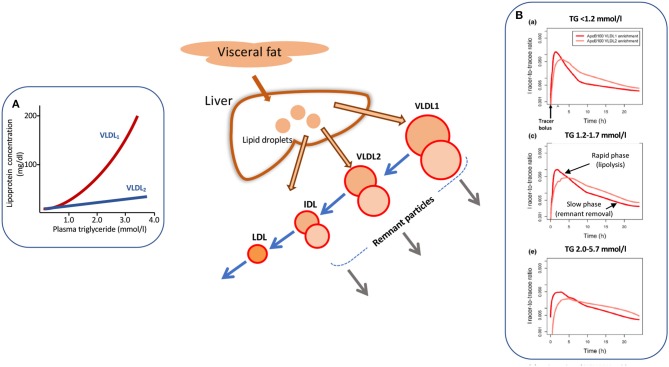
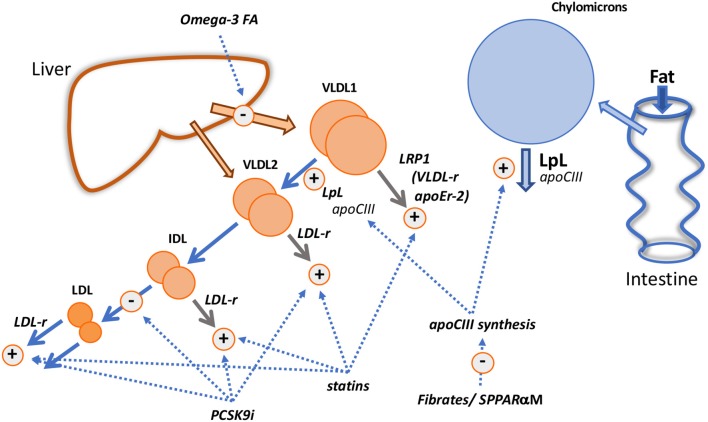
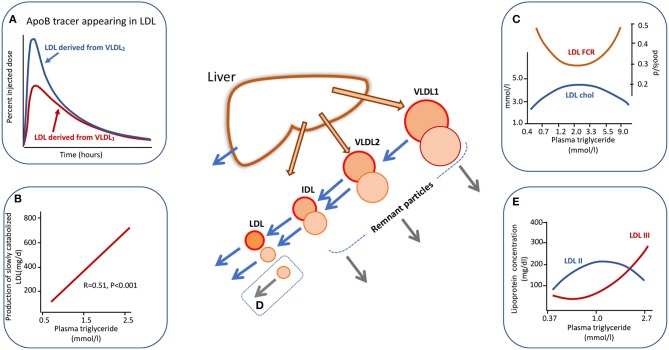
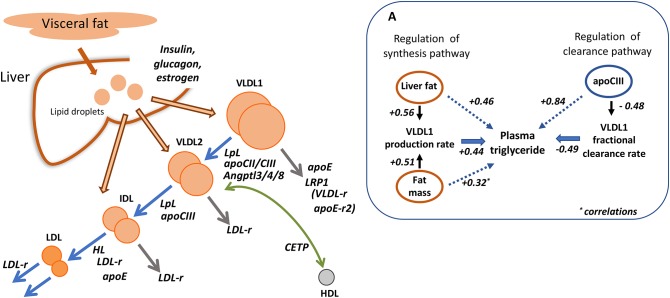
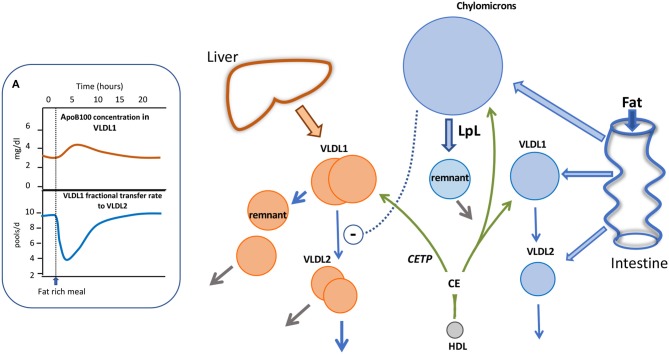
Elevations in plasma triglyceride are the result of overproduction and impaired clearance of triglyceride-rich lipoproteins-very low-density lipoproteins (VLDL) and chylomicrons. Hypertriglyceridemia is characterized by an accumulation in the circulation of large VLDL-VLDL-and its lipolytic products, and throughout the VLDL-LDL delipidation cascade perturbations occur that give rise to increased concentrations of remnant lipoproteins and small, dense low-density lipoprotein (LDL). The elevated risk of atherosclerotic cardiovascular disease in hypertriglyceridemia is believed to result from the exposure of the artery wall to these aberrant lipoprotein species. Key regulators of the metabolism of triglyceride-rich lipoproteins have been identified and a number of these are targets for pharmacological intervention. However, a clear picture is yet to emerge as to how to relate triglyceride lowering to reduced risk of atherosclerosis.
血浆甘油三酯水平升高是由于富含甘油三酯的脂蛋白(极低密度脂蛋白 [VLDL] 和乳糜微粒)的产生过多和清除受损所致。高甘油三酯血症的特征是循环中大量 VLDL-VLDL 及其脂解产物的积累,并且在整个 VLDL-LDL 脱脂化级联中发生扰动,导致残余脂蛋白和小而密的低密度脂蛋白(LDL)的浓度增加。高甘油三酯血症中动脉粥样硬化性心血管疾病风险增加被认为是由于动脉壁暴露于这些异常脂蛋白所致。已经确定了富含甘油三酯的脂蛋白代谢的关键调节剂,其中许多调节剂是药物干预的靶点。然而,如何将甘油三酯降低与动脉粥样硬化风险降低联系起来,目前还没有明确的结论。